The metro sprawls across some 8,000 square miles of suburban subdivisions, aging in-town bungalows, and new-build communities in Cherokee, Forsyth, and Gwinnett counties — each with different buyers, different price sensitivities, and different reasons to say no. A sales approach that works in Buckhead will flounder in Woodstock. What closes a homeowner in Decatur won’t necessarily land in Marietta. The contractors who build serious volume here aren’t winging it from call to call. They’ve figured out what actually works — and increasingly, they’re using AI to make sure every rep on their team knows it too.
Why Atlanta Specifically Pressures Sales Teams
The climate alone creates unusual sales dynamics. Georgia summers are brutal — not in a “it gets warm” way but in a “the air conditioner has to run from April through October or people get sick” way. That means HVAC replacement conversations happen fast, often in emergency conditions, and customers are stressed when the tech shows up. The window for a clean close is narrow. The homeowner wants it fixed today, but they don’t want to get gouged.
Storms complicate things further. Atlanta doesn’t get the sustained hurricane exposure of coastal markets, but it gets hammered by severe spring thunderstorms — the kind that spawn hail, drop large branches, and leave roofing teams with slammed pipelines six weeks after every major system passes through. When demand spikes like that, inexperienced reps often over-sell or rush. They get excited about the volume and skip steps. Close rates actually drop during storm surges if you don’t have a coached, consistent approach.
Then there’s the competitive density. Atlanta has more roofing companies per capita than almost anywhere in the South. HVAC contractors, plumbers, and remodelers compete in a market where homeowners have learned — through years of experience — to get three bids. The “we’re getting a few more quotes” objection isn’t a stall in Atlanta. It’s a ritual.
The Gap Between Your Best Rep and Everyone Else
Most Atlanta contractors we talk to have the same problem: one or two reps who close consistently, and a broader team that struggles to replicate what those top performers do. The gap is rarely about effort or personality. It’s about habits — the specific things top closers do early in a conversation that create trust, reduce friction, and set up the price conversation properly.
The problem is that closing habits are almost impossible to transfer through traditional training. You can run a morning sales meeting. You can do ride-alongs. You can debrief calls on Friday afternoons. But if you’re managing eight reps running four or five in-home appointments a day, you’re reviewing maybe 5% of what’s actually happening in the field. The other 95% is invisible.
That’s the gap AI sales coaching was built to fill.
Every recorded call gets analyzed. Not sampled, not cherry-picked — every one. The system identifies where conversations go sideways: where reps lose trust, where they fumble the transition to pricing, where they cave on objections they shouldn’t cave on. It surfaces patterns that a manager simply can’t see from occasional ride-alongs.
What Actually Breaks Down in Atlanta’s In-Home Sales
It’s usually not the pitch. Atlanta contractors tend to have decent product knowledge and can explain their services clearly. What breaks down is the dynamic — specifically, how reps handle the first 90 seconds when a homeowner is defensive, and how they manage the conversation when price comes up.
The “I want to get another bid” moment is instructive. A lot of reps treat it as rejection and start negotiating against themselves immediately. They drop price before the homeowner has even asked. Or they argue — they start explaining why their company is better rather than understanding what’s driving the hesitation. AI coaching identifies when this pattern is happening across a team and gives managers specific language reps can use instead. Not scripts. Frameworks. There’s a difference.
The same goes for the high-trust scenarios that are actually harder than they look. Storm damage situations, for instance, often bring homeowners who are grateful and compliant — which makes reps complacent. They stop asking questions. They assume the sale is done. And then a competitor shows up two days later and takes the job because they built a relationship the first rep skipped over. AI coaching catches that passivity. It flags conversations where the rep over-assumed and under-connected.
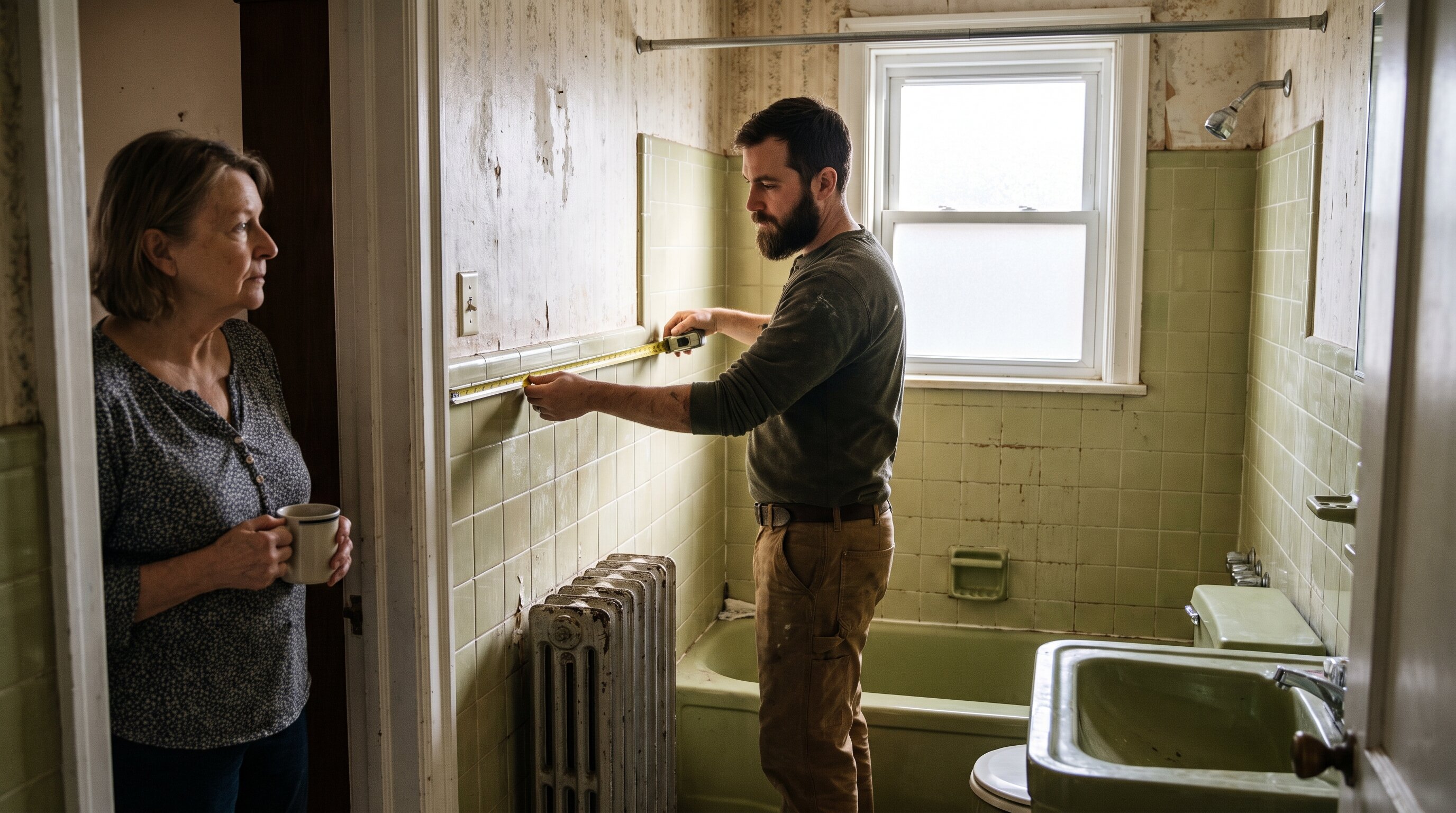
For contractors serving Atlanta’s home remodeling market — kitchens, bathrooms, full renovations — the dynamics are even more layered. These are bigger tickets, longer sales cycles, and buyers who are making emotional decisions they’ll live with for years. Trust-building has to happen earlier and go deeper. Reps who treat a remodeling consultation like an HVAC replacement call — efficient, transactional — almost never close the job.
How AI Coaching Actually Gets Deployed in the Field
The setup isn’t complicated. Sales calls get recorded — either through phone systems, tablets, or dedicated recording devices during in-home appointments. Those recordings run through the AI platform, which analyzes them against a model built on what high-converting conversations actually look like. Within hours, managers have specific feedback on each rep’s calls: what went well, what didn’t, and where to focus in the next coaching session.
The real advantage isn’t the analysis though. It’s the speed. Traditional coaching relies on a manager finding time — which in a busy Atlanta contracting business, means coaching happens rarely or not at all. With AI handling the initial review, managers can prioritize. They spend their coaching time on the conversations that actually need attention, not random sampling.
Kitchen Tune-Up, a national home services franchise with operations across markets like Atlanta, used this approach to scale their sales team without scaling their management overhead. The results were measurable — close rate improvements, faster ramp-up for new reps, and a reduction in the performance gap between top closers and the rest of the team. Read how they did it.
The Ramp-Up Problem for New Hires
Atlanta’s construction boom means contractors are hiring. A lot. Forsyth County alone has added tens of thousands of homes over the past five years, and the home services workforce hasn’t kept pace. That means new reps, often with limited sales experience, are going into in-home appointments in competitive markets where buyers know their options.
The old model — pair a new hire with a senior rep for six weeks, hope the habits transfer — doesn’t scale. By the time a new rep has figured out what works, they’ve already burned through dozens of appointments and probably lost deals that a coached rep would have closed.
AI coaching compresses that ramp-up. New reps can see analyzed examples of high-performing conversations — real calls from their own company’s team — before they go into the field. They can debrief their own early calls against clear criteria rather than vague feedback. The learning loop tightens. Managers spend less time repeating the same coaching over and over, and new hires get competent faster.
What This Means for Your Atlanta Business
Atlanta’s home services market isn’t getting less competitive. The volume is there — the population growth, the aging housing stock, the storm cycles — but capturing it consistently requires a sales team that performs across the full roster, not just on the top two or three reps.
The contractors who will own their category over the next three to five years are building systems now. They’re not waiting for a training problem to become a revenue problem. They’re using AI to see what’s happening in the field, identify patterns before they calcify into habits, and close the gap between their best performance and their average performance.
If your team closes like your best rep every time, you don’t have a sales problem. Most Atlanta contractors aren’t there yet. The question is how fast you want to get there.
Related Topics: Atlanta home services sales training, AI sales coaching for contractors, Georgia contractor sales training, home services close rate improvement, in-home sales coaching software, AI coaching for HVAC contractors, Atlanta roofing sales training

Related articles

Start closing more deals, without hiring more reps
See exactly what’s holding your team back and fix it fast.
.avif)