Rilla calls its product a virtual ridealong. The framing is deliberate — it invokes the image of a sales manager sitting in the passenger seat, watching the rep work, ready to debrief the moment they’re back in the truck. That framing works perfectly for HVAC. For roofing. For solar. For any trade where a rep walks through a door, runs a full presentation, and closes or doesn’t close before they leave.
Painting companies are not those trades.
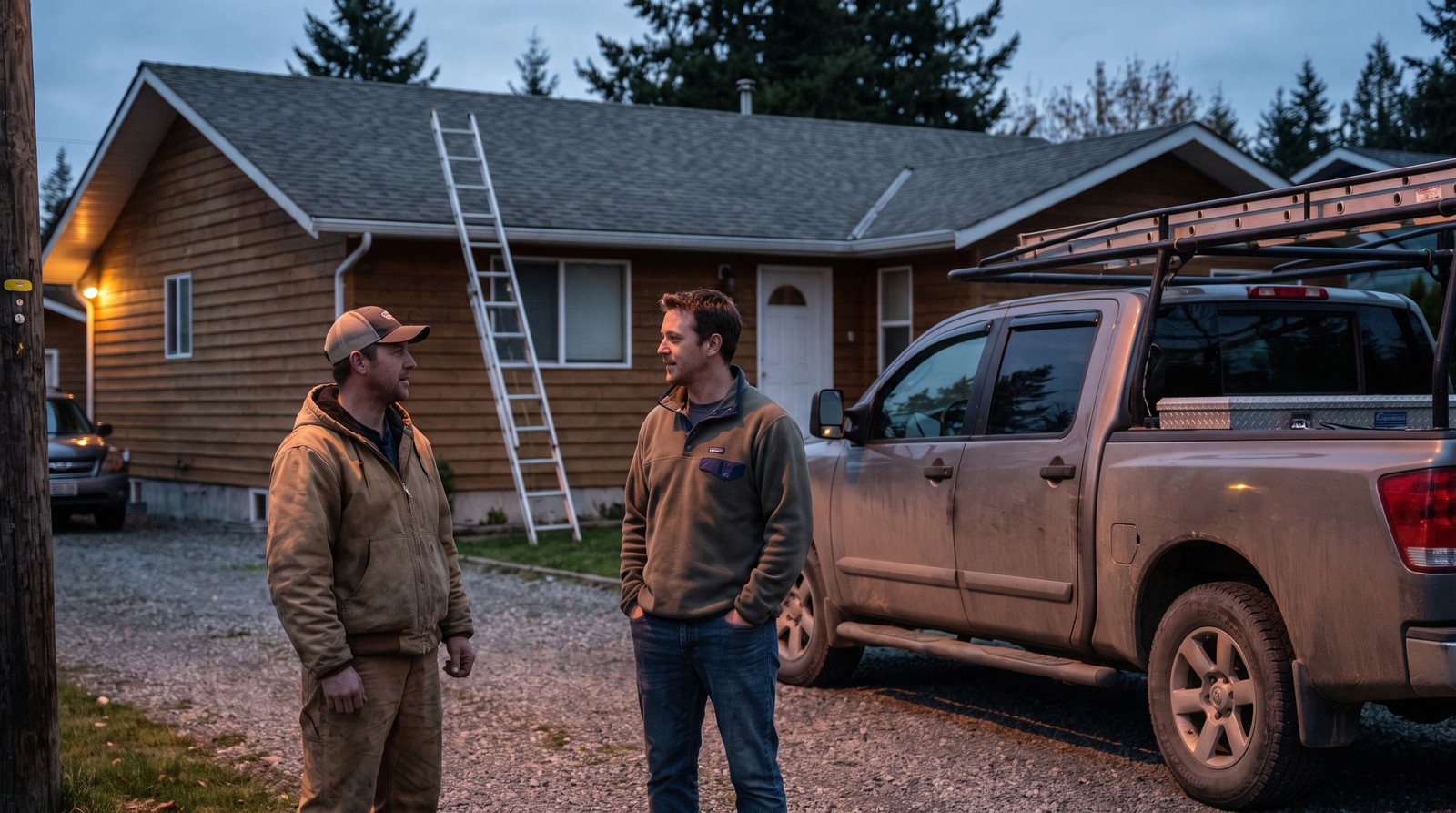
In residential painting, the appointment ends with “let me get a couple more quotes.” The close doesn’t happen at the kitchen table. It happens on the phone three days later, when the homeowner has four proposals in front of them and is calling each company back. Rilla’s virtual ridealong was in the driveway by then.
This is not a small structural difference. It’s the entire sales model. And it’s why the comparison between Rilla and SalesAsk looks different for painting than it does for any other trade vertical.
Rilla’s Architecture and Why It Was Built the Way It Was
Rilla records in-person field conversations. That’s the product. A mobile app that a rep opens before they walk in the door, records the visit from start to finish, and uploads when they get back to signal. The AI then processes the recording — transcription, analytics, playbook scoring, feedback — and delivers a coaching report.
The model was designed for trades where everything important happens in one visit. HVAC service calls where the tech upsells a system replacement. Roofing inspections where the rep assesses storm damage and closes a claim-based job the same afternoon. Solar consultations where the rep does a roof assessment and energy analysis in one appointment and asks for a signature before leaving. In those contexts, Rilla works exactly as described. The coaching is timely, the analytics are relevant, and the virtual ridealong model makes sense because the ridealong would have covered the same window.
Rilla’s G2 reviews, case studies, and press coverage are concentrated in those verticals. Their Crunchbase description specifically lists “solar, roofing, kitchens, baths, HVAC, plumbing” as target markets. There is no painting industry page on rilla.com — a 404 confirms they haven’t built one. Their January 2026 Home Depot partnership entered home improvement territory, but home improvement in that context means windows, doors, insulation, and kitchen renovations — not painting, where the sales cycle is fundamentally different.
That absence is informative. Rilla has built industry-specific content for the verticals where their model fits cleanly. They haven’t built one for painting because the model doesn’t map.
What the Painting Sales Cycle Actually Looks Like
Residential painting is a multi-bid business by default. Homeowners almost universally request multiple quotes — the industry norm is three, but two to five is common, especially for larger exterior jobs. The rep shows up, walks the property, takes measurements, discusses colors, surface prep, warranty terms, and financing options. They leave a proposal.
And then they wait.
The close window opens somewhere between 48 hours and a week later. The homeowner has compared proposals, thought about it, maybe called their neighbor who just had their house painted. They reach back out — or they don’t. The painting rep who closes more jobs is not necessarily the one who gave the best estimate. It’s the one who followed up best.
Industry close rate benchmarks vary by company size and market, but the range typically lands between 25% and 45% for residential painting. The gap between the bottom and top of that range is almost entirely attributable to follow-up behavior — not estimate quality. Estimates that cover the same scope at similar prices are chosen based on which company stayed in contact, answered questions promptly, and made the homeowner feel confident about the crew.
Rilla does not coach that phase. It ends when the appointment ends.
The Three Gaps Painting Contractors Run Into with Rilla
The follow-up window. This is the most significant gap and the one most specific to painting. When a painting rep leaves an estimate, the decision is almost never made that day. The coaching that matters most is: how do you follow up without being pushy? How do you answer “I got a cheaper bid” when you can see the proposal was likely priced on less prep? How do you handle “we decided to wait until spring” when you could be scheduling the job now?
Rilla has no visibility into those conversations. It records the estimate. The follow-up call, the text exchange, the second visit to address scope questions — none of that enters the coaching system. A painting rep could nail every visit and still lose 60% of their follow-ups to a competitor who is just more persistent and more skilled at phone-based selling. Rilla would show them a high playbook score and give them no indication anything was wrong.
The booking call. Painting companies schedule estimates through phone calls and online forms. The CSR who books those estimates has a meaningful impact on show rate, first impressions, and the rep’s context going into the appointment. Did the homeowner mention a competing quote during the booking call? Did they give a strong signal about timeline or budget? Did they express hesitation that a well-trained CSR could have navigated to a firmer commitment?
Rilla doesn’t touch the booking call. SalesAsk coaches CSRs through that window — the same system, the same coaching engine — because losing a job at the booking stage is just as real a revenue problem as losing it at the estimate.
Pricing math. Rilla’s pricing is $199–$349 per rep per month at current published rates. That range works for HVAC contractors where an incremental close on a system replacement adds $8,000–$15,000 in revenue. For painting, average residential project tickets typically fall between $2,000 and $5,500 for interior work and $3,500 and $8,000 for exteriors. The ROI calculation is harder. A 5-rep painting company paying $1,245–$1,745 per month for Rilla needs to close one additional project per month per rep from coaching to break even — that’s achievable, but the math is tighter, and it assumes the coaching is hitting the right phase of the sales cycle. Which, for painting, it isn’t.
What SalesAsk Coaches in Painting
SalesAsk’s painting coverage starts before the estimate and doesn’t stop until the job is booked.
The CSR who takes the call to schedule an estimate is coached on how to confirm the timeline, gather context about competing bids, and set expectations that increase show rate. When the rep arrives for the estimate, Coach Dean is listening — reviewing the conversation for the same signals it tracks in any other vertical: did the rep ask about timeline, budget, and competing quotes? Did they differentiate on prep depth and warranty? Did they address the “I’m just getting other quotes” moment that comes up in nearly every painting estimate?
After the rep leaves, follow-up coaching is available. Reps practice follow-up calls in RepLab — the scenario simulation module — against AI homeowners running the most common painting objections. “I got a bid $800 cheaper.” “We decided to push to fall.” “My brother-in-law said he could do it for materials cost.” Those are the conversations where painting close rates are actually determined. Practicing them before they happen is where the skill builds.
The ServiceTitan integration connects that full coaching cycle to actual revenue outcomes. A coaching improvement in follow-up technique can be tracked forward to booked jobs. That’s not possible with Rilla’s architecture because Rilla never had visibility into the follow-up window to begin with.
SalesAsk has a dedicated painting industry page — AI Sales Coaching for Painters — which means the playbooks, benchmarks, and objection libraries Coach Dean draws from are specific to painting’s close dynamics, not carried over from HVAC or roofing.
Head-to-Head Comparison
The ROI Math for a Painting Company
Five reps. Each runs fifteen to twenty estimates per week, depending on crew scheduling and territory. Industry close rate range: 28% to 44%. Average ticket: $3,800.
At 28% close rate on 75 estimates per week, that’s 21 jobs at $3,800 each = $79,800 per week. At 44%, it’s 33 jobs = $125,400. The difference is $45,600 per week — roughly $2.37M annually — between the bottom and top of the industry close rate range for that team.
The actual difference between a company closing at 28% and one closing at 44% is almost entirely in follow-up execution. How consistently they contact, how well they handle objections, how quickly they respond to the “I got a cheaper bid” call.
Rilla’s coaching covers the estimate appointment. SalesAsk covers the appointment and the entire follow-up window.
A 5-rep painting team paying $495/month for SalesAsk ($99 × 5) needs roughly a 0.1% improvement in close rate to break even at $3,800 average ticket. Moving from 28% to 29% on 75 estimates per week = one additional close per week = $3,800 per week = $197,600 per year. The break-even on the SalesAsk subscription is achieved in less than a day and a half of annual coaching improvement.
Which Teams Each Tool Is Right For
Rilla makes sense for painting companies where the primary sales challenge is estimate quality — reps who aren’t presenting comprehensively, aren’t covering prep depth and warranty, aren’t building value at the kitchen table. If that’s where the close rate problem lives, Rilla will surface it.
SalesAsk makes sense when the close rate problem is in the follow-up cycle — which, for most painting companies, is exactly where it is. It also makes sense for any painting operation that’s running CSRs on inbound booking calls, where coaching that appointment has measurable impact on show rates and first-impression context.
For painting companies using ServiceTitan, SalesAsk’s native integration means coaching outcomes are connected to booked jobs and revenue. That level of attribution — what coaching improvement actually produced — is not available through Rilla’s architecture.
The painting sales cycle is one of the few in home services where the field visit is not the close. It’s the qualification. The close is the follow-up. Coaching tools that end when the appointment ends are coaching the wrong half of the process.
How Painting Contractors Get Started with SalesAsk
SalesAsk’s Painting industry page covers the specific objection patterns, close rate benchmarks, and use case breakdown for painting teams. The Coach Dean AI Agent page explains how autonomous coaching works at scale — without managers having to review every recording themselves.
For companies who want to see the actual numbers, the home improvement case study covers a home services operator who improved close rates and rep retention simultaneously — two metrics painting contractors consistently cite as their top challenges.
If your team is losing jobs in the three days after the estimate, the coaching tool you need is the one that’s still working during that window. Book a demo to see what follow-up coaching and CSR training look like for painting-specific sales cycles.

Related articles

Ready to convert
every conversation?
See exactly what’s holding your team back and fix it fast.
.avif)