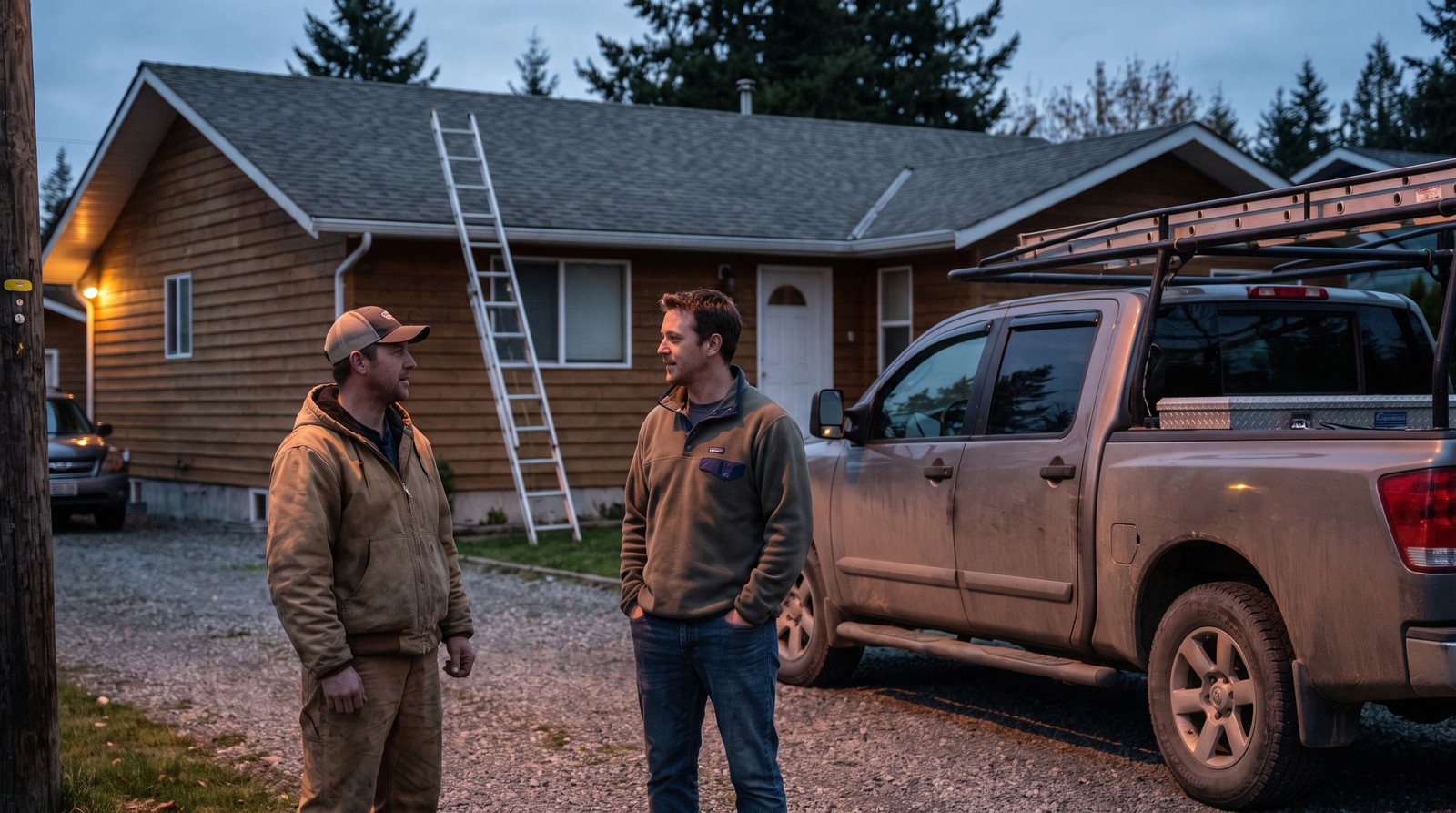
It is 7:41 on a Tuesday evening and your best rep just pulled out of a driveway in Mesquite. Two hours at the kitchen table. Good rapport, solid presentation, a $14,600 HVAC replacement quoted with three options. The homeowner said the words every rep has learned to dread and accept: "We just need to talk it over."
Here is what I keep coming back to after hundreds of conversations with contractors: almost everyone obsesses over those two hours at the table, and almost no one can tell me what happens in the seventy-two hours after. The rep drives to the next appointment. The homeowner is left with a folded piece of paper, a fridge magnet, and two more estimates arriving before Friday. That stretch of silence is where a huge share of in-home sales actually die, and most sales managers have zero visibility into it.
I think of it as the follow-up gap. This post is about what happens inside it, and what the best home-services companies are doing to close it.
Why do in-home sales fall apart after the appointment?
Because the sale keeps happening after your rep leaves, but your company stops participating in it.
The one-call close is the trades' favorite legend, and to be fair, it is real. Good reps do close in the home, and you should absolutely train for it. But the honest math is uglier than the legend. Research compiled by IRC Sales Solutions found that 80% of sales require five or more follow-up contacts, while SPOTIO's data shows 44% of salespeople give up after a single attempt. Even if in-home selling closes faster than B2B, the shape of the problem is the same: the buyer's decision outlasts the appointment, and most sellers quietly exit the process before the buyer does.
In home services this gets worse for a structural reason. The person who ran the appointment is a commissioned rep with a full board of tomorrow's leads. Every hour they spend chasing Tuesday's maybe is an hour not spent in front of Wednesday's fresh prospect. The incentive design practically guarantees thin follow-up, and no amount of "be more disciplined" speeches at the Monday meeting fixes an incentive problem.
What is the follow-up gap, exactly?
The follow-up gap is the stretch between your rep leaving the home and the homeowner making a decision, during which the buyer is actively comparing and your company is usually silent.
For a typical replacement project, that window runs two to seven days. For remodels it can run weeks. It has three defining features. First, it is invisible: your CRM says "quoted, pending" and nothing else. Second, it is competitive: the homeowner booked you and two other companies off the same search, and at least one of those competitors will follow up. Third, it is decisive: this is when the spouse who missed the appointment weighs in, when the neighbor's opinion arrives, when the price gets Googled at midnight.
The numbers on the gap: 80% of sales take five or more follow-ups (IRC Sales Solutions). 44% of reps stop after one (SPOTIO). Follow-up emails see roughly a 40% open rate in the first hour and about 5% after twenty-four hours (ProfitOutreach). Text messages get opened 98% of the time (LeadSimple). The buyer's attention decays by the hour; most companies follow up by the week.
What does the homeowner actually do with your quote once you're gone?
They compare it against two others using the only artifact you left them: a number on paper, stripped of everything your rep said to justify it.
Walk through it from the buyer's side. Your rep spent two hours building a case: the load calculation, why the two-stage unit fits this house, the duct issue in the attic, the warranty difference. Then they left, and all of that compressed down to a line item. The competitor who quoted $1,900 less did the same. On paper, at the kitchen table on Thursday night, your carefully justified premium looks like plain overcharging.
The spouse problem compounds this. In a large share of in-home appointments, one decision-maker is absent. That person never heard the reasoning. They only see the number, filtered through their partner's memory of a two-hour conversation. If you have ever listened to recordings of in-home appointments, you know how much gets said in two hours, and how little of it survives a secondhand retelling. Your rep is now being pitched, badly, by an unpaid intermediary who caught maybe a third of it.
And your quote is competing at its weakest. The homeowner rereads it exactly when objections surface, precisely when no one from your company is present to answer them.
How fast should you follow up after an in-home appointment?
Same evening, before the next competitor's appointment happens, and then on a deliberate cadence rather than a guilty one.
Most of the speed research comes from lead response rather than post-appointment follow-up, so I will not pretend the numbers transfer exactly. But the direction is unambiguous. InsideSales research found leads contacted within thirty minutes were dramatically more likely to convert than those contacted hours later, and open rates on follow-up messages collapse from about 40% to about 5% within a day. Attention decays fast. The evening of the appointment, your presentation is still vivid. By Saturday it is a blur competing with two fresher blurs.
A same-evening text does two jobs at once. It re-anchors your rep's case while it is still warm, and it quietly signals operational competence, which for a $15,000 install matters as much as the pitch. The company that follows up crisply is presumed to schedule crisply, install crisply, and honor the warranty crisply. Fair or not, buyers read process as proof.
One honest caveat: cadence can curdle into spam. Six generic "just checking in" messages in four days will lose deals you would otherwise have won. The fix is not less follow-up. It is follow-up with content, which brings me to the harder question.
What should the follow-up actually say?
It should replay the specifics of the conversation, not ask for the order again.
"Just following up to see if you had any questions" is the most common follow-up in the trades and the least useful. It contains no information. It gives the absent spouse nothing. It gives the homeowner nothing to reread at midnight except the price.
Strong follow-up is a recap: here is what we found in your attic, here is why I recommended the two-stage system for your square footage, here is the rebate deadline we discussed, here is the photo of the rusted heat exchanger. Specificity is the whole game, because specificity is what the competing paper quotes do not have.
This is where recording the appointment changes the economics of follow-up. When the appointment is recorded and summarized, the recap writes itself: the customer's actual concerns, in their words, the commitments your rep made, the objections that came up. Reps do not skip follow-up because they are lazy; they skip it because reconstructing a two-hour conversation from memory at 9 p.m. is real work. Remove the reconstruction cost and the follow-up actually happens. That has been one of the less advertised benefits our customers get from recording in-home appointments: the coaching value is the headline, but the follow-up value quietly pays for the tool.
Do digital proposals close the follow-up gap?
They help, not by being prettier than paper, but by keeping your case intact after the rep leaves and telling you what the buyer does with it.
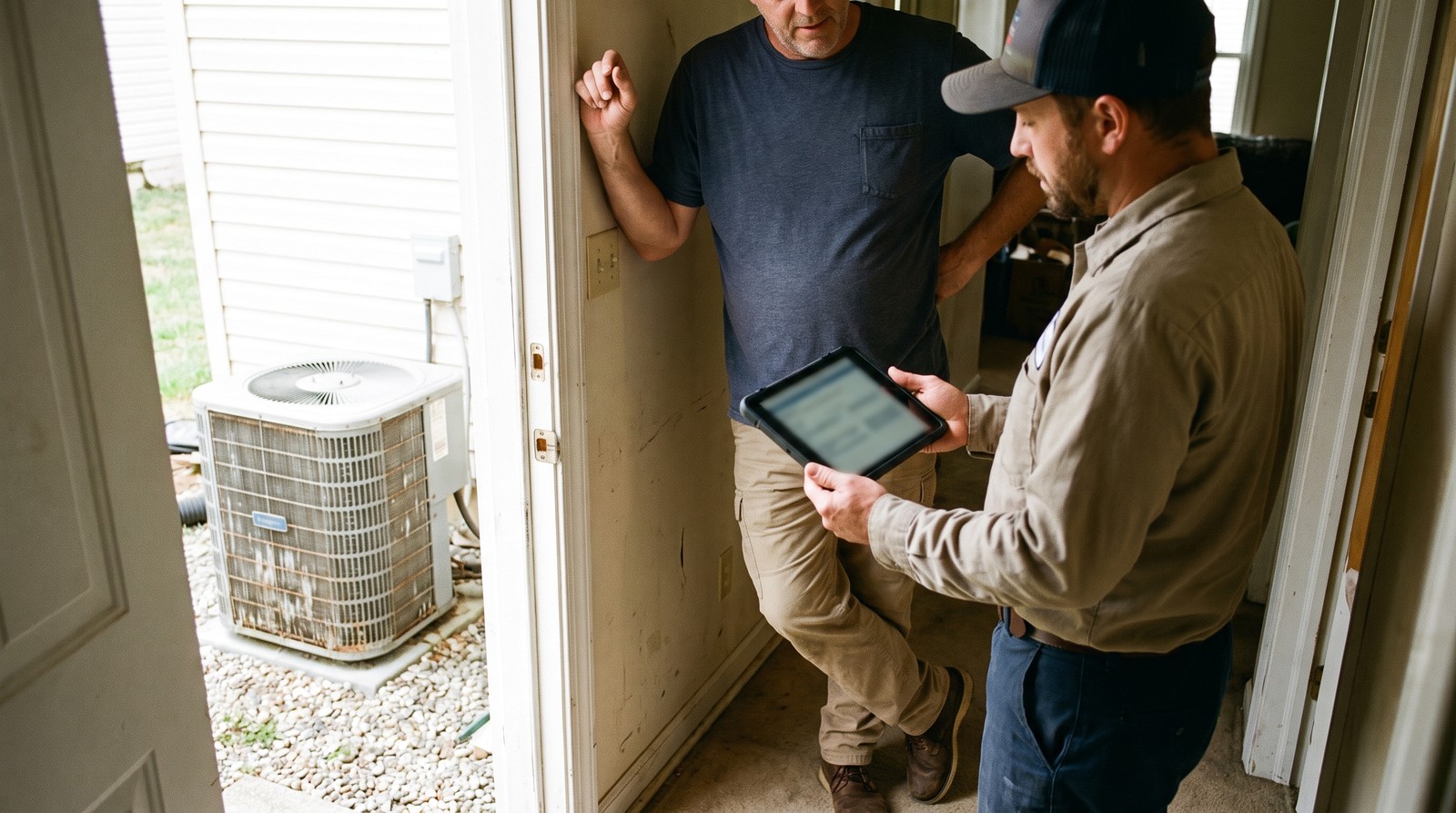
A paper quote is a dead artifact. A digital proposal is a live one: the options presented side by side, the photos from the inspection, the financing math, the reasoning your rep built at the table, all in one link the homeowner can forward to the spouse who missed the appointment. The absent decision-maker gets the full case instead of a secondhand summary. And because it is digital, you learn things paper never tells you: whether it was opened, when, how many times, which option they lingered on. A proposal opened four times on Thursday night is a completely different follow-up situation than one never opened at all, and your rep should treat them differently.
I will concede the limits plainly. A digital proposal does not rescue a bad appointment. If the rep never built trust at the table, no link will build it after. Some buyers, particularly older ones, genuinely prefer paper, and pushing them to a portal adds friction rather than removing it. And a proposal tool without a follow-up habit is just a nicer-looking dead artifact. The tool amplifies a process; it does not substitute for one.
This problem is exactly why we are launching Homeplan later this month: a buyer-facing home for everything discussed at the appointment, built for contractors, connected to what actually happened in the conversation. I am obviously not neutral on this. But the gap it addresses is real whether or not you ever use our product, and you can close a lot of it this week with a recorded recap and a same-evening text.
Paper quote vs. digital proposal in the follow-up window
| What matters after the rep leaves | Paper quote | Digital proposal |
|---|---|---|
| What the buyer rereads | The price, alone | The price with the reasoning, photos, and options around it |
| The absent spouse sees | A secondhand retelling | The full case, forwarded in one link |
| What you know about buyer behavior | Nothing until they call | Opens, timing, repeat views, option interest |
| Rep effort to follow up well | High: reconstruct from memory | Low: the recap already exists |
| Where it fails | Any comparison shopper | Buyers who prefer paper; bad appointments |
How many touches, on what schedule?
Plan seven touches across three weeks, alternate channels, and decide the whole cadence before the first one — the sequence below is the one I would hand a new rep today.
| Day | Channel | What it carries |
|---|---|---|
| Day 0 | In person | Book the decision date and the follow-up call before leaving |
| Day 1 | Text or email | Thank-you plus the quote in digital form and one photo from the visit |
| Day 3 | Call | The recap with one new thing (rebate, financing option, spec detail) |
| Day 7 | Call (the booked one) | The decision conversation — ask directly where you stand |
| Day 10 | Text | Answer to a question they raised, or the planted question |
| Day 14 | Call | The honest deadline |
| Day 21 | The graceful close-out: door stays open, ask for the real objection |
Two notes on this. First, the day-21 close-out wins more jobs than you would expect, because "you can tell me the real reason" is disarming and sometimes the real reason is something you can fix in one sentence. Second, the cadence flexes by trade. A water heater replacement decision happens in 48 hours and needs the whole sequence compressed into four days. A kitchen remodel decision takes six weeks and needs the touches spread out with more substance in each. The structure — booked first call, value in every touch, honest deadline, graceful exit — stays the same.
How do you follow up without being the annoying contractor?
Annoyance comes from asking, not from contacting — homeowners resent being chased for a decision, but they almost never resent being helped toward one.
Reps under-follow-up because the "just checking in" call feels needy, and they are right that it does. The fix is not more courage. It is changing what the call is for. If every touch delivers something — a rebate they did not know about, a photo of a similar finished job two streets over, a straight answer about what the cheaper bid probably leaves out — then seven touches read as service, not pressure. I have listened to homeowners thank reps on the sixth call. Not one of those calls opened with "just circling back."
There is a tradeoff to name here: this standard of follow-up takes real preparation. A rep running eight estimates a week cannot improvise seven substantive touches per prospect. The ones who pull it off write the follow-up plan in the truck before leaving the curb, while the conversation is fresh — which objections came up, what the spouse cared about, what new information would actually move them. Five minutes of notes funds three weeks of touches.
Where to start this week
You do not need new software to start closing the gap. Pick your three highest-value open quotes right now and have the rep send a specific recap tonight, referencing at least two details from the conversation. Make same-evening recaps the standard for every quoted appointment. Track one new number in your pipeline meetings: not just close rate, but days-from-quote-to-decision and what happened in between. Once you see the gap, you will not be able to unsee it. The companies winning the comparison shop are not always the ones with the best two hours at the table. They are the ones still selling on day three, when everyone else has gone quiet.
FAQ
Does fast follow-up make us look desperate?
No. For a five-figure home project, buyers read responsiveness as operational competence. Desperation is six content-free "checking in" messages; a same-evening recap with specifics reads as professionalism.
Should the rep or the office handle post-appointment follow-up?
The first touch should come from the rep, because they hold the relationship and the specifics. Later cadence touches can shift to the office, but a recap from a coordinator who was not in the home falls flat unless it draws on a record of the conversation.
We close a lot on the first visit. Does this still matter?
Yes, because the deals that do not close in-home are disproportionately the larger, comparison-shopped ones. A strong one-call-close culture plus weak follow-up means you win the easy deals and donate the big ones.
Text, email, or call for the first follow-up?
Text for speed and open rate (roughly 98% of texts get read), email for carrying the full recap and attachments, and both beat a next-day voicemail. Match the channel the homeowner already used with you.
How many follow-ups are too many?
There is no magic number, but each touch must add something: a photo, an answer, a deadline, a financing option. When you run out of things to add, ask for a decision honestly rather than sending another check-in.
For the proposal side of this gap, see how digital proposals hold up after the rep leaves.
Sources

Related articles

Ready to convert
every conversation?
See exactly what’s holding your team back and fix it fast.
.avif)