AI Sales Roleplay Training: Practice Without the Pressure
Meta Title: AI Sales Roleplay Training | Practice Without the Pressure (59 chars)
Meta Description: AI roleplay training lets your sales team practice objections, pricing, and closing without the awkwardness. Real scenarios, real coaching, zero pressure. (157 chars)
Traditional sales roleplay is uncomfortable. Your rep plays the customer, your manager plays the rep, everyone’s self-conscious, and nobody wants to look dumb in front of their coworkers.
So what happens? People phone it in. The objections aren’t realistic. The feedback is generic. And the whole exercise feels like a waste of time.
AI sales roleplay changes that. Your reps can practice with an AI that responds like a real homeowner—complete with budget concerns, spouse objections, and comparison shopping questions—without the social pressure of performing in front of the team.
Why Traditional Roleplay Falls Short
The concept of roleplay is sound: practice makes perfect, and sales is no different than any other performance skill. Musicians rehearse. Athletes scrimmage. Surgeons practice on simulators before operating on humans.
But sales roleplay in a conference room with your coworkers watching? That’s not rehearsal. That’s performance anxiety with a different audience.
Reps know the “right” answers when their manager is standing there. The real test is whether they remember those answers when they’re alone in a stranger’s kitchen trying to close a $12,000 deal.
[IMAGE: Traditional conference room roleplay vs AI roleplay on a phone/tablet]
How AI Roleplay Actually Works
AI roleplay platforms simulate real sales conversations. You pick a scenario—maybe it’s a homeowner who says “I need to get two more quotes”—and the AI plays the customer.
The AI responds naturally. If you fumble the objection, it pushes back. If you handle it well, it moves on to the next concern. Just like a real sales call.
Afterward, you get feedback: what you did well, what you missed, what you could have said instead. No judgment, no embarrassment, just coaching.
The Psychological Difference
Practicing with AI removes the fear of looking stupid. Your reps can try different approaches, fail safely, and iterate without worrying about what their peers think.
That matters more than it sounds. Sales is already a high-rejection profession. Adding the possibility of public failure during training just makes people avoid practice altogether.
With AI, the stakes are low. Nobody’s watching. You can roleplay the same objection ten times until you nail it. That kind of repetition is how skills actually develop.
Real Scenarios, Not Generic Scripts
The best AI roleplay platforms understand your industry. If you’re selling HVAC replacements, the AI knows what “I wasn’t planning to spend this much” sounds like coming from a homeowner who just found out their 20-year-old furnace is shot.
Generic sales training roleplays don’t work because they’re too abstract. “Overcome price objections” doesn’t mean the same thing in software sales, car sales, or home services. The language is different. The context is different. The rebuttals that work in one industry fall flat in another.
Industry-specific AI roleplay gives your reps practice with the exact conversations they’ll have in the field. Not theoretical objections—real ones.
[IMAGE: AI roleplay dashboard showing scenario selection - HVAC, roofing, plumbing specific scenarios]
What Separates Good AI Roleplay from Bad
Not all AI roleplay is created equal. Some platforms just run you through scripted paths—if you say X, the AI responds with Y. That’s not roleplay, that’s a choose-your-own-adventure book.
Good AI roleplay is adaptive. It listens to what you actually say and responds accordingly. It improvises. It throws curveballs. It behaves like a human customer, not a flowchart.
Key Features to Look For
When evaluating AI roleplay tools, prioritize these:
- Scenario variety: Can you practice different buyer types, objections, and situations?
- Voice vs text: Voice-based roleplay is more realistic (and harder). Text-based is easier but less transferable to real calls.
- Industry customization: Does the AI speak like your customers, or like generic B2B prospects?
- Feedback quality: Generic “you did great!” doesn’t help. Look for specific, actionable coaching.
- Progress tracking: Can you see improvement over time? Are weak areas surfaced automatically?
AI Roleplay vs Live Coaching: When to Use Each
AI roleplay isn’t a replacement for live coaching—it’s a complement. Use AI for volume and repetition. Use live coaching for nuance and complex scenarios.
If your rep needs to practice the same objection fifty times until it’s muscle memory, AI is faster and more scalable than dragging a manager into a conference room for an hour.
But if your rep is struggling with reading the room or adapting to unexpected situations, that’s where human coaching still wins.
The best teams use both: AI for skill-building, live coaching for refinement.
How SalesAsk Roleplays Work
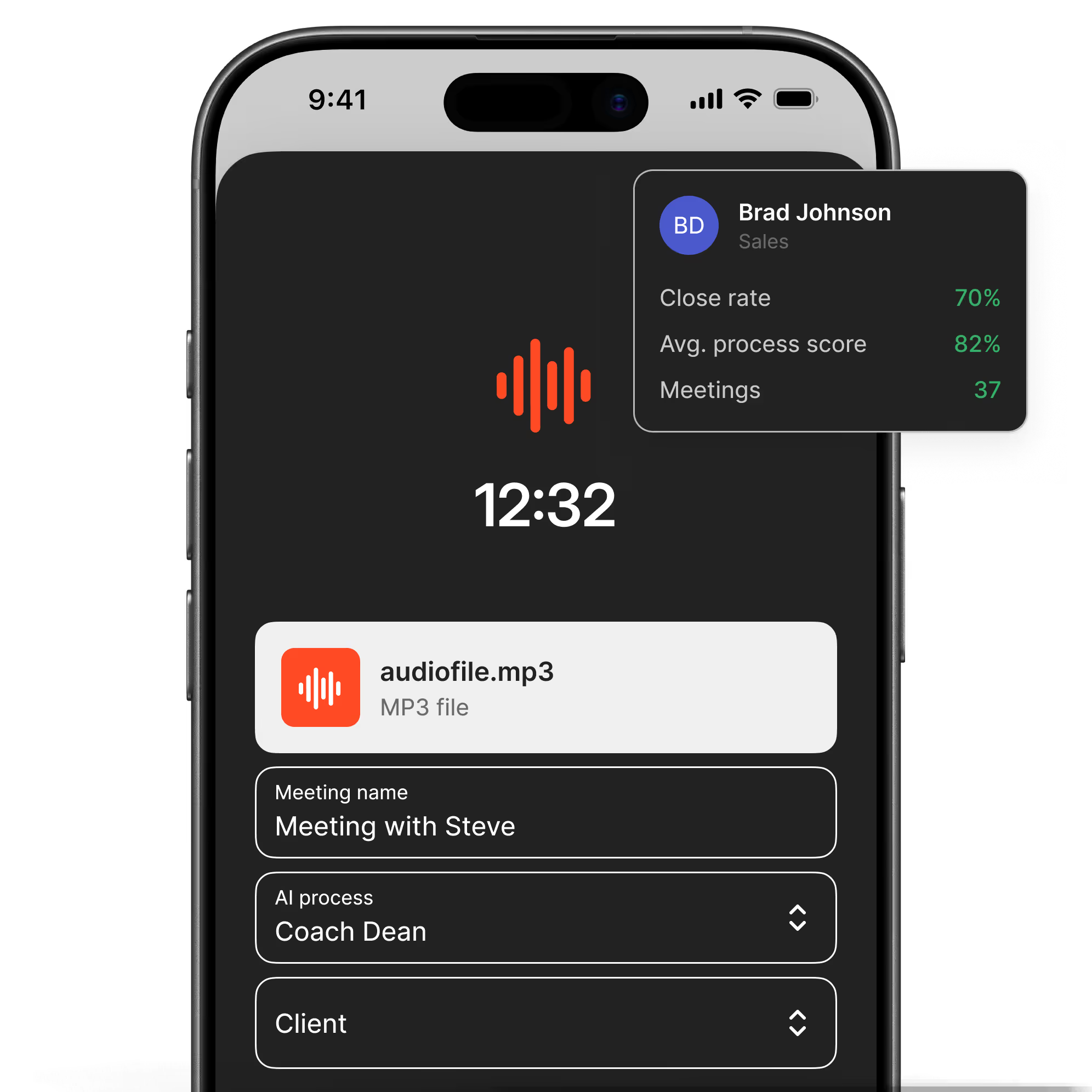
SalesAsk’s AI Roleplays feature is built specifically for home services sales. You pick a trade (HVAC, roofing, plumbing), a scenario (price objection, competitor comparison, urgency pushback), and Dean (SalesAsk’s AI) plays the homeowner.
The roleplays are voice-based, so your reps are practicing the actual skill they’ll use in the field: talking. Not typing out responses, but having a real-time conversation with an AI that pushes back, asks follow-up questions, and doesn’t make it easy.
After each roleplay, Dean breaks down what worked and what didn’t. Specific moments. Specific language. Not generic feedback—tactical coaching.
[IMAGE: SalesAsk AI Roleplays interface showing scenario selection and feedback dashboard]
Who Benefits Most from AI Roleplay
AI roleplay is most valuable for:
- New reps who need volume practice before going into the field
- Struggling reps who need to rebuild confidence without public pressure
- High performers who want to sharpen edge-case objection handling
- Seasonal teams who need to ramp up quickly (e.g., roofing storm chasers)
- Remote teams where live roleplay is logistically difficult
If your reps are already confident and crushing quota, AI roleplay is a maintenance tool. But if you’ve got green reps, inconsistent performance, or a team that avoids practice because traditional roleplay is awkward—AI roleplay is a game-changer.
Implementation: How to Roll Out AI Roleplay
Don’t just buy a tool and expect your team to use it. AI roleplay works best with structure:
- Mandate baseline practice: Every new rep completes 10 roleplays before their first solo call.
- Weekly skill challenges: Pick one objection per week (e.g., “I need to think about it”) and have everyone practice it.
- Track completion: If you don’t measure usage, it won’t happen. Build roleplay into your onboarding and ongoing training cadence.
- Celebrate improvement: Share anonymized before-and-after clips (with permission) to show what growth looks like.
The goal isn’t perfection—it’s reps. Reps who practice regularly, even just 10 minutes a week, see measurable improvement in close rates.
The Cost of Not Practicing
Here’s the uncomfortable truth: most sales reps never practice outside of real calls. They’re learning on your dime, in front of real customers, with real revenue on the line.
Every fumbled objection is a lost deal. Every awkward pause is a homeowner thinking “maybe I should get another quote.” Every weak close attempt is money left on the table.
AI roleplay lets your team make those mistakes in practice, not in production.
The Future of Sales Training
Five years ago, AI roleplay didn’t exist. Today, it’s table stakes for any sales org serious about skill development.
The trajectory is clear: AI will get better at simulating difficult customers, surfacing coaching insights, and personalizing practice to each rep’s weak points. The teams that adopt it now will have a compounding advantage over teams still running awkward conference room roleplays once a month.
Sales is a performance skill. Performers practice. AI roleplay finally makes practice scalable, accessible, and—most importantly—effective.
Your team is going to practice somewhere. Make sure it’s not in front of your customers.
Related Topics: AI sales roleplay software, sales practice tools, virtual roleplay training, AI sales coaching, sales objection handling practice, home services sales training, AI-powered sales training
Similar Blogs



Sell More with
AI & Coach your
sales team.
Get Results in 21 Days. See it in action now!

Join 15,000+ reps


The #1 Ai Sales Growth System for Home Builders, Home service and Home remodeling companies.
Mon-Fri 9-6pm