
Craft has a painting industry page. The headline promises “AI sales coaching for painting companies: record every in-home estimate, coach your estimators in real time, and increase revenue per visit by 20%+.”
The proof behind that claim: Wilson Heating, Cooling, Plumbing & Electrical.
Wilson is a real company. The 31.4% revenue increase per opportunity that VP of Sales Paul Gryniuk documented is a real number. Nobody is disputing that. But Wilson is, as the name says, a heating and cooling company. They paint nothing. They install HVAC systems, fix plumbing, wire electrical panels. When Craft uses Wilson’s result to anchor their painting page, their plumbing page, their windows page, and their garage door page simultaneously, the honest question is: what does a number from an Ohio HVAC company actually tell a residential painting contractor?
Not much, it turns out. And in a trade where the sales cycle breaks every rule that HVAC coaching software was built around, that gap matters.
How Painting Sales Actually Work
Most home services sales coaching was designed for trades with a decisive in-home moment. HVAC tech finds a failing compressor, presents two options, and the homeowner says yes or no before the van leaves the driveway. Roofing rep walks the damage, shows photos, closes at the kitchen table. Solar consultant runs a four-hour presentation that ends with a signed contract or a dead lead.
Painting doesn’t work like that.
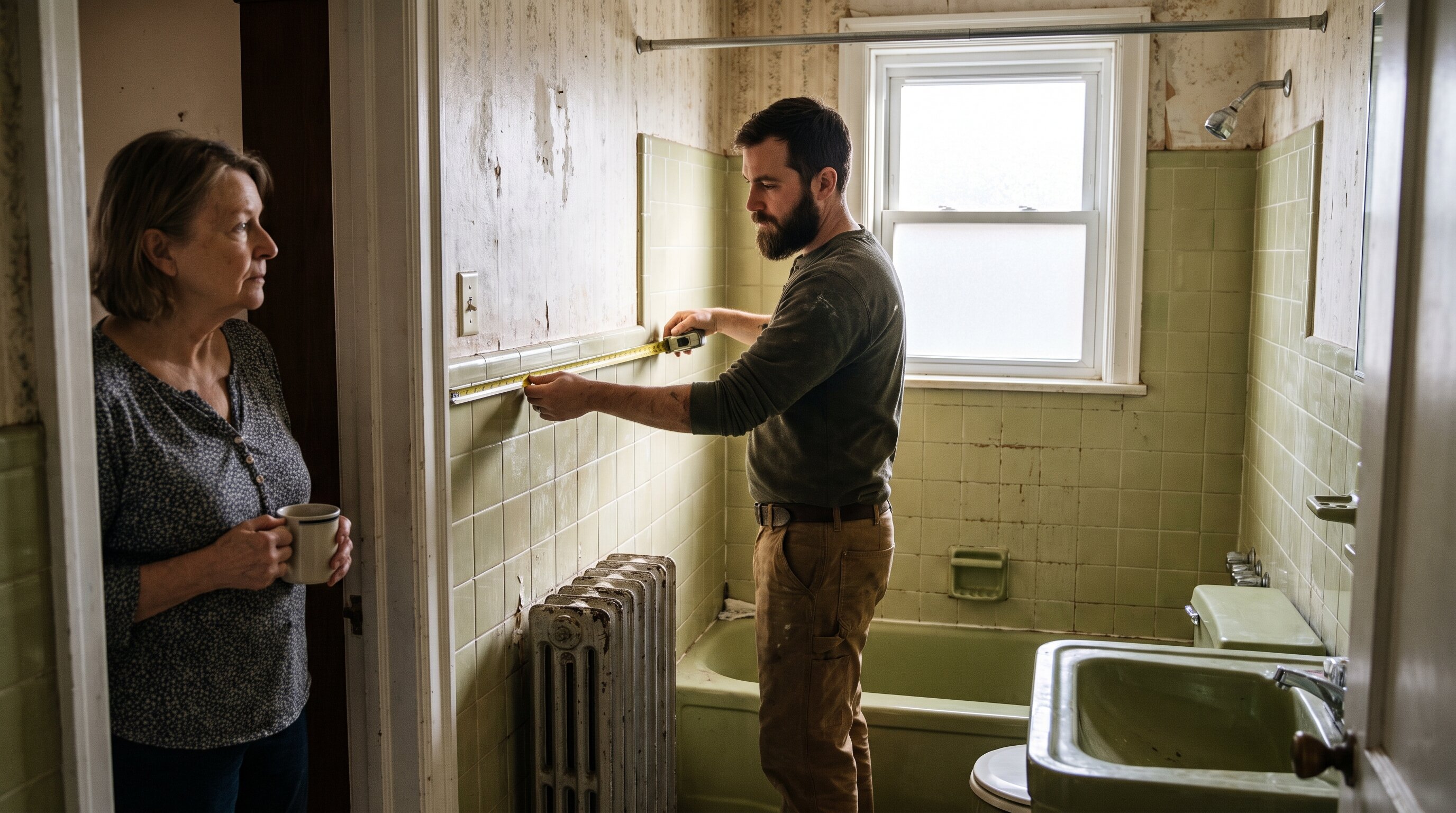
The residential painting estimate takes 45 to 90 minutes. The estimator walks the property, discusses scope, measures surfaces, and explains what prep work means and why it costs money. Then they leave. The homeowner has three more estimates scheduled. The decision comes four days later, after comparing proposals that look nothing alike: because every painting company quotes differently, includes different line items, and prices prep work inconsistently.
The estimator who wins is rarely the one who gave the best presentation. It’s usually the one who called back first, followed up with a clear written proposal, and answered the “what’s included in your prep?” question with the most confidence on the phone.
That’s the painting sales cycle. It’s multi-touch, multi-day, and the appointment itself is only one chapter.
What Craft Does: and Where It Stops
Craft’s product records in-home sales conversations, provides real-time prompts to the rep through a mobile interface, and delivers post-call coaching reports for managers. The real-time coaching piece is genuinely useful: when an estimator rushes through the scope conversation or buries their pricing too quickly, a well-timed prompt can redirect the visit.
But Craft’s coaching architecture treats the appointment as the unit of analysis. Record the visit, analyze it, improve the next one. The 20% revenue per visit improvement they advertise assumes the visit is where the conversion happens.
For painting contractors, that’s only half the story.
The appointment plants the seed. The follow-up harvests it. An estimator who has a great in-home conversation but sends a confusing proposal and waits a week to call back will lose to a less polished competitor who followed up in 24 hours. Craft doesn’t coach the follow-up call. It doesn’t flag when an estimator hasn’t touched a prospect in three days. It doesn’t connect the coaching event at the estimate to the outcome when the job books or doesn’t book.
The numbers behind that sit in SalesAsk compared with Craft, feature by feature.
That’s not a criticism of Craft’s core technology. Real-time prompting during estimates is valuable. It’s a description of the gap between what Craft was built to do and what painting contractors actually need.
The Metric Problem
Craft’s painting page promises 20% higher revenue per visit by Day 30.
Revenue per visit is a reasonable metric for trades where most revenue is captured in one appointment. For painting contractors, the more important number is estimate-to-signed-contract rate, and that metric lives in your CRM, not in your call recordings.
A painting estimator who’s converting 35% of their estimates into jobs is performing well. One converting 18% has a problem that might show up in their estimate conversations, or it might show up in their follow-up cadence, their proposal format, how they handle the “you’re $1,200 higher than the other guy” call, or whether they’re even calling back at all.
Craft can show you what happened during the estimate. It can’t tell you which coaching behaviors predict a signed job five days later. That connection, from coaching event to revenue outcome, requires integrating coaching data with your job management system and tracking the full lifecycle of each estimate.
This is covered in depth in real-time coaching as a field sales training method.
SalesAsk’s AI sales coaching platform was built around that connection. Through the ServiceTitan integration, coaching events during the estimate link directly to job records. When Coach Dean prompts an estimator to slow down and walk the scope more thoroughly, that event is traceable to whether the estimate converted. Over time, you can see which specific coaching behaviors, in which types of conversations, predict jobs.
For a painting company running 80 estimates a month with a 25% close rate, that visibility is the difference between coaching that produces higher close rates and coaching that produces better-sounding estimates that still don’t close.
Trade-Specific Intelligence
There’s another problem with using a Wilson HVAC case study as proof for painting contractors: the coaching playbooks are different.
HVAC estimators handle “the unit is failing and you need to replace it now.” Painting estimators handle “why is your exterior quote $3,000 more than the other company?” These are different conversations. The objections are different. The emotional tenor is different. Painting is often discretionary. Homeowners want it, but they don’t need it the way they need a working air conditioner in August. The sales strategy has to account for that.
SalesAsk’s Coach Dean is trained on painting-specific sales conversations. The real-time prompts during a painting estimate are calibrated to what actually moves the needle in that trade: how to present prep work as protection rather than added cost, how to anchor price before the homeowner has seen three competing quotes, how to get a concrete follow-up commitment before leaving.
That trade-specific intelligence isn’t something Craft can import from their HVAC case studies. It has to be built from painting call data, painting objections, painting close patterns.
The Follow-Up Gap
This is where the comparison gets concrete.
A painting estimator finishes a walkthrough, sends a proposal, and waits. Industry average: companies follow up within two days only about 40% of the time. The rest wait for the homeowner to call back, and the homeowner is comparing four estimates while life gets in the way.
SalesAsk flags this. When an estimate sits without a follow-up call for 48 hours, managers see it. The AI roleplays train estimators specifically on the follow-up call, the one where the homeowner says “yours was the highest” and the estimator needs to explain the prep work difference without sounding defensive.
Craft doesn’t have visibility into the gap between the estimate and the outcome. It coached the visit. Whatever happens next is outside its view.
The Decision That Actually Matters
Both platforms record field conversations. Both use AI to analyze what’s happening. The question isn’t whether Craft or SalesAsk can improve your estimators’ appointment performance, they probably can. The question is whether you’re optimizing only for better appointments, or for more signed contracts.
For painting contractors, those aren’t the same thing.
If your estimators are already doing solid in-home presentations and your close rate is still stuck at 22%, the appointment coaching might not be the lever. The follow-up cadence, the proposal clarity, the way your estimators handle the price comparison call. That’s where the jobs are being lost. Craft won’t tell you that. It’s not looking there.
SalesAsk is.
If you want to understand the full estimate-to-job lifecycle for your painting team, book a demo and show us your current close rates and follow-up data. We’ll tell you where the real gap is.
Related Topics: painting contractor sales training, AI sales coaching for painters, residential painting estimate conversion, painting estimator training, craft AI alternative for painting companies, SalesAsk painting contractors, how to improve painting close rates

Related articles

Ready to convert
every conversation?
See exactly what’s holding your team back and fix it fast.
.avif)