The best advertisement Rilla ever had in home services didn’t come from a sales deck. It came from Tommy Mello.
Mello built A1 Garage Door Service into a $200 million operation with 300 technicians and over 100 installers, running 15,000 to 18,000 service calls a month. He’s not quiet about what it took: hiring obsessively, measuring everything, coaching technicians like athletes. A1 became the first garage door company on Rilla, and the testimonial Mello gave them is direct — “You could take your worst technician and turn them into a top player within a month.” That’s not a marketing claim. That’s a specific claim from someone who runs one of the most operationally intense home service businesses in the country.
So let’s start with what Rilla actually got right in this vertical before getting into where the model runs into the edges of what it can do.
The Repair-or-Replace Moment Is Worth Understanding
The central sales conversation in garage doors isn’t like most home services. A homeowner calls because something is broken — a torsion spring snapped in the middle of the night, a cable frayed, a panel got backed into by a car. They’re not in a consideration phase. They want it fixed today.
The technician shows up to a customer who already needs something. The question becomes what.
A standard torsion spring replacement runs $350 to $500 depending on the size and spring type. A damaged panel replacement might be $200 to $400. But if the door is old — more than 12 or 15 years, showing rust, running on the original opener — there’s a real question about whether the right answer is repair or replace. A new door with a quality opener runs $1,500 to $4,500 depending on material, insulation, and features. For a tech who knows how to frame that conversation, every service call becomes a potential replacement opportunity.
The good-better-best presentation is the core coaching priority in garage doors: here’s your repair option to get you running today, here’s a mid-range panel and opener upgrade, here’s a full replacement that would give you 15-20 more years and a Wi-Fi opener. Each option has a real case to make. The repair is cheaper upfront. The replacement eliminates the underlying problem. The upgrade solves the symptom without addressing the door’s age.
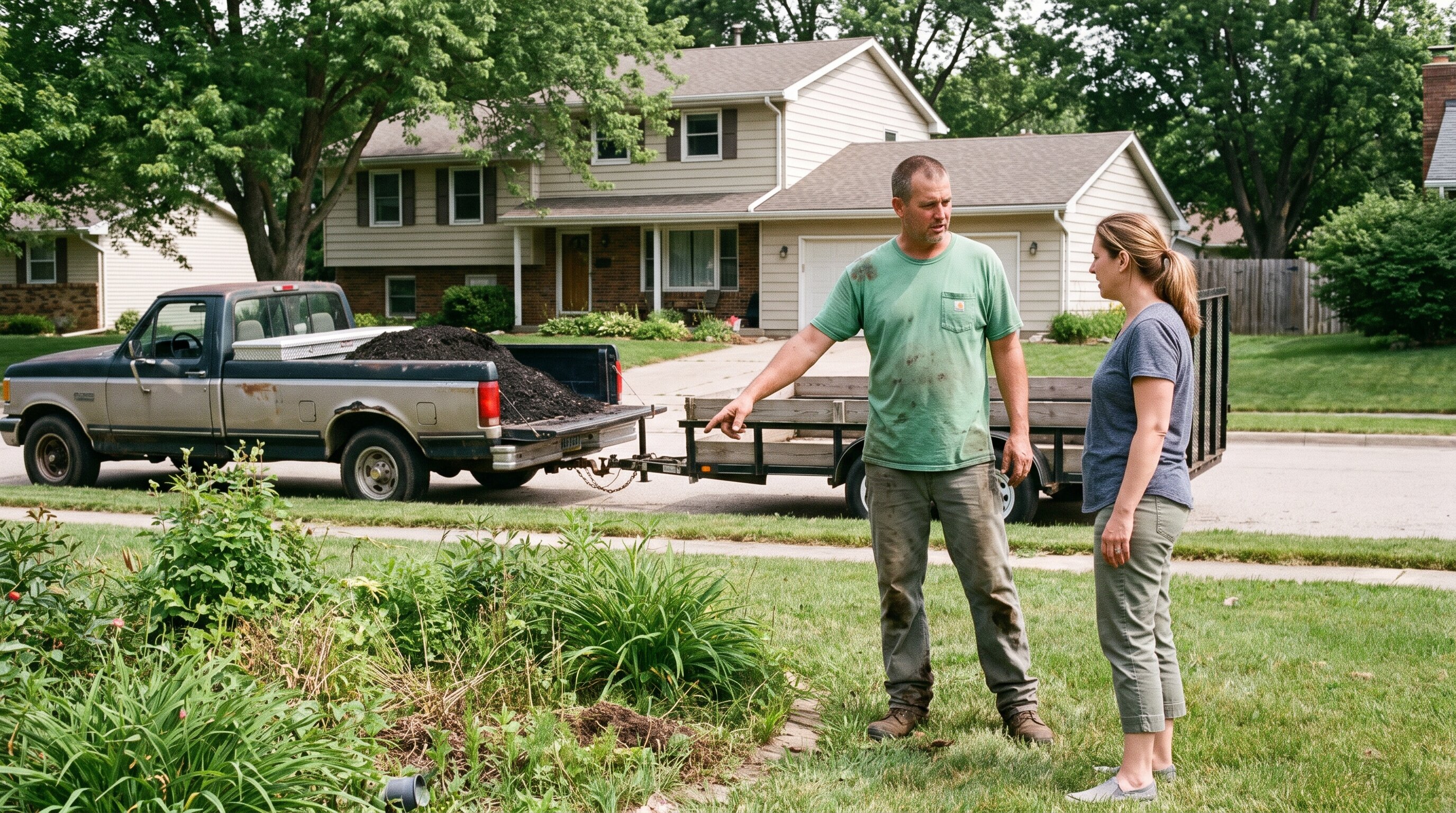
Whether the technician introduces all three options, in the right sequence, with confident pricing — that’s a coachable moment. And it happens at the house, during the appointment, while the tech has the door panels spread across the driveway. This is exactly where Rilla’s field recording model operates at its best.
What Rilla Captures Accurately
At the service appointment, Rilla does what it says it does. The recording captures the tech’s entire presentation — whether they mentioned all three options, whether they handled “that seems expensive” with confidence or folded immediately, whether they introduced the maintenance plan, whether they brought up the smart opener before the customer walked back inside.
The coaching that follows from that recording is real. A manager reviewing 30 service calls a week — instead of riding along on 3 — can spot that two of the newer technicians are consistently skipping the full door replacement option and defaulting to spring-only repairs. That pattern costs money. It’s hard to see without the data.
For a company at A1 Garage’s scale, the aggregate of those individual moments is enormous. If 300 technicians are each handling 10 calls a week, and 15% of those calls have realistic replacement opportunities that are being presented inconsistently, the revenue gap is substantial. Rilla gives managers visibility into that gap.
This is the core value proposition, and it’s honest. For garage door companies where the primary revenue problem lives in the field appointment — where technicians are rushing through options, pricing from memory instead of presenting a proposal, or failing to mention maintenance plans — field recording is the right tool.
The Call That Rilla Doesn’t Record
But the field appointment isn’t the first conversation in a garage door sale.
When someone’s spring breaks at 7am, they don’t look up the garage door company they used three years ago. They Google, they call the first result, and in the first 90 seconds they make a decision about whether to book with that company or keep calling. The CSR who answers is running a sales conversation — they just don’t always know it.
“How much will it cost to fix my garage door spring?” is the opening question in probably 40% of garage door inbound calls. The CSR’s answer determines whether the customer books an appointment or calls the next number. Does the CSR explain that the service includes a full inspection? Do they mention the diagnostic fee structure clearly and frame it as protection against surprise costs? Do they ask what the door is doing, what model it is, how old it is — and use that to set expectations that make the tech’s visit easier?
At $200M in revenue, A1 Garage handles an enormous volume of inbound calls. The CSR team isn’t a support function — it’s the first layer of sales. Coaching those conversations matters. Rilla doesn’t hear them.
Worth reading before you decide: Rilla's 2026 rate card, line by line.
This isn’t a hypothetical gap. It’s structural to how the platform was built: Rilla records field appointments. The CSR desk, the dispatch line, the customer who calls back three days after the appointment to ask if A1 can match a competitor’s price — those conversations happen outside Rilla’s recording window.
For a straight comparison, see Rilla's support response times, reported by real users.
The Follow-Up That Emerges at the Bigger Ticket
Most garage door service calls resolve in a single visit. Spring breaks, tech comes out, presents options, job gets done or doesn’t. The single-appointment model fits Rilla’s coverage well.
But not every garage door sale closes at the driveway.
A homeowner who is renovating their garage — converting a two-car attached garage, putting in new insulation, getting carriage-house doors with glass inserts and a smart LiftMaster system — is spending $6,000 to $12,000 on a project that involves a site visit, a detailed quote, and usually a few days to decide. They got the quote from your tech on Tuesday. They’re also getting a quote from someone else on Thursday. The follow-up call your rep makes on Friday is where the job gets won or lost.
How the rep handles that call — whether they add anything or just say “did you have a chance to look at the proposal?”, whether they offer to walk through financing options, whether they acknowledge the competitor’s quote without panicking on price — these are coachable moments too. They happen on the rep’s cell phone, not at the customer’s house, and Rilla never captured them.
The same logic applies to commercial door accounts. A property manager overseeing a multi-unit complex or a small industrial park might need six bays serviced. That’s not a driveway conversation. It’s a proposal cycle with a facilities director who is comparing multiple vendors. The coaching on how to run that sales process — how to present the preventative maintenance contract, how to address “we’ve always used the other company,” how to build relationships with property management firms — doesn’t happen in a field recording.
The Revenue Attribution Question That Gets Harder at Scale
Here’s what’s interesting about A1 Garage’s story: they have incredibly good data on their business. Tommy Mello is known for this — tracking technician performance by close rate, average ticket, customer rating, and revenue generated. A1 doesn’t run blind.
So the question is what Rilla adds to that data layer.
Rilla can tell you that Jeff’s playbook compliance score improved from 62% to 78% between October and December. That’s real. But the next question — “did Jeff’s improvement in presenting good-better-best options result in an increase in his average ticket or replacement rate?” — requires connecting the coaching metric to the revenue metric. That requires the coaching platform to integrate with the system that holds the revenue data.
Rilla doesn’t integrate with ServiceTitan at the revenue attribution level. It captures field conversations. The connection between what Jeff said at the driveway and what showed up in the books three weeks later has to be made manually, by a manager who pulls both data sets and runs a comparison.
SalesAsk’s AI coaching platform integrates natively with ServiceTitan, tracking the path from coaching activity to booked jobs to closed revenue. That doesn’t mean Rilla’s coaching isn’t valuable — it means the ROI measurement looks different. If you’re a garage door company that wants to know “which coaching interventions actually changed revenue outcomes,” the platform architecture matters.
Ottawa General Contractors, a home improvement company in a similar multi-conversation sales model, documented $1.7M in incremental revenue and a 30% improvement in close rate after deploying SalesAsk. The mechanism was revenue attribution — connecting what coaching changed at the call level to what changed at the revenue line, not just what changed on a compliance scorecard.
Where Rilla Makes Real Sense in This Vertical
For a garage door operation where 90% of revenue comes from single-visit service calls — spring replacements, opener repairs, cable work, panel swaps — Rilla is well-suited. The field appointment is where almost everything happens, the CSR volume is manageable, and there isn’t much of a follow-up cycle.
Rilla is also genuinely useful for companies in rapid technician growth phases. If you’re onboarding 20 new techs this year and your managers can’t physically ride along with everyone, field recording creates coaching visibility that wouldn’t otherwise exist. That’s the A1 Garage story in miniature — scale the team, maintain standards, use recording to fill the ride-along gap.
For companies where the CSR team is a real revenue layer, where commercial accounts have a proposal cycle, where larger residential projects involve follow-up over several days, or where the question “did coaching improve our numbers?” needs to be answered at the revenue level rather than the compliance level — the fit is less clean.
A Question Worth Asking Before You Sign
Before evaluating any sales coaching platform for a garage door operation, it’s worth mapping where deals are actually dying.
If you pull 90 days of lost opportunities — calls that came in, got scheduled, and didn’t close — how many of them died at the driveway? How many died because a CSR quoted the spring repair price wrong on the inbound call and set an expectation the tech couldn’t meet? How many died because the tech presented the replacement option awkwardly and the customer said “let me think about it,” and nobody followed up? How many were commercial bids that went to a competitor because the proposal was generic?
That breakdown tells you which tool to buy. Mostly field-appointment losses — Rilla is a reasonable choice. CSR conversion issues, follow-up cycle losses, commercial proposal failures, and a need to connect coaching to revenue — that points somewhere different.
SalesAsk covers the full lifecycle of garage door sales — from the CSR’s inbound call through the technician’s field appointment through the follow-up if one exists — and connects coaching signals to revenue outcomes through ServiceTitan integration. For operations that need visibility across the whole chain, not just the driveway portion of it, that coverage is what changes the number.
See how SalesAsk coaches garage door teams through every stage — from the CSR call through the field visit through the follow-up. Book a demo or compare SalesAsk vs Rilla directly.

Related articles

Ready to convert
every conversation?
See exactly what’s holding your team back and fix it fast.
.avif)