Siro published a guide called "Best Field Sales Software for Home Improvement Teams" about three weeks ago. It's a useful read — structured coverage of CRMs (AccuLynx, Builder Prime, LeadPerfection), canvassing apps (SalesRabbit, Spotio), and AI coaching as "the newer category." Siro positions itself in that third bucket: the AI coaching layer that sits on top of your existing tech stack.
But here's what the guide doesn't have: a dedicated home improvement industry page on Siro's website. A home improvement-specific case study. A named contractor in the kitchen and bath or siding and windows space with a published close rate outcome. The blog exists; the product page doesn't.
That gap is worth understanding before you evaluate Siro for a home improvement business. The technology has real capabilities. The home improvement fit has real constraints.
What Siro Does Well (And Why It Matters for Some Home Improvement Businesses)
Siro's core product is post-appointment AI coaching. Reps record their in-home presentations using a phone app, the AI analyzes the conversation, and coaching feedback surfaces automatically — without a manager having to listen to every recording. The system identifies which skills need work, surfaces the specific moments to review, and can score against your defined playbook.
Their Halftime feature adds a real-time layer: when a rep steps outside during the appointment to finalize pricing or check financing options, Halftime surfaces live coaching prompts. For a home improvement consultant running a structured sit-down presentation — kitchen designer showing 3D renders, flooring specialist walking through sample options — that mid-appointment pause is a natural inflection point where live coaching has real value.
The post-call analysis is also genuinely useful for teams that want self-directed coaching. Siro's model assumes reps will review their own calls, see the AI feedback, and adjust. For businesses with strong internal coaching cultures and self-motivated reps, that feedback loop works.
The Problem With "Post-Call" When the Sale Happens After the Call
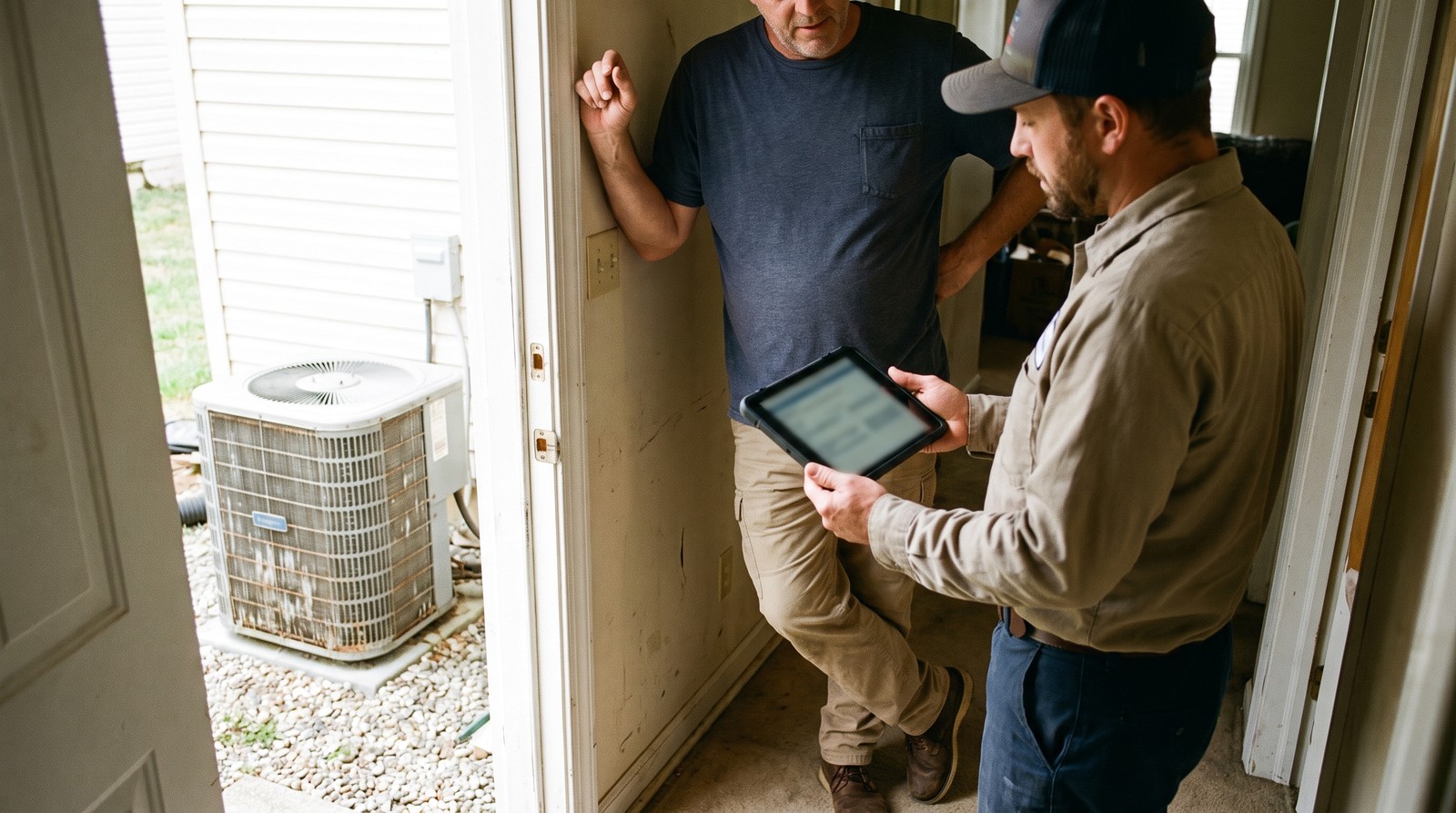
Home improvement deals at higher ticket sizes — $15K bathroom remodel, $22K kitchen renovation, $35K siding and windows package — rarely close same-day. Homeowners get multiple estimates. They discuss it with a spouse. They sit with the price. Then, 48 to 96 hours later, someone from your company calls them back.
That follow-up call is where most high-ticket home improvement deals are actually decided. Not at the kitchen table during the presentation, but on the phone three days later when the homeowner has had time to think, talked to your competitor, and is either ready to say yes or ready to say they're going with someone else.
Siro's Halftime feature is designed for the appointment itself. It activates at the midpoint of an in-home presentation. The follow-up call — different room, different context, often a different rep — happens entirely outside Siro's coaching model. Siro can identify that a follow-up opportunity exists. It cannot coach the follow-up conversation in real time.
Worth reading before you decide: five Siro alternatives worth a look in 2026.
This isn't a critique of the technology. It's a structural observation about what the technology was designed to do. Siro was built around the in-home field sales moment. Home improvement's highest-value coaching opportunity is often not in that moment — it's in the call that comes after.
CSR Coaching and the Appointment That Never Gets Made
Home improvement companies with active marketing operations — TV, direct mail, digital lead gen — run significant inbound call volume. A homeowner who sees your ad calls to ask about pricing. A CSR picks up. What happens in the next 8 minutes determines whether that lead becomes a booked consultation or a missed opportunity.
Siro doesn't coach CSR calls. The platform is designed for field reps running in-home presentations. Your call center operation — where appointment setting happens, where urgency is created, where homeowners either commit to a slot or drop off — gets no Siro coaching coverage.
For a home improvement business generating 100 inbound calls a month, even a 10% improvement in CSR booking rate translates to 10 additional consultations. At a 30% close rate and $12,000 average ticket, that's $36,000 in additional pipeline per month from coaching a conversation Siro never touches.
The Case Study Problem
Siro's published case studies include Hello Garage (garage renovation, not traditional home improvement), American Standard, Jacuzzi, and Rose Roofing. None of them are a kitchen remodeler, a flooring contractor, a siding and windows company, or a basement waterproofer.
The full picture is in coaching remodeling estimators on every in-person consultation.
This isn't inherently disqualifying — every platform starts somewhere. But when you're evaluating a coaching tool for a $3M home improvement business and the vendor can't show you results from a comparable company, you're making a bet on technology rather than evidence.
SalesAsk's Ottawa General Contractors case study — $1.7M in incremental revenue in six months, 30% close rate improvement — comes from a home improvement company using ServiceTitan. The coaching model is documented, the revenue attribution is specific, and the business profile matches the home improvement segment more closely than any currently published Siro case study.
Revenue Attribution: The Question After "Did It Work?"
Siro measures skill improvement. Their Hello Garage case study showed a 17% improvement in identified weak skills after 30 days. That's a coaching effectiveness metric — useful for understanding if reps are absorbing the coaching, not useful for answering the question ownership asks: "What revenue did this produce?"
SalesAsk connects coaching events to ServiceTitan job records. When a rep's approach to price anchoring improves over 90 days, SalesAsk maps that change to the job IDs where close rates shifted and the revenue those jobs represented. The attribution chain runs from coaching behavior to booked revenue.
For a home improvement owner reviewing quarterly results, "our reps' weak skills improved 17%" and "coaching produced $340,000 in additional closed revenue over 90 days" are very different conversations. One justifies continuing the subscription. The other justifies expanding the seat count.
Where Siro Is Worth Evaluating
If your home improvement business is structured around a small, disciplined sales team that runs standardized in-home presentations, if your reps are self-motivated enough to review their own call recordings and act on AI feedback, and if your primary coaching gap is in the in-home presentation itself — Siro has genuine merit. The post-call analysis is accurate, the coaching feedback is specific, and the manager review workflow is lighter than platforms that require active intervention.
The fit gets more complicated when your business depends heavily on CSR call center performance, when high-ticket deals close via follow-up rather than same-day, and when ownership needs to see coaching impact in revenue numbers rather than skill scores.
The Full-Cycle Question
A home improvement company running 200 inbound calls, 80 booked consultations, 60 in-home presentations, and 18 closed deals per month has coaching opportunities at every stage. CSR: 200 calls. Field: 60 presentations. Follow-up: the 42 consultations that didn't close same-day.
Siro coaches the 60. SalesAsk coaches all three stages and connects the coaching outcomes to ServiceTitan revenue records.
If you're running a home improvement business and want to understand what full-cycle coaching looks like in practice, the SalesAsk demo walks through the CSR-to-field-to-follow-up coaching model with your specific revenue numbers. The AI sales coaching product page covers the architecture. The home services industry page covers how it maps to home improvement contractors specifically. For a direct competitive comparison, SalesAsk vs Siro breaks down the feature set side by side.

Related articles


Ready to convert
every conversation?
See exactly what’s holding your team back and fix it fast.
.avif)