The honest answer is longer than anyone wants to admit.
Most owners quote ninety days when they’re selling themselves on a new hire. Three months sounds clean. A quarter. Something measurable. But ninety days is aspirational, not descriptive. It’s the number you believe in when you’re still optimistic about the new guy.
The real number, in home services, is somewhere between four and six months before a rep consistently performs at the level that actually justifies their draw. That’s not a failure — that’s the genuine cost of skill transfer in a face-to-face selling environment where trust, timing, and reading a room decide most deals.
What Does “Trained” Actually Mean?
This is where the conversation usually breaks down. Managers say “trained” and mean wildly different things depending on what’s been keeping them up at night.
Early on, trained means the rep knows the pitch. They can walk a homeowner through the process without going blank. They’re not calling you mid-presentation asking what to do about the financing question.
Four weeks in, trained becomes: they can handle objections without folding. They don’t drop the price just to avoid awkwardness. They know when to slow down and when to stay in the conversation.
By month three, trained means they’re doing this without babysitting. Close rates are somewhere near 30%, maybe creeping higher. You’re not riding along every week.
Each of those definitions is legitimate. They’re also completely different milestones. And here’s the part almost nobody says out loud: most reps get stuck between definition one and definition two, and managers don’t notice because the rep looks confident. They’ve got the words down. What they haven’t built is judgment.
Judgment — knowing when to stay quiet, when to address the unspoken objection, when the homeowner is sold but their spouse isn’t — that takes time. Or it takes feedback. Real feedback, not a parking lot debrief before you both drive off to the next appointment.
The Typical Six-Month Ramp
In home services, the training arc tends to follow a predictable shape.
Weeks 1–3 are orientation chaos. The rep learns your offerings, pricing structure, and the basic pitch flow. They’re overwhelmed. They smile and take notes and forget 60% of it by the weekend. This phase is less about training and more about not scaring them off.
Weeks 4–8 are shadow-and-stumble territory. They’re in homes, mostly watching or playing a supporting role on ride-alongs. Some of this is valuable. A lot of it is the manager doing the close while the rep watches, which teaches observation skills but not execution. The rep learns what a good close looks like. They don’t learn how to do it themselves yet.
Months 2–3 are solo attempts. Here’s where you find out who they actually are. Some reps surprise you. More often you see the gaps: they rush through discovery, they crumble on price objections, they get flustered by the “we need to think about it” and either push awkwardly or give up entirely. They don’t have the pattern recognition yet.
Months 4–6 are where real correction can happen — if anyone has bandwidth for it. This is when close rates either improve or flatline, depending almost entirely on whether the rep is getting consistent, specific feedback on what went wrong in each conversation.
Month 6 and beyond: reps who’ve made it here with genuine coaching typically land around 25–35% close rates. Reps who made it without real coaching are all over the map, and some of them have quietly stopped trying to improve.
The Problem Isn’t the Reps
Here’s a pattern that shows up constantly: the manager who genuinely wants to coach can’t. Not because they don’t care — because they’re also selling, managing installs, handling escalations, and onboarding the next hire while trying to develop the current one.
The feedback loop gets long. A rep does ten calls in a week. The manager might review one if they’re lucky — usually the one they happened to ride along on. That leaves nine calls with no learning attached to them. Nine opportunities for the rep to reinforce bad habits without ever knowing it.
This is the hidden cost of traditional ramp. It’s not that training doesn’t happen. It’s that training happens on a delay, and salespeople who don’t get feedback in near-real time tend to conclude that what they’re doing is working. They measure activity, not outcomes. They feel busy. The problem calcifies.
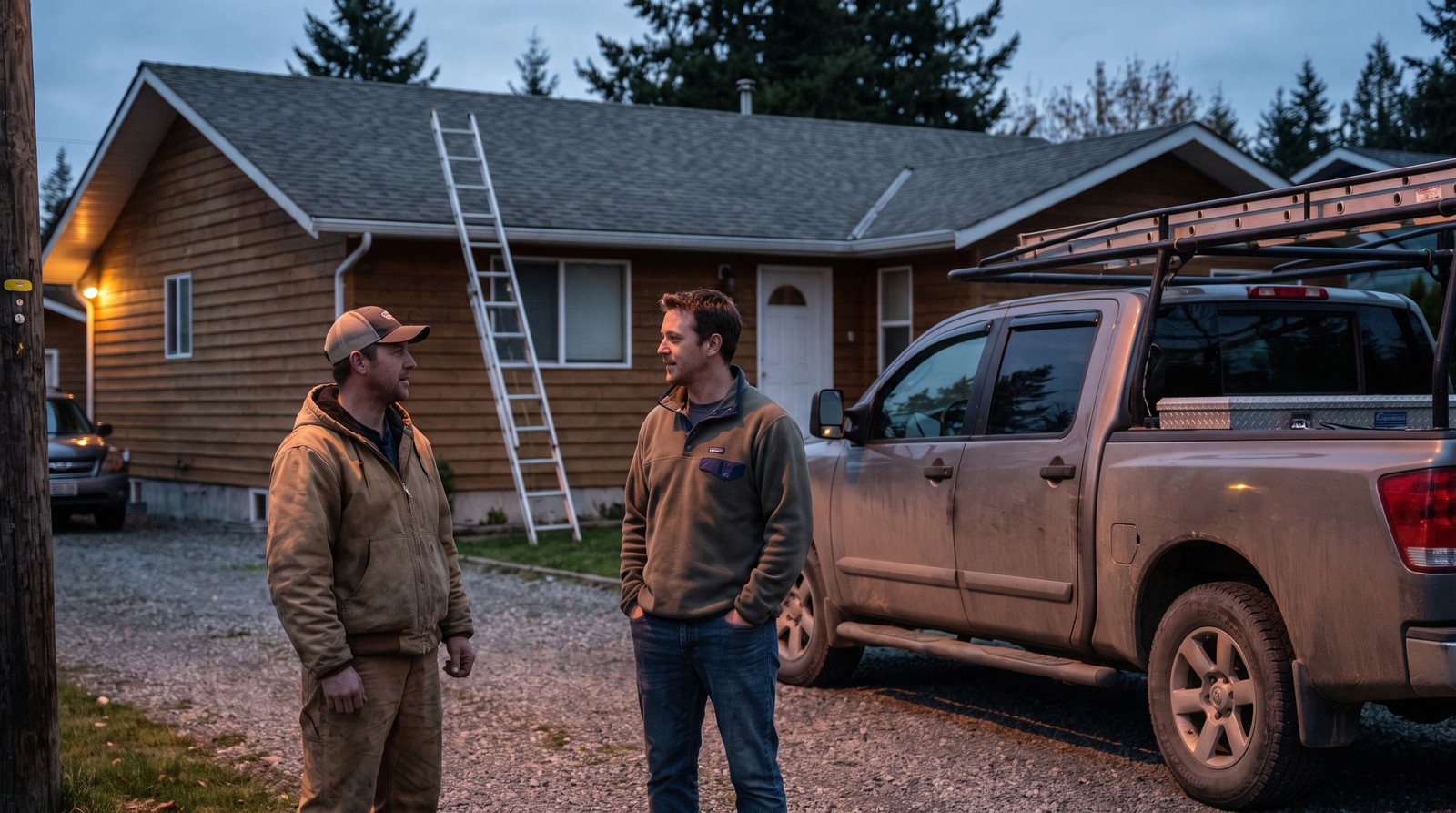
The reps who ramp fastest are almost always the ones whose manager had time to be genuinely invested in their development — someone who debriefed after calls, asked hard questions about what the homeowner actually said, pointed out the moment the rep telegraphed uncertainty by lowering the price before the customer even asked.
That kind of coaching is rare. Not because managers don’t care. Because there aren’t enough hours.
How AI Coaching Changes the Math
AI sales coaching for home services doesn’t replace a manager’s judgment. What it does is compress the feedback loop from days — sometimes weeks — down to minutes.
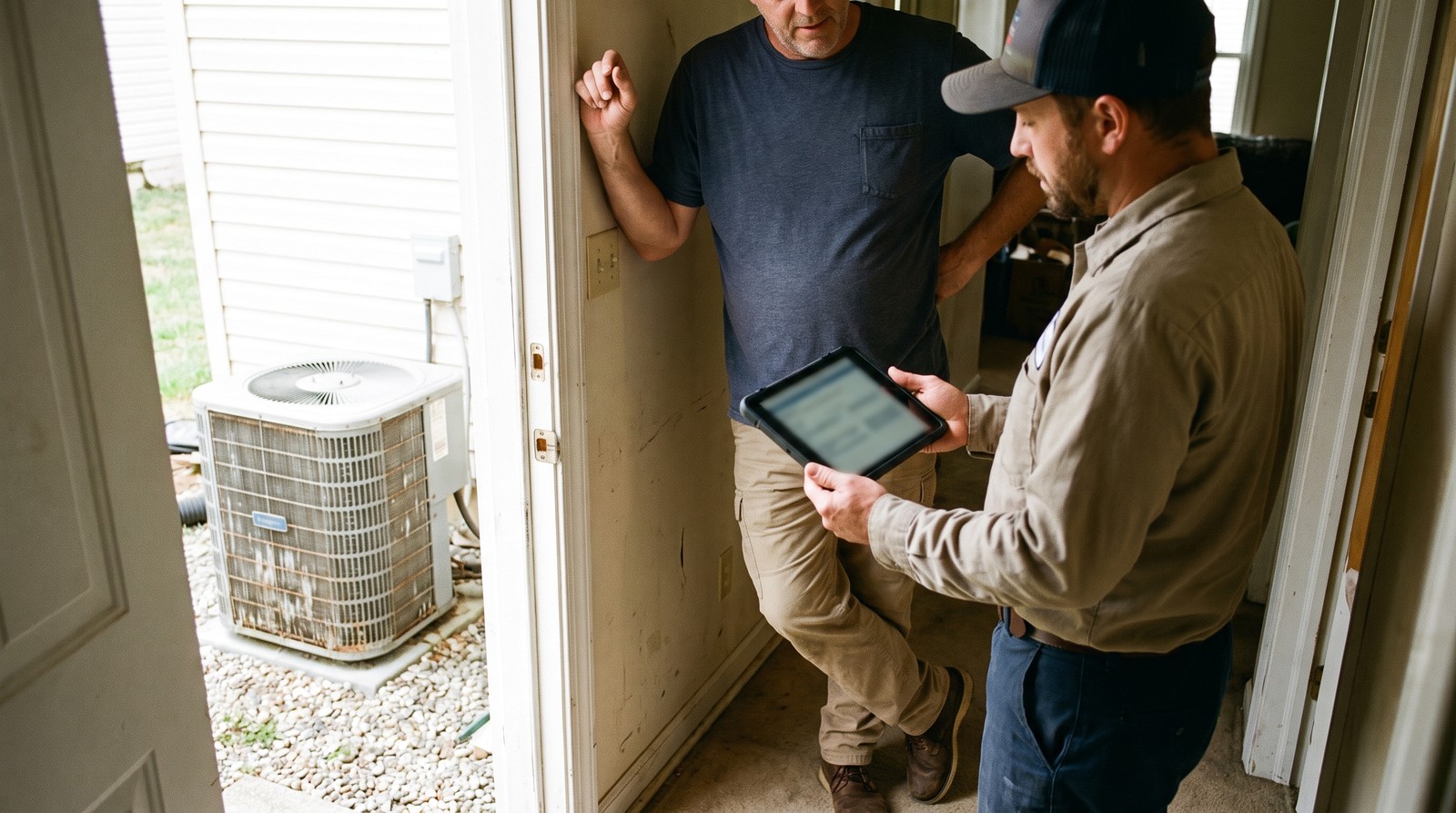
Every call gets reviewed. Not a sample. Every call. The rep finishes an appointment, and within minutes there’s a breakdown of what happened: where they built rapport, where the conversation shifted, whether they handled the objection or got rolled by it. Patterns that would take a manager six weeks of ride-alongs to notice show up in the data by week two.
At companies using AI coaching, new reps regularly hit independent performance levels in 45–60 days instead of five or six months. That’s not a marketing claim — it’s the outcome when feedback loops close and reps can actually learn from the full volume of calls they’re already running, not just the ones a manager happened to witness.
Cache’s Heating & Air is a good example. New hires were historically babysat for months before managers felt comfortable cutting them loose. After bringing in AI coaching through SalesAsk, new reps were operating independently in weeks — not because the learning curve disappeared, but because every single call became a learning opportunity instead of one in ten.
That’s the lever. Not smarter hires. Not better ride-alongs. Feedback that scales.
The Business Math Nobody Wants to Do
If traditional ramp costs you five or six months of below-average performance plus a significant portion of a manager’s time, the real cost of a slow hire is brutal. For a rep drawing $60,000 base, closing at half the rate of a ramped rep for five months, you’re looking at meaningful revenue left on the table — and that’s before accounting for the manager hours spent on coaching that statistically doesn’t happen anyway.
Compress that to 45 days and the calculation changes entirely. You find out faster if someone’s going to work. You stop carrying underperformers for months because nobody had time to identify the specific habit killing their close rate. And your managers stop burning out trying to be everywhere at once.
For companies in HVAC sales, home remodeling, roofing, or any trade where close rates vary wildly between reps, this compression matters more than almost anything else in the growth equation. You can’t scale a sales team if every new hire takes six months to develop, and you can’t afford for that development to fall entirely on managers who are also expected to hit their own numbers.
The Honest Answer
So: how long does it take?
With traditional methods and a manager who somehow has the bandwidth to coach weekly: four to six months before you have a rep you can count on.
With structured AI coaching, consistent call review, and feedback that closes quickly: six to ten weeks.
The difference isn’t really about the tool. It’s about whether your reps are learning from every call or just the ones a manager happened to ride along on. Scale feedback, and you scale development. Scale development, and the whole hiring math stops being so painful.
If you want to see what this looks like in practice — what the call data actually shows and what a rep sees day to day — book a demo and we’ll walk through it with your team’s numbers.
Related Topics: home services sales rep training timeline, how long to onboard a sales rep, sales rep ramp time home services, AI sales coaching new hire, sales onboarding for contractors, close rate improvement home services, sales manager coaching bandwidth

Related articles

Ready to convert
every conversation?
See exactly what’s holding your team back and fix it fast.
.avif)