How do you coach a sales team you cannot ride along with?
You review the conversation after it happened instead of sitting in it while it happens.
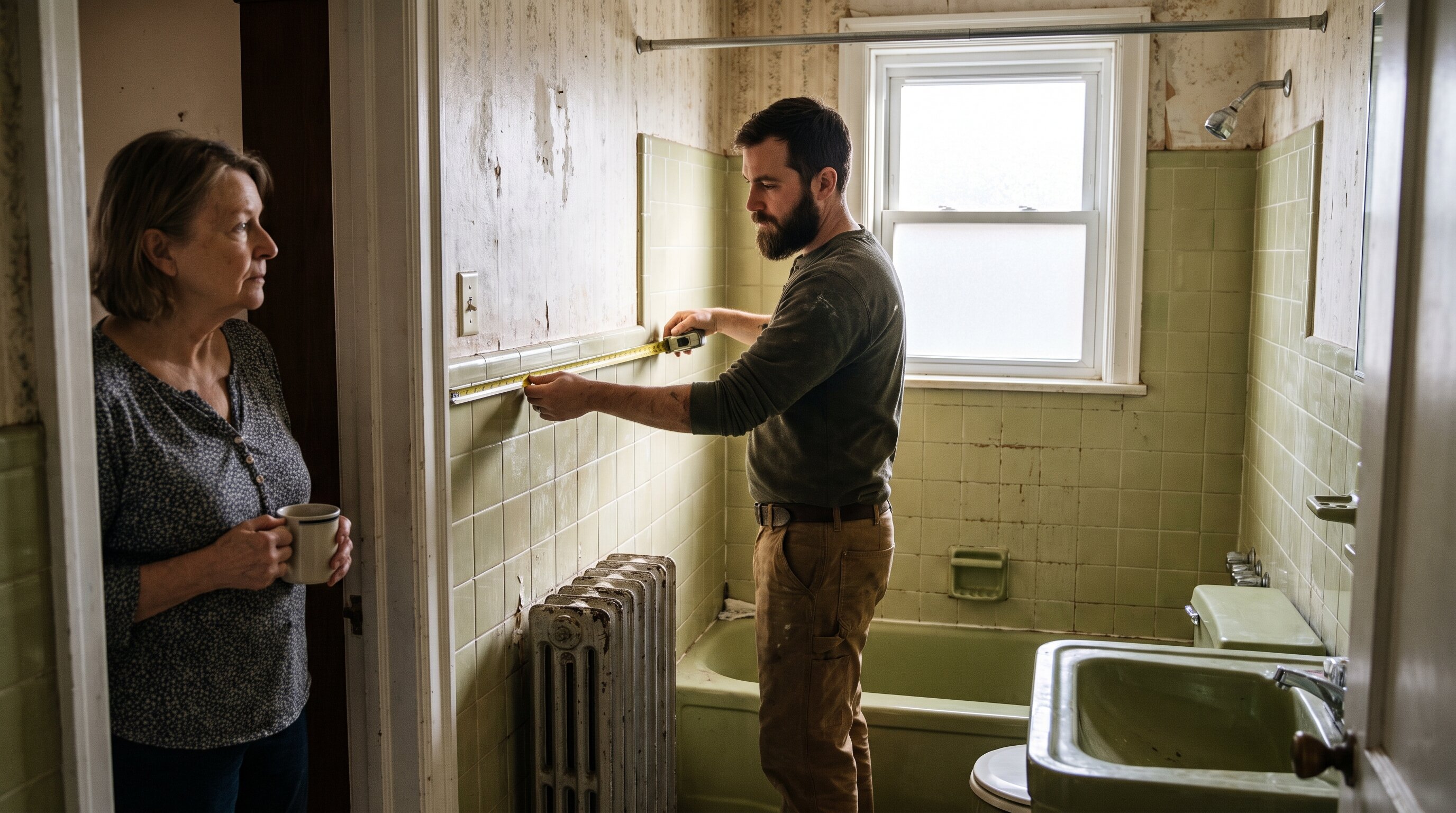
For a home services or home improvement company this is usually not about remote work at all. The reps are local. The problem is that one sales manager cannot be in four appointments happening at four in the afternoon in four different neighbourhoods, so three of them go uncoached and the manager coaches from whatever the rep remembers on the drive home.
A recorded conversation removes the choosing. The manager reviews all four the next morning, and the rep hears the part they got wrong rather than being told about it.
Remote selling changed everything. The sales teams that adapted fastest weren't the ones who simply moved meetings to Zoom, they were the ones who rebuilt their entire coaching infrastructure around virtual-first operations.
I've worked with residential contractors, home services companies, and B2B teams navigating this shift. The common thread? Traditional in-person coaching falls apart when your team is distributed. You can't ride along to appointments, you can't pull someone aside after a call for quick feedback, and you lose the organic coaching moments that happen naturally when teams work in the same office.
If you run a home services sales team and want every appointment coached, not only the ones a manager can sit in on, book a SalesAsk demo.
Virtual sales training solves part of the problem, it teaches your team how to sell remotely. But AI-powered coaching solves the bigger challenge: How do you maintain coaching consistency, provide real-time feedback, and develop skills when your team is spread across different cities, time zones, and schedules?
Why Traditional Virtual Training Isn't Enough
Most virtual sales training programs focus on tools and techniques: how to run effective video calls, how to share screens professionally, how to read body language through a camera. That's useful, but it's surface-level.
The real challenge with remote teams is coaching frequency. In a traditional office environment, a sales manager can listen in on calls, observe team dynamics, and provide immediate feedback. When your team is remote, those organic coaching opportunities disappear. You're left scheduling formal check-ins, which means feedback comes too late to be actionable.
Here's what typically happens: A remote sales rep struggles through a challenging objection on a Tuesday morning. They wing it, handle it poorly, and the prospect goes cold. Their manager doesn't find out until Friday's team meeting, by which point the deal is lost and the rep has already repeated the same mistake three more times.
Traditional virtual training operates on a scheduled basis, weekly team calls, monthly training sessions, quarterly reviews. But sales happen daily. The gap between training events and real sales situations is where performance breaks down.
The Unique Challenges of Coaching Remote Sales Teams
Remote sales teams face coaching challenges that don't exist with in-person teams. Let's start with the most obvious: visibility. When your team works from home offices across multiple states, you have no natural line of sight into their daily activities. Are they prospecting consistently? Are they handling objections well? Are they following the sales process or cutting corners?
Scheduled ride-alongs don't work for remote teams. You can't physically accompany a rep to an appointment when they're 800 miles away. Virtual ride-alongs (listening in on calls) help, but they suffer from the same problem as in-person observation, reps perform differently when they know someone's listening. You're not seeing their real behavior; you're seeing their best behavior.
Then there's the asynchronous nature of remote work. Your team operates on different schedules. Some reps run appointments early morning, others work evenings. If you're relying on live observation for coaching, you're only catching a fraction of your team's actual performance.
Remote teams also miss out on peer learning. In an office, junior reps overhear how senior reps handle tough objections. They pick up techniques through osmosis. When everyone works from home, that organic knowledge transfer disappears. You're left with siloed skill development, which means performance gaps widen over time.
How AI Coaching Bridges the Remote Gap
AI-powered sales coaching was designed for distributed teams. It doesn't care where your reps are located, what time zone they operate in, or whether they're working from home offices or coffee shops. The AI analyzes every sales conversation, identifies coaching opportunities, and delivers feedback automatically, no manager presence required.
Here's the practical difference: A remote rep is on a video call with a prospect. The conversation stalls because the prospect says they want to "think about it." Without AI coaching, that rep is on their own, they either know how to handle that objection or they don't. With AI coaching, they get real-time guidance: "Ask what specifically they need to think about. Isolate the real concern." The rep pivots, keeps the conversation alive, and moves toward close instead of accepting a soft rejection.
That's continuous coaching across your entire remote team, simultaneously, on every call. Not just the appointments you happen to observe, all of them.
The AI doesn't need to be scheduled. It doesn't need travel time. It doesn't get tired after listening to five calls in a row. It provides the same level of coaching support to your rep in Phoenix as it does to your rep in Boston, without any additional overhead.
Measuring What Matters with Remote Teams
Traditional virtual training programs struggle with measurement. You run a training session, your team attends, and then... what? You hope they're implementing what they learned, but you have no visibility into whether it's actually happening.
AI coaching solves this through automated performance tracking. Every call is analyzed for key behaviors: Did the rep build rapport? Did they ask discovery questions? Did they present value before price? Did they handle objections confidently? You get data across your entire team, updated continuously, without manual tracking.
This changes how you manage remote teams. Instead of guessing who needs coaching, you know exactly where each rep is struggling. Instead of generic team training, you can provide targeted development for specific skills. Instead of waiting for quarterly reviews to assess performance, you see trends in real-time and intervene before problems become patterns.
The competitive advantage is significant. Companies with strong remote coaching infrastructure develop reps faster, maintain higher performance consistency, and scale more efficiently than companies still relying on periodic training events.
Building a Virtual-First Coaching Culture
The best remote sales teams don't treat AI coaching as a monitoring tool, they treat it as a development platform. Every rep gets access to their own performance data, can review their own calls, and can see exactly where they're improving and where they need focus.
This creates self-directed development. Your reps aren't waiting for a manager to tell them they need to work on objection handling, they can see it in their own metrics. They can listen to calls where they handled objections well and compare them to calls where they didn't. They can identify their own patterns and course-correct without waiting for formal feedback.
For managers of remote teams, this shifts your role from observer to strategist. Instead of spending hours listening to calls to figure out who needs coaching, you review aggregated data and focus your time on high-leverage coaching conversations. Instead of reactive management (fixing problems after they happen), you become proactive (identifying trends and intervening early).
The Onboarding Advantage for Remote Teams
New hire onboarding is particularly challenging for remote teams. In a traditional office, new reps learn by osmosis, they hear how experienced reps handle objections, they pick up on company terminology, they absorb best practices through proximity. Remote teams don't have that luxury.
AI coaching accelerates remote onboarding by providing continuous feedback from day one. A new rep isn't left guessing whether they're doing things correctly, they get real-time guidance on every call. They can review their own recorded calls and compare their approach to coaching recommendations. They ramp faster because they're getting coaching on 100% of their conversations, not just the few calls a manager happens to observe.
This is especially powerful for companies scaling remote sales teams. You can hire reps in new markets without needing local sales managers. The AI provides baseline coaching automatically, and your leadership team can focus on strategic development rather than basic skills training.
Integration with Your Existing Virtual Stack
Modern AI coaching platforms integrate with the tools your remote team already uses. If your team runs sales calls on Zoom, the AI analyzes those conversations automatically. If you use Salesforce for CRM, performance data flows directly into rep records. If you run team meetings on video, coaching insights can be shared via the same platforms you already use for collaboration.
This means minimal disruption to your existing workflow. Your reps don't need to learn new tools or change how they operate. They simply get better coaching on what they're already doing, delivered through systems they're already comfortable with.
The Future of Remote Sales Development
Virtual selling isn't a temporary shift, it's the new baseline. The sales organizations winning in this environment are the ones who've moved beyond "virtual training" as a substitute for in-person sessions and embraced "virtual coaching" as a fundamentally different approach to skill development.
AI-powered coaching is purpose-built for this reality. It provides the consistency, frequency, and scale that remote teams need to perform at high levels. It replaces the organic coaching moments that disappeared when teams went remote with structured, continuous feedback that's available to every rep, on every call, regardless of location.
Traditional virtual training has its place, use it for strategy sessions, product launches, and team building. But for day-to-day skill development, for real-time feedback, for ensuring your remote team actually implements what they learn? That's where AI coaching delivers ROI that traditional methods can't match.
The companies building best-in-class remote sales teams aren't choosing between training and coaching, they're using AI-powered coaching to extend training into every conversation their team has. That's the model that scales. That's how you build high-performing remote sales teams.
Related Topics: virtual sales training, remote sales coaching, AI sales coaching software, distributed sales teams, remote sales management, virtual sales development, work from home sales training, AI coaching for remote workers
Related Resources

Related articles


Ready to convert
every conversation?
See exactly what’s holding your team back and fix it fast.
.avif)