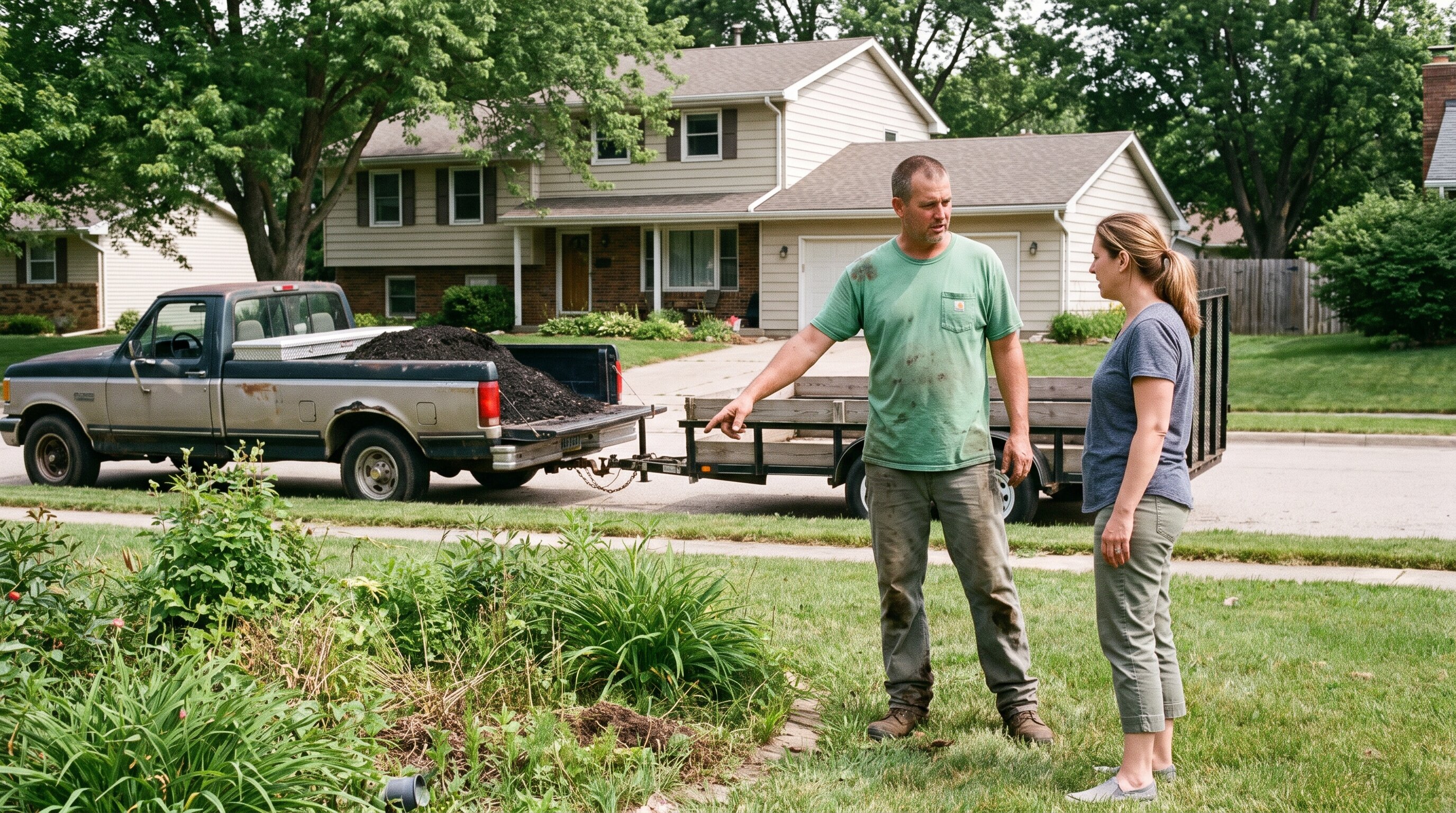
Craft’s real-time coaching capability is legitimate. When a field rep is in the middle of an in-home appointment and the AI is surfacing prompts — “the homeowner just mentioned concerns about installation disruption, consider addressing timeline before price” — that’s a genuinely different experience from platforms that review the call afterward. For some verticals, real-time coaching during the field appointment is close to the entire game.
For generator contractors, it’s a meaningful part of the game. Not the whole thing.
What Makes Generator Sales Different
The standby generator market has grown considerably in the last few years, driven by a combination of grid instability, post-COVID home investment patterns, and a hurricane and winter storm cycle that has left a lot of homeowners in the dark long enough to reconsider the “nice to have” category.
A whole-home generator sits at $10,000-$20,000, sometimes higher. The companies selling them are a mix of Generac and Kohler certified dealers, electrical contracting firms that have added generator lines, and a growing network of dedicated generator specialists. The sales environment in all of these is similar: a homeowner who came in with a specific triggering event (a storm, a neighbor’s installation, a major outage), who has done some research, who has real questions about load capacity and installation logistics and financing terms, and who needs to trust the consultant before they write a check for a fifth of their annual income.
Craft’s in-home coaching is built for this environment. The real-time prompts, the post-call analysis, the framework adherence scoring — all of that applies directly to the generator consultation appointment. A consultant who is reminded to walk through the load calculation before introducing pricing, who gets a cue when they’ve spent too long on technical specs and not enough time on homeowner outcomes, is going to perform better with Craft than without it.
The conversation worth having is about what Craft doesn’t touch.
The Inbound CSR Call
Generator companies that run a meaningful inbound operation — a phone line that gets busy when a storm hits, staffed by CSRs who book consultation appointments — have a first conversion step that happens before any field consultant arrives.
Post-storm inbound call volume is not evenly distributed. A significant category-5 event or a major ice storm that takes 800,000 homes offline for four days will flood a local generator dealer’s phone line. The CSR team that handles those calls — that books efficiently, creates urgency without being pushy, captures accurate job site information, and sets homeowner expectations about installation timelines — is doing sales work that affects close rates downstream.
Craft’s primary coaching architecture is built around field rep performance. The in-home conversation is its environment. CSR coaching for inbound volume and outbound follow-up sits differently in the product.
This matters for generators in a way it might not for a trade like roofing, where the inbound inquiry is typically less time-sensitive. In generator sales, the fear window — the period when a homeowner is emotionally motivated by a recent outage experience — closes somewhere between 48 and 96 hours after power is restored. The CSR who books that consultation appointment during the fear window is working with a fundamentally different homeowner than the one who schedules the same appointment two weeks later.
Coaching that CSR conversation is a real coaching problem. It’s not primarily about script adherence — it’s about recognizing urgency cues in the homeowner’s call, calibrating the available-appointment framing appropriately, and converting a motivated inbound caller into a scheduled consultation before they hang up and call your competitor.
This is covered in depth in how field sales training works with live coaching.
The Follow-Up Close
The other gap is on the back end of the generator sale.
Generator companies track a specific metric: their follow-up conversion rate. Of all the consultation appointments that end with “I need to think about it” or “I’m going to get another quote,” what percentage eventually close?
In most generator operations, that number is meaningful. It’s not uncommon for 30-40% of annual generator revenue to come from consultations that didn’t close at the appointment. The follow-up call — made by either the field consultant or a dedicated follow-up coordinator, timed correctly (48-72 hours after the appointment, not 10 days later), scripted around the specific objection the homeowner raised — is a sales environment with real coaching leverage.
That conversation happens on the phone, inside your office, not during a field appointment. Craft’s in-home coaching architecture doesn’t reach it the same way.
SalesAsk’s platform coaches CSRs and field reps across the complete conversation cycle — inbound inquiry calls, in-home consultations, and follow-up close calls. For generator companies where the follow-up conversion rate is a known revenue driver, coaching the follow-up call is not optional.
Revenue Attribution and the Generator CFO Question
Generator contractors spending $15,000-$25,000/year on a coaching platform will eventually ask a question their CFO is already thinking: what’s the ROI?
The answer isn’t easy to compute for most coaching platforms because the coaching system and the revenue system don’t communicate. Craft can show you rep performance metrics — framework adherence, objection handling scores, call quality trends over time. It cannot show you which coaching investments led to which closed generator deals.
SalesAsk’s integration with ServiceTitan creates that bridge for home services companies running on that platform. When a field consultant’s performance on the financing objection improves after three weeks of targeted coaching, and their close rate on $15,000+ proposals increases by 8 points, that improvement is trackable to job revenue. The coaching event connects to the booked job, which connects to the invoice.
If you are building a shortlist, read what Field Pro does and does not coach.
That calculation matters at generator ticket sizes in a way it doesn’t always matter for lower-ticket trades. If your average generator installation is $13,000 and you close two additional installations per month because of improved follow-up coaching, the ROI on the coaching investment is visible and defensible. Without revenue attribution, you’re running on faith — which may be fine until a budget conversation requires you to justify the spend.
Where Craft Wins
None of this is an argument that Craft is wrong for generator contractors. There are generator operations where the primary selling environment is the in-home consultation and where real-time field coaching is the highest-leverage coaching investment available. In those companies, Craft’s in-home performance would likely outperform SalesAsk’s field coaching component in the short run.
The cases where SalesAsk tends to win are generator companies where:
The inbound CSR operation is a meaningful revenue driver (post-storm surge volume, outbound campaigns to existing electrical customers), and coaching that team requires the same sophistication as coaching field reps.
The follow-up conversion rate is a known part of the revenue model, and someone is accountable for improving it through coaching rather than just volume.
The company wants to close the loop between coaching activity and revenue outcomes — not just improvement scores and activity metrics.
Asking the Right Evaluation Questions
When evaluating coaching platforms for a generator operation, the question to start with is not “which platform has the best real-time field coaching?” Craft’s answer to that question is good.
The question is: which conversations in your generator sales process are the highest-leverage coaching opportunities? If the answer is entirely in the in-home consultation, the evaluation narrows. If the answer includes the CSR’s inbound storm-surge calls, the follow-up conversion call, and the ability to prove ROI to your finance team, the evaluation broadens.
Generator sales in 2026 run across all three of those environments. The home services AI coaching platform that fits is the one that reaches all three.
See how SalesAsk coaches generator contractor teams across the full conversation cycle. Request a demo →
Read the full comparison: SalesAsk vs Craft →
Generator contracting is part of the home services vertical ecosystem where SalesAsk’s full-lifecycle coaching is deployed.
Related articles

Ready to convert
every conversation?
See exactly what’s holding your team back and fix it fast.
.avif)