How to Handle Can You Match That Price in Home Services Sales
The question lands like a grenade in the middle of a sales appointment. You’ve done the walkthrough, built rapport, explained your process, handed over a quote — and then the customer looks at you and says: “The other company quoted us 20% less. Can you match that price?”
Most reps panic. Some fold immediately. Others get defensive. Both responses kill the deal.
There’s a better way to handle it — and it starts with understanding what the customer is actually asking.
They’re Not Just Asking About Money
When someone says “can you match that price?”, they’re usually saying one of three things:
- I don’t fully see the difference between you and them yet.
- I feel like I should negotiate before committing.
- I’m genuinely trying to stay within a budget constraint.
Only the third one is actually about price. The first two are value problems — and you don’t solve a value problem by cutting your price.
If you match the price without addressing the underlying question, you’ve told the customer that the other company was right — that there IS no difference between you. You’ve also trained them to negotiate with every contractor they hire in the future.
The Script That Works
Here’s what to say when you hear “can you match that price?”:
“I appreciate you being upfront about that. I’m not going to be able to match their price — and I want to explain why that’s actually a good thing for you.”
Then explain the specific difference. Not vague quality claims. Specifics.
“Their quote likely doesn’t include [X]. Our quote includes [Y and Z]. Here’s what that means for you over the next 5 years…”
The goal is to make the comparison apples-to-oranges. If they’re genuinely comparing the same scope of work, that’s a different conversation. But most of the time, they’re not.
What NOT to Say
There are a few common responses that seem logical but almost always backfire:
“Our quality is better.” Every contractor says this. It means nothing without proof.
“You get what you pay for.” Preachy. The customer hears: “You’re naive if you take the cheaper option.”
“I can maybe knock off a little.” This signals that your first price was padded — and now they’re wondering how much more you’ll drop if they push harder.
“Our guys are really experienced.” Fine, but every company says this. Credentials alone don’t close.
Reframe the Risk
The most effective price objection response reframes the customer’s mental model from “I’ll save money now” to “I might pay more later.”
“I totally understand wanting to stay within a budget. What I’d ask you to think about is what happens if something goes wrong six months from now. With our warranty, we come back — no call charges, no labor fees. Do you know what their warranty terms look like?”
If they don’t know, you’ve just introduced doubt. Doubt about the cheaper option — not your price.
If they do know and the competitor has a solid warranty, acknowledge it. But pivot:
“Then it comes down to who shows up and handles it cleanly. Let me tell you about a customer who switched from a lower-priced contractor after their first callback went badly…”
Story beats argument. Every time.
When Price Is Actually the Problem
Sometimes the customer genuinely can’t afford your quote. That’s not an objection — it’s a constraint. In that case, the right move is to offer a phased option or a smaller scope, not to drop your margin.
“If budget is the main concern, we can also talk about phasing the project — starting with the critical work now and handling the secondary items in a second visit. Want me to break that out?”
This keeps the relationship alive. You’re not just saying no; you’re problem-solving with the customer, not against them.
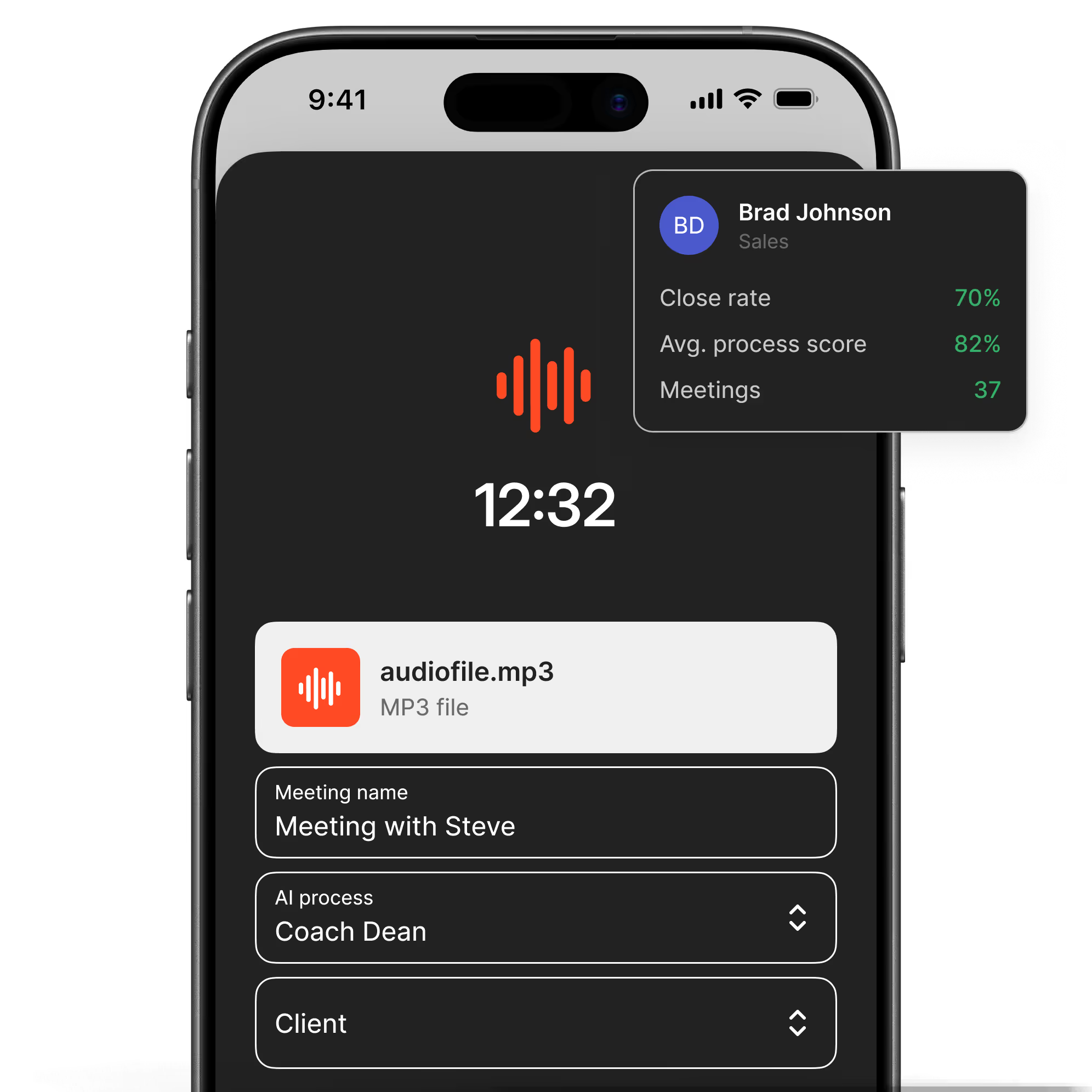
For reps who struggle with this in live appointments, practicing the response beforehand makes an enormous difference. AI sales coaching gives reps a low-stakes environment to practice price objection scenarios — full role-play simulations — so the real conversation doesn’t feel like the first time they’ve been through it.
The Underlying Skill: Value Anchoring
The best home services salespeople don’t wait for the price objection to happen. They build so much value earlier in the appointment that “can you match their price?” arrives with less force.
They do this through: - Detailed walkthroughs — showing the customer specifically what they found, not just handing over a number - Third-party proof — reviews, before/after photos, references from nearby neighborhoods - Risk framing — explaining what happens if the problem gets worse or is done incorrectly - Ownership language — “your system,” “your home,” not generic abstract descriptions
By the time you hand over the quote, the customer should already feel that choosing a cheaper option carries real risks. The objection still comes — but it has less weight behind it.
Companies using AI-powered coaching for home services reps train this pattern into muscle memory before reps hit live appointments. The results show up in close rates, not just training scores. See how teams have applied this in the SalesAsk ROI resources.
The Shortcut That Actually Works
One tactic that consistently opens the conversation up: ask what’s in the other quote before defending yours.
“Before I respond — would it help to look at the two quotes side-by-side? Sometimes there are scope differences I can point out.”
This is collaborative, not defensive. You might find genuine differences that make your case. Even if the scopes are similar, you’ve slowed down the conversation — which breaks the panic-close dynamic and resets the room.
If they don’t have the other quote handy, that’s telling. Often the “other quote” is less concrete than they’re letting on.
Ready to see how SalesAsk trains your team to hold their value under pricing pressure? Book a demo to see the AI coaching system in action.
Related Topics: price objection handling home services, can you match that price sales response, how to handle price objections contractors, home services sales scripts, AI sales coaching price objection, value selling home improvement, contractor price negotiation
Similar Blogs

Sell More with
AI & Coach your
sales team.
Get Results in 21 Days. See it in action now!

Join 15K+ reps


The #1 Ai Sales Growth System for Home Builders, Home service, Dental/DSO and Home remodeling companies.
Mon-Fri 9-6pm
Join 15K+ reps