Top Siro Alternatives for Home Services in 2026
Looking for alternatives to Siro? You’re not alone. While Siro has positioned itself as a sales coaching platform for home services, many contractors are finding gaps in their offering — especially around real-time coaching, affordability, and industry-specific features.
I’ve analyzed the competitive landscape and tested the leading alternatives. Here’s what actually works for home service companies in 2026.
Why Contractors Are Looking Beyond Siro
Siro entered the market with a ServiceTitan partnership and strong branding. But the reality for many users has been different:
The pricing problem. Siro’s enterprise pricing puts it out of reach for mid-sized contractors. Most home service companies need affordable, scalable solutions — not six-figure commitments.
Limited real-time features. Siro focuses heavily on post-call analysis. That’s valuable, but it misses the moment when reps actually need help: during the sales conversation.
Generic coaching. Home services sales are unique. Pricing conversations in roofing are different from HVAC, which are different from remodeling. Generic sales advice doesn’t cut it.
The Best Siro Alternatives for 2026
1. SalesAsk (Best for Home Services)
Why it stands out: Built specifically for home services. Real-time AI coaching during sales calls, not just post-call analysis.
Key features: - Live coaching suggestions while reps are on-site - Industry-specific training (HVAC, roofing, plumbing, remodeling) - AI roleplays for practice without pressure - Affordable pricing for growing contractors
Best for: Mid-sized home service companies ($5M-$50M) who want AI coaching that works in the field.
Pricing: Starting at $150/user/month (vs Siro’s enterprise-only pricing)
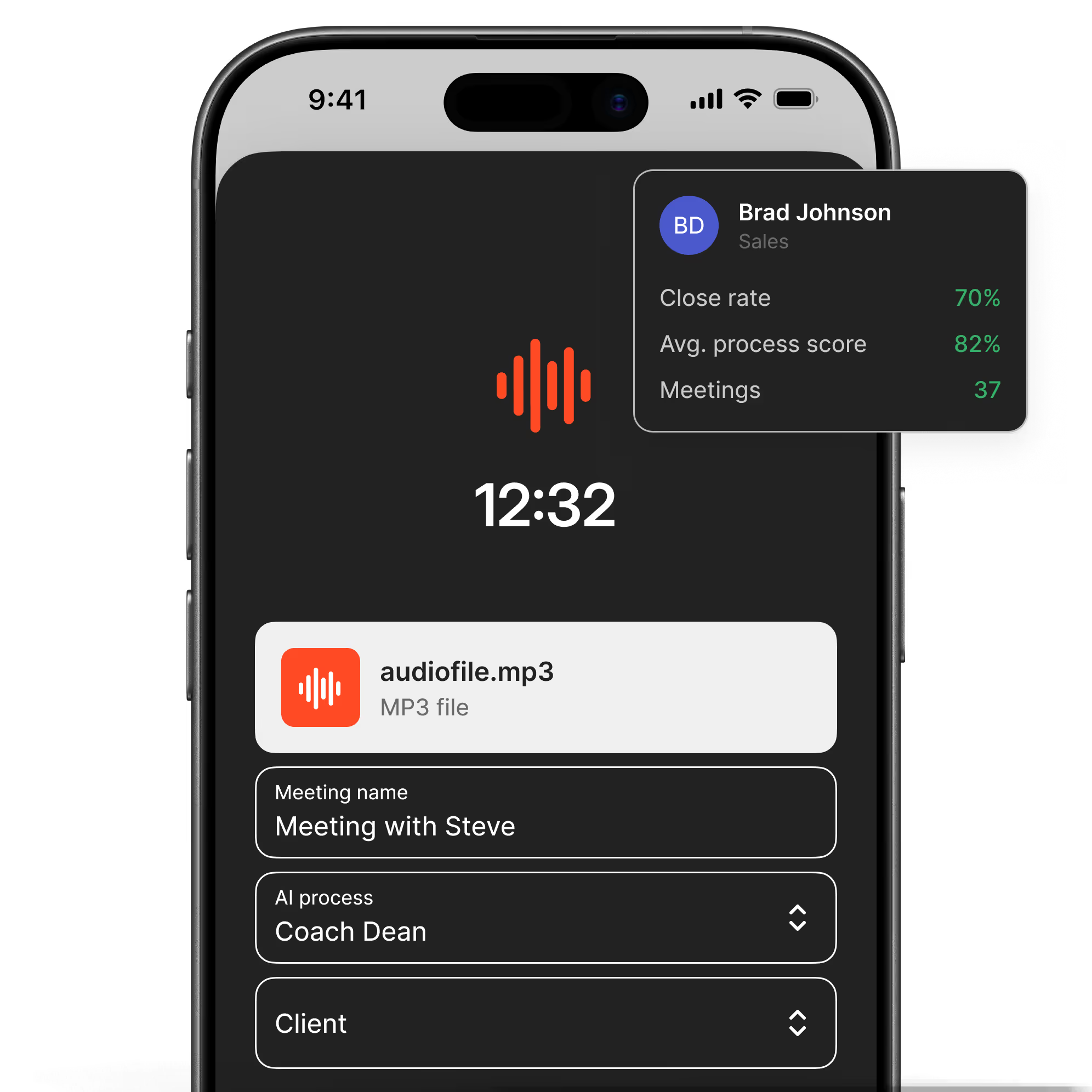
[IMAGE: SalesAsk dashboard showing real-time coaching interface]
2. Rilla
Why contractors choose it: Strong brand recognition. “End of ridealongs” messaging resonates with field sales teams.
Key features: - Audio transcription and analysis - Post-call coaching insights - Performance dashboards - Rep scorecards
Limitations: Like Siro, it’s primarily post-call analysis. No real-time coaching. Pricing has crept up significantly as they’ve grown.
Best for: Large home service companies with dedicated training teams who want comprehensive analytics.
3. Craft (Formerly Craftflow)
Why it’s gaining traction: Clean interface, fast implementation, competitive pricing.
Key features: - Call recording and transcription - Basic coaching insights - Sales rep analytics - Integration with common CRMs
Limitations: Less industry-specific than SalesAsk or Siro. Better for generalist sales teams than home services specialists.
Best for: Home service companies who want simple call recording with basic analytics.
4. Second Nature AI
Why it’s interesting: AI roleplay focused. Helps reps practice before they’re in front of customers.
Key features: - AI-powered sales roleplays - Objection handling practice - Pitch training scenarios - Performance tracking
Limitations: Doesn’t integrate with actual sales calls. It’s training software, not live coaching.
Best for: Companies building structured training programs alongside their existing coaching tools.
What Actually Matters: Real-Time vs. Post-Call
Here’s the critical distinction most contractors miss when evaluating alternatives.
Post-call coaching (Siro, Rilla, most competitors) gives you insights after the deal is won or lost. You learn what went wrong, but you can’t change the outcome. It’s like watching game film — valuable for improvement, but it doesn’t score points.
Real-time coaching (SalesAsk) provides guidance during the conversation. When a rep gets stuck on pricing objections, they get instant, AI-powered suggestions. When they forget to mention financing, they get prompted. It’s like having a coach standing next to them.
The ROI difference is massive. Post-call coaching improves future performance. Real-time coaching saves deals today.
How to Choose the Right Siro Alternative
Start with these questions:
1. Do you need real-time or post-call coaching? If you’re losing deals to objections your reps can’t handle in the moment, you need real-time. If your team is solid but needs refinement, post-call analysis might work.
2. What’s your budget reality? Siro and Rilla both target enterprise budgets. If you’re a $10M contractor, their pricing might not make sense. SalesAsk and Craft offer more accessible entry points.
3. How industry-specific do you need it? Home services sales have unique patterns. Roofing sales are consultative, long-cycle, and relationship-driven. HVAC often involves emergency service-to-sales conversions. If your platform doesn’t understand these nuances, it’s just generic sales advice.
4. What’s your team’s tech adoption level? Some platforms require extensive setup and training. Others work out of the box. Match the complexity to your team’s capabilities.
The Integration Question
Every sales coaching platform claims “easy integration.” Here’s what actually matters:
CRM sync: Does it pull customer data from your existing system (ServiceTitan, Jobber, Housecall Pro)?
Call connectivity: Does it work with your phone system without complex IT work?
Mobile experience: Do your field reps need desktop computers, or does it work on phones?
Reporting integration: Can you pull coaching data into your existing dashboards?
SalesAsk integrates directly with major home service platforms. Siro requires ServiceTitan. Rilla works with most systems but needs configuration.
Pricing Reality Check
Siro doesn’t publish pricing — always a red flag. From contractor conversations, expect $300-500/user/month minimum, often with minimums that push total contracts into six figures.
Rilla started around $150/user/month but has increased significantly. Current pricing appears to be $200-300/user/month based on recent contracts.
SalesAsk maintains transparent pricing starting at $150/user/month with no minimums.
Craft offers competitive pricing in the $100-200/user/month range.
What Contractors Actually Say
I’ve talked to dozens of home service contractors who’ve used these platforms. Here’s what matters to them:
“Does it actually help reps close more deals?” Everything else is secondary. Training is only valuable if it translates to revenue.
“Will my reps actually use it?” The fanciest platform is worthless if your team resists adoption. Simple, intuitive tools win.
“Can I prove ROI to my CFO?” You need clear metrics: conversion rate improvement, average ticket increase, close rate changes.
“Does it understand my industry?” Generic sales advice falls flat. Home service sales are different.
Making the Switch from Siro
If you’re currently using Siro and considering alternatives, here’s the transition path:
Month 1: Pilot the alternative with 2-3 reps. Run both systems in parallel. Compare coaching quality and rep feedback.
Month 2: Expand to 25% of your team. Measure conversion rate changes. Validate the ROI claim.
Month 3: Full team rollout if metrics support it. Sunset Siro contract at renewal.
Most contractors find they can validate (or invalidate) an alternative within 60 days of real-world use.
The Bottom Line
Siro isn’t a bad platform — it’s just not the only option, and for many home service contractors, it’s not the best option.
If you want real-time coaching that actually helps reps during sales calls, SalesAsk is purpose-built for that. If you want comprehensive post-call analytics and have the budget for enterprise software, Rilla or Siro might fit. If you need simple, affordable call recording, Craft is worth evaluating.
The key is matching the tool to your actual needs — not just buying the platform with the biggest marketing budget.
Related Topics: siro alternatives, sales coaching software home services, AI sales coaching, real-time sales coaching, home services CRM integration, contractor sales training, field sales coaching tools
[IMAGE: Comparison chart showing SalesAsk vs Siro vs Rilla features] [IMAGE: Real-time coaching interface example]
Ready to see how SalesAsk compares? Book a demo to see real-time AI coaching in action.
Similar Blogs

Sell More with
AI & Coach your
sales team.
Get Results in 21 Days. See it in action now!

Join 15,000+ reps


The #1 Ai Sales Growth System for Home Builders, Home service and Home remodeling companies.
Mon-Fri 9-6pm