
Nobody calls a waterproofing company because they’re excited about their basement. They call because something scared them — a crack in the foundation wall, standing water after a storm, a musty smell that won’t go away. They’re already stressed. They probably Googled “basement flooding” at midnight and spent two hours reading horror stories about structural failure.
That’s the person your rep walks in to meet.
If your sales training ignores this emotional context — if it’s all product features and cubic-foot drainage capacity — you’re fighting the sale instead of working with it.
Fear Is the Starting Point, Not the Problem
The instinct for a lot of waterproofing reps is to calm the homeowner down: “It’s not as bad as you think.” The intention is good. But it backfires. If the rep minimizes the concern, the homeowner starts wondering whether they even need to spend anything. They got scared, they called three companies, and now the first rep is telling them it’s not a big deal?
Better framing: validate the concern, then explain what it means specifically in their situation.
“The crack you’re seeing is actually pretty common in poured concrete foundations once they’re 15-20 years old. The concerning part isn’t the crack itself — it’s what happens if water finds it consistently over the next few winters. Let me show you what I’m looking at.”
Now you’re taking them seriously. You’re being specific. And you’re leading them through an assessment rather than reciting a pitch.
The difference between an average waterproofing rep and a great one isn’t product knowledge. It’s the ability to slow down, listen to what the homeowner actually saw and felt, and connect the solution back to their specific fear. AI sales coaching surfaces this in call reviews — the moments where reps talked over homeowner concerns instead of through them.
The Walk-Through: Where Jobs Are Won or Lost
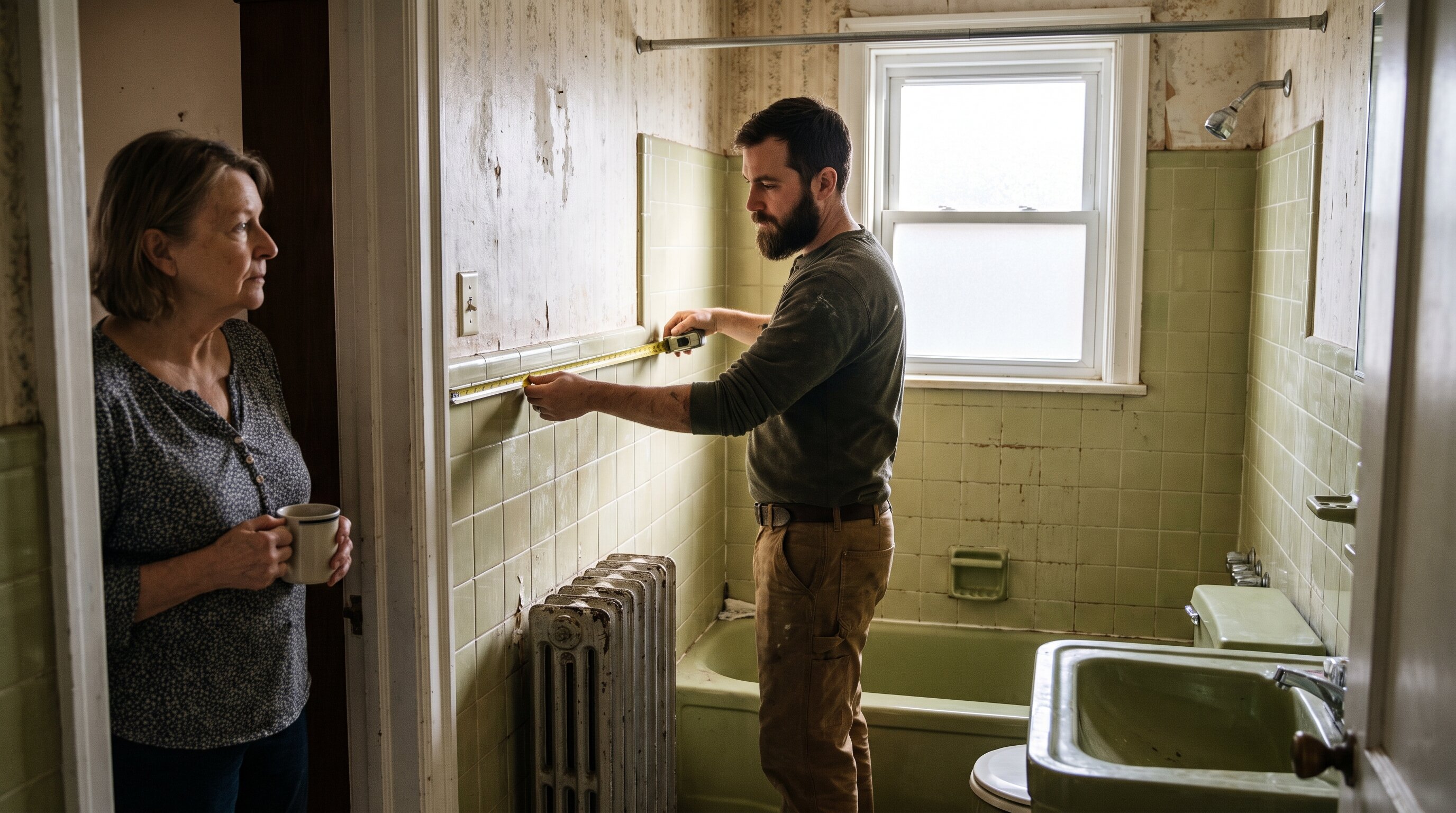
Most basement waterproofing sales happen during a walk-through assessment. This is not just a technical evaluation. It’s a guided discovery process where the homeowner watches you see what they’ve been worried about — and starts to trust your judgment.
What to narrate: As you walk the perimeter, describe what you’re seeing out loud. “This corner is where I’d expect to see the most pressure — and yeah, you can see the staining here. This line along the floor tells me water has been sitting here at least once, probably more.” The homeowner feels like they’re learning, not being sold.
What to ask: “Has this side ever had standing water, or is it more of a seepage situation?” “When did you first notice the smell?” These aren’t qualification questions — they’re connective. The homeowner fills in the story, and the story is what the solution gets anchored to.
What to leave visible: After the walk-through, before sitting down to go over pricing, hand them something they can hold — a simple diagram of the drainage system, or a photo from a similar job. Tactile materials slow the conversation down in a good way. People who are scared make better decisions when they feel like they understand what’s happening.
Presenting the Solution Without Overwhelming Them
Waterproofing systems have a lot of moving parts: interior drains, exterior excavation, sump pumps, wall systems, vapor barriers. The temptation is to explain everything. Don’t.
Pick the two or three elements most relevant to this homeowner’s specific situation and explain those clearly. Lead with outcome, not equipment.
Instead of: “We’d install a WaterGuard interior drainage system along the perimeter with a TripleSafe sump pump and a CleanSpace wall system…”
Try: “What we’re solving is the water that’s finding the floor-wall joint — which is where basement water almost always enters. We’ll channel it to a pump before it ever sits on your floor. The wall liner stops moisture vapor, which takes care of the smell and the damage to anything you store down here.”
The homeowner hears what problem is being solved and why. The product names are secondary.
Tiered options work here
The home remodeling industry has learned that presenting good/better/best options shifts the conversation from “should I do this” to “which of these is right for me.” Waterproofing is no different. Offer a phased approach for homeowners who are budget-cautious — address the active water intrusion now, address the vapor and aesthetics in a second phase. Some won’t take the tier, but offering it reduces the number of people who walk away entirely because the full solution felt like too much at once.
This structure is part of how high-performing home remodeling contractors think about consultative selling — more detail in our home remodeling industry guide.
Handling “I Need to Get More Quotes”
This is the most common stall in waterproofing sales — and it’s not really about quotes. It’s about uncertainty. The homeowner isn’t sure what they’re buying, whether the price is fair, or whether your diagnosis was accurate.
The response that works: “That’s completely fair — you should feel confident in whatever decision you make. While you’re doing that, it might help to ask each company a specific question: ask them to show you where the water is entering and what exactly they’re solving for. Some companies quote a similar-looking system but handle the source differently.”
You’ve now educated them on how to evaluate the quotes. Which means when they hear a vague or generic pitch from a competitor, they’ll notice. And when they come back to yours — which had a walk-through, a specific diagnosis, and a clear explanation — it feels like more than a price comparison.
This kind of objection prep is exactly what real call analysis reveals. Reps who consistently lose to “we’re getting more quotes” are usually missing something earlier in the conversation — they haven’t created enough specific trust in the diagnosis. Reviewing those calls through AI-powered coaching helps managers pinpoint exactly where that trust broke down.
After the Sale: The Referral Setup
Basement waterproofing is one of the highest-referral categories in home services when the job is done right and the customer feels good about the process. But most companies wait to ask — if they ask at all.
Build the referral conversation into your follow-up. “Most of our jobs come from neighbors who saw a similar problem or have been worried about the same thing. If anyone comes to mind who’s mentioned something about their basement, we’d really appreciate the introduction.”
You don’t have to make it transactional. You just have to ask. Most reps don’t.
For a real example of how systematic follow-through changes outcomes, see how Connell Roofing reduced their coaching overhead by shifting to AI-assisted call review — the same principles apply to any contractor category where job quality and the sales conversation are tightly linked.
Building the Skill, Not Just the Script
Waterproofing sales requires more emotional intelligence than most contractor categories. You’re talking to people at a stressful moment, about an invisible problem, involving a significant investment.
Scripts help. But what helps more is reps who can read the room — who know when to slow down, when to push forward, when a homeowner needs reassurance versus information. That kind of read is developed through practice, feedback, and honest review of how actual conversations went.
If your team is closing less than 35% of in-home consultations, something is breaking down — either in the walk-through, the objection handling, or the follow-up. The data is in the calls. AI coaching makes it accessible without requiring a manager to listen to hours of recordings every week.
Explore what that looks like at SalesAsk →
Related Topics: basement waterproofing sales training, in-home sales techniques for contractors, handling objections in home services, AI sales coaching for waterproofing, consultative selling for home improvement, foundation repair sales training, basement sales conversion rate*

Related articles

Ready to convert
every conversation?
See exactly what’s holding your team back and fix it fast.
.avif)