Good/Better/Best Pricing Framework for Home Services: The Psychology of Choice Architecture
The best salespeople in home services don’t push one price. They present three options — and let the customer choose.
This is the Good/Better/Best pricing framework. And if you’re not using it, you’re leaving money on the table. Not because you’re underpricing (though you might be), but because you’re making the buying decision harder than it needs to be.
Here’s the thing about human psychology: we hate being sold to, but we love buying. We resist when there’s only one option — it feels like an ultimatum. But give us three choices? Now we’re in control. We’re comparing, weighing trade-offs, making decisions.
This isn’t manipulation. It’s service. You’re helping customers understand value tiers and choose what fits their needs and budget.
Why One Price Doesn’t Work
When you present a single price, the customer has two choices: yes or no.
That binary decision triggers price objections because there’s nothing to compare against except “not buying.” The conversation becomes about justifying cost rather than discussing value.
I’ve watched hundreds of home services sales calls where reps present one option and then scramble when the customer says “that’s more than I expected.” Because what do you do then? Drop the price? Now you look desperate. Hold firm? Risk losing the sale.
The Good/Better/Best framework eliminates this trap. When you present three options, the conversation shifts from “Should I buy?” to “Which should I buy?”
That’s not a subtle difference. It’s transformative.
The Framework Breakdown
Here’s how it works in practice:
Good: The entry-level option. Solves the core problem. No frills. Typically your standard offering stripped to essentials.
Better: Your recommended option. Everything in Good, plus upgrades that genuinely improve outcomes. This should be where 60-70% of customers land.
Best: The premium tier. Everything in Better, plus the luxury features, extended warranties, or premium materials. For customers who want the absolute best.
Each tier needs to be a genuine option you’d be happy to deliver. This isn’t about creating a “decoy” — it’s about serving different customer segments.
Positioning the Middle Option
The Better option is your strategic weapon.
Most customers will choose it. Not because they’re predictable, but because you’ve positioned it as the sweet spot. It’s not the cheapest (so it feels substantial) and it’s not the most expensive (so it feels smart).
When you present options, your voice should telegraph your recommendation. “Most homeowners in your situation choose Better because…” is code for “this is what I’d recommend.”
You’re not pushing. You’re guiding based on experience.
The difference matters. Customers trust a recommendation framed as pattern recognition (“here’s what similar customers choose”) more than advice framed as opinion (“here’s what I think you should do”).
Pricing Psychology: Anchoring and Contrast
The Best option exists primarily to make Better look reasonable.
This is anchoring at work. When a customer sees a $12,000 option, your $8,500 Better option suddenly seems less expensive — even though $8,500 would’ve felt expensive in isolation.
The contrast effect is powerful. Behavioral economics research shows that humans don’t evaluate prices absolutely. We evaluate them relatively, based on what we’ve just seen.
That’s why you always present from highest to lowest: Best, Better, Good. You anchor high, then present your recommended option as the balanced choice.
Common Mistakes to Avoid
Don’t make Good so bare-bones that it’s embarrassing. It should still solve the problem effectively. If Good feels like a compromise, customers won’t trust your Better recommendation.
Don’t price the tiers too close together. You need meaningful separation — 30-50% between tiers. Otherwise, everyone just picks the middle option regardless of need.
Don’t overwhelm with options. Three is optimal. Four or more triggers decision paralysis. Two isn’t enough to create contrast.
Don’t let Good be your standard offering. If you present Good/Better/Best and most customers choose Good, you’ve priced it wrong. Better should be the statistical favorite.
The framework only works when the tiers are calibrated correctly for your market and customer base.
Handling “I’ll Take Good”
When a customer chooses Good, your job isn’t to upsell. It’s to confirm they understand what they’re getting and what they’re not.
“Absolutely, Good gets you [core benefits]. Just so you know, Better includes [specific upgrade] which I usually recommend because [concrete reason]. But if Good fits your budget better, we’ll make sure it’s done right.”
Notice the structure: validate their choice, clarify what’s different, explain why you typically recommend Better, then support their decision.
Half the time, they’ll reconsider. The other half, you’ve protected yourself from buyer’s remorse later.
Building Your Tiers
Start with your current offering. That becomes Better.
Now create Good by removing upgrades that increase cost but aren’t core to solving the problem. Think premium materials, extended warranties, or cosmetic enhancements.
Then create Best by adding everything you could do if money were no object. The highest-quality materials. The longest warranty. Installation that includes extras most customers don’t even think to ask for.
Price each tier to reflect actual cost plus margin. Don’t artificially inflate Good to make Better look cheaper. The framework works because the value is real.
AI Sales Coaching and Pricing Frameworks
The hardest part of Good/Better/Best isn’t creating the tiers. It’s presenting them consistently.
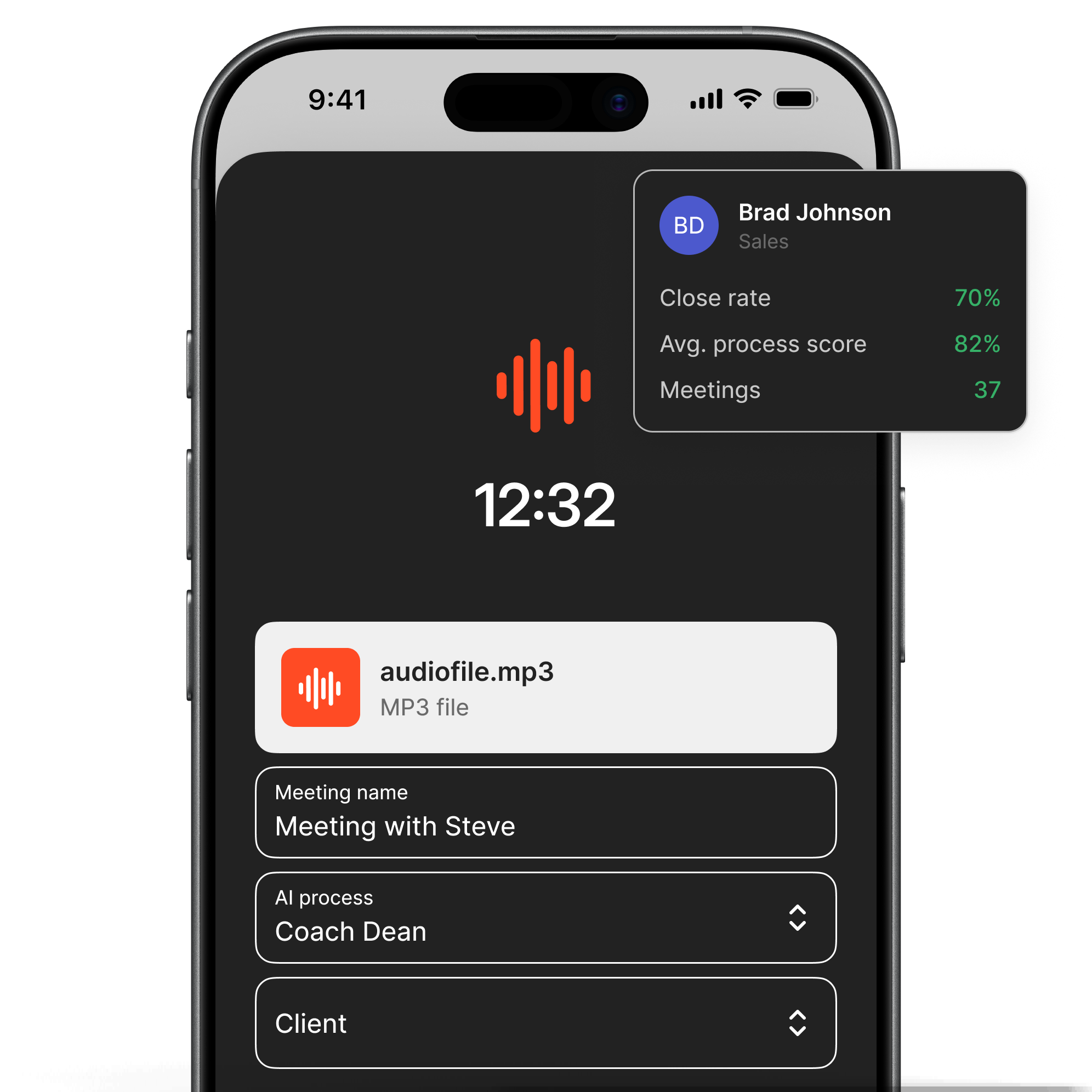
This is where AI sales coaching becomes valuable. Traditional training teaches the framework in a classroom. But when you’re standing in a customer’s kitchen, nervous about presenting three prices, that training disappears.
AI coaching catches presentation mistakes in real-time. When a rep presents prices in the wrong order, or skips explaining the Better option, or fails to anchor properly, the system flags it.
That feedback loop — instant, consistent, non-judgmental — builds muscle memory faster than weekly ride-alongs ever could.
Real-World Implementation
Here’s what this looks like for a roofing company:
Good: Architectural shingles, standard warranty, basic tear-off and install. Better: Designer shingles, enhanced warranty, upgraded ventilation, extended coverage on ice dam protection. Best: Premium impact-resistant shingles, lifetime warranty, complete attic ventilation upgrade, transferable warranty.
A homeowner shopping on price alone might choose Good. Someone who’s been through one roof replacement already and knows what to watch for? They choose Better. The customer who just bought the house and plans to stay for 20 years? Best makes sense.
You’re not tricking anyone. You’re matching solutions to needs.
The Close Becomes Easier
When you use Good/Better/Best, closing stops feeling adversarial.
You’re not pushing a single option. You’re facilitating a decision. The customer feels in control because they are. And when people feel in control, they buy.
I’ve watched conversion rates jump 15-20% when contractors implement this framework correctly. Not because they’re selling more expensive options (though average deal size usually increases), but because fewer customers say “let me think about it.”
Choice architecture removes the psychological barrier to buying. You’ve addressed price objections before they’re raised. You’ve positioned value clearly. You’ve given the customer a decision framework that feels fair.
Start Testing Tomorrow
Pick your next three estimates. Build Good/Better/Best options for each.
Track what customers choose. Track how the conversations feel different. Track whether objections change.
Then refine the framework based on what you learn. The homeowners who choose Good — did they say why? The ones who chose Best — what convinced them?
The framework improves with data. Start collecting it.
Related Topics: pricing strategies for contractors, value-based pricing home services, sales presentation frameworks, customer decision psychology, AI sales training, closing rate optimization, tiered pricing models, home services sales best practices
Meta Title: Good/Better/Best Pricing: The Framework That Closes More Sales
Meta Description: Learn how the Good/Better/Best pricing framework uses choice architecture psychology to increase close rates and deal sizes in home services sales.
Image Suggestions: 1. Hero Image: Split-screen showing contractor presenting one price vs. three-tier pricing presentation (before/after style) 2. Mid-Article: Visual diagram showing Good/Better/Best tiers with price points and feature breakdowns 3. Bottom CTA: Contractor confidently presenting options to homeowner at kitchen table


Sell More with
AI & Coach your
sales team.
Get Results in 21 Days. See it in action now!

Join 15,000+ reps


The #1 Ai Sales Growth System for Home Builders, Home service and Home remodeling companies.
Mon-Fri 9-6pm