Hatch vs SalesAsk: AI CSR Automation vs AI Sales Coaching for Home Services Contractors (2026)
Yelp Paid $270 Million for What Hatch Does
In January 2026, Yelp acquired Hatch for approximately $270 million. That number should tell you something about how much value sits in the problem Hatch solves: the gap between a lead coming in and a booking confirmed.
Hatch runs AI agents across calls, texts, and emails. When a homeowner submits a contact form at 11:30 PM on a Friday, Hatch doesn't wait until Monday morning. It follows up. It qualifies. It schedules. The AI CSR handles the speed-to-lead problem that loses 60–70% of service leads industry-wide—because most contractors aren't staffed around the clock, and most customers won't wait 18 hours for a callback.
That's a genuinely important problem. And Yelp clearly agreed.
But here's the thing about a $270 million acquisition: it tells you what Hatch is, not what it isn't. And there's a specific moment in the home services sales cycle where Hatch hands off completely—a moment that often determines whether a $14,000 HVAC replacement gets closed or becomes a second-bid situation. That handoff is the whole story.
What Hatch Actually Does (The Intake Layer)
Hatch's product is an AI CSR platform. Three channels: voice, SMS, email. It handles the volume problem of inbound lead response—the calls that come in after hours, the quote requests that pile up over a weekend, the follow-up sequences that most service businesses run manually or not at all.
Its AI agents can qualify leads, book appointments, send appointment reminders, follow up on unsold estimates, and re-engage lapsed customers. Capterra reviewers consistently mention the same things: speed to lead is dramatically improved, campaigns are easy to set up, and the automation takes real work off the office.
Pricing follows a platform fee plus usage model—Hatch doesn't publish specific numbers publicly, which is typical for AI CSR platforms that size usage costs to call volume. Contracts tend to run annually.
What Hatch doesn't do is talk to homeowners about their ductwork. It doesn't know why a rep skipped the financing question during a walk-through. It can't hear the tone shift in a customer's voice when the price gets quoted, and it has no mechanism to coach the technician who's standing in a basement at 2 PM trying to close a $9,800 heat pump replacement.
Hatch's job ends at the appointment confirmation. Everything that happens after the technician knocks on the door is outside its scope—by design, not by accident. The Yelp acquisition will sharpen Hatch's lead generation capabilities considerably (Yelp's local consumer data is enormous), but it doesn't change the product's fundamental boundary: intake and conversion from lead to booked appointment.
After the Front Door
The appointment is where revenue actually gets made. A well-booked appointment with a motivated homeowner can still go sideways in about a dozen ways: the rep doesn't present financing before price, the homeowner invokes a spouse who isn't there, the "we're getting other bids" objection comes out and the rep retreats instead of anchoring on value, or the accessories and service agreement get mentioned so briefly they barely register.
None of this is a booking problem. Hatch solved the booking problem. This is a coaching problem—specifically, the problem that most field sales coaching is either inconsistent (the manager who rides along once a quarter) or invisible (post-call reviews that land in a dashboard no one has time to read).
For HVAC contractors in particular, the average job ticket variance between a trained closer and an untrained tech can run $1,500–$2,500. On a 10-tech team running 8 appointments per day, that variance compounds fast. The coaching gap is not a marginal cost issue—it's a structural revenue leak that no amount of better booking will fix.
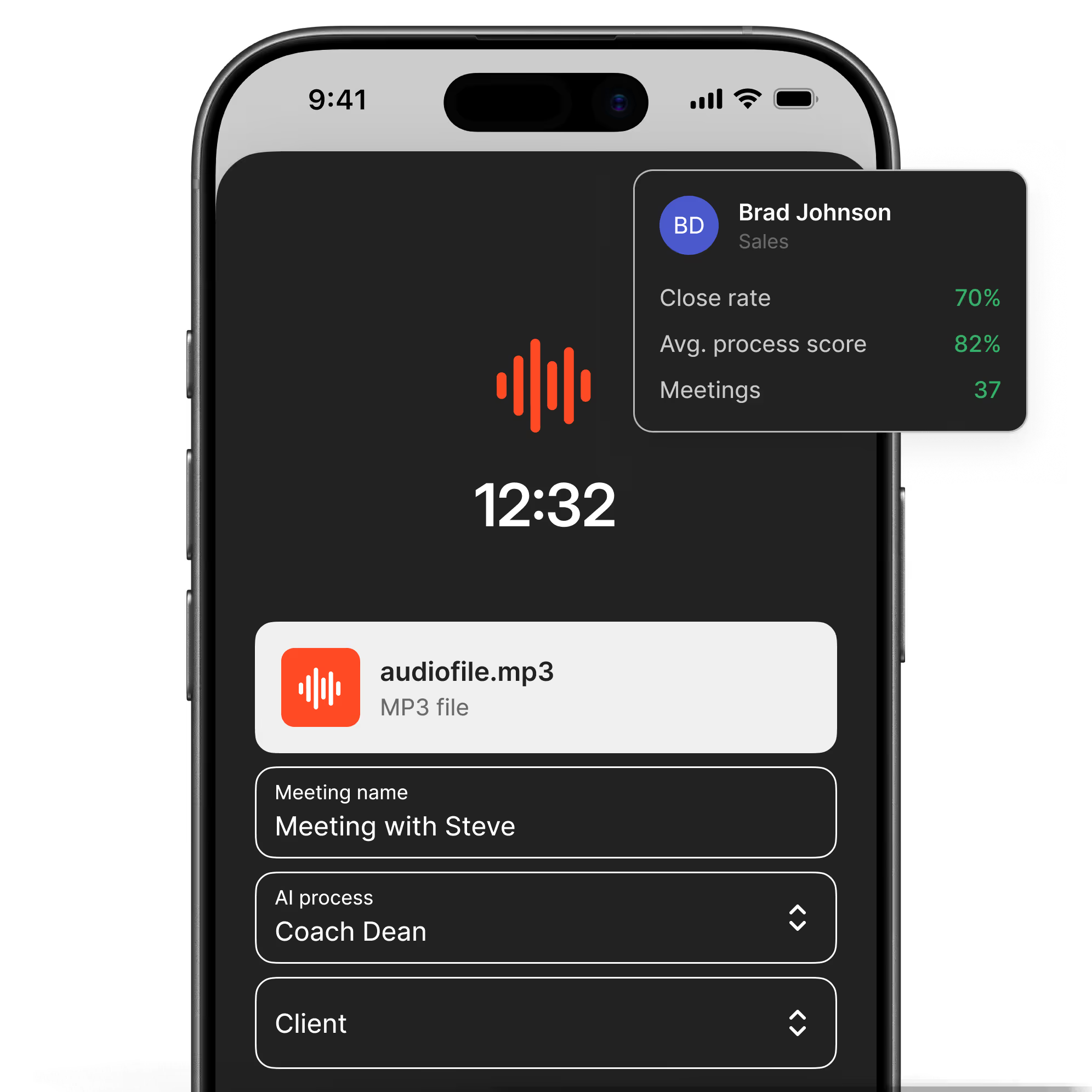
SalesAsk is built for what happens after the front door. Coach Dean, its AI agent, analyzes conversations during and after every appointment—not just the ones a manager happened to listen to. It sends reps specific, time-stamped feedback within minutes of a call ending. Not a score. Not a heatmap. A message like: "You mentioned the service agreement at the end of the closing sequence after the customer had already mentally moved on. Next appointment, introduce it during the inspection phase while they're still engaged." That's the kind of feedback that changes behavior the next day, not the next quarter.
Revenue attribution sits underneath all of this. SalesAsk integrates with ServiceTitan and Jobber bidirectionally—so when a coaching event fires ("financing prompt at the 12-minute mark") and the job closes at $11,200, that connection gets recorded. The ops team can pull a report that says coaching generated $340,000 in incremental revenue last quarter. That's not a survey result. That's actual job data from ServiceTitan matched against coaching outcomes.
Taylor Morrison—a national home builder—saw a 16% increase in appointment-to-contract conversion rate after implementing SalesAsk coaching. That kind of outcome doesn't come from better lead follow-up. It comes from the conversation that happens inside the appointment.
The Stack That Makes Sense
The contractors getting the most out of AI in 2026 aren't choosing between Hatch and SalesAsk. They're running both—and the reason becomes obvious when you map the customer journey.
Hatch captures the lead. It follows up before a competitor does. It books the appointment. It sends the reminder so the homeowner doesn't forget. Everything up to the moment your tech pulls into the driveway.
SalesAsk takes over from there. It coaches the conversation that happens inside the home. It reinforces what your best closers do instinctively—presenting financing early, staying with the objection instead of deflecting, layering in accessories during the inspection—and makes that behavior transferable to every rep on the team, including the one you hired six weeks ago.
ServiceTitan (or Jobber) sits in the middle, holding the job data both tools can connect to.
Where this gets interesting is when you look at what Hatch's Yelp acquisition actually changes: Yelp brings significant consumer-facing distribution, review data, and local lead flow. Hatch AI agents handling Yelp-sourced leads will be faster and better-matched than before. That's more qualified appointments in your tech's calendar. But a qualified appointment with a motivated homeowner still requires a rep who knows how to close it—and that's the gap Hatch, Yelp, and any booking automation tool leaves open. More appointments at the same close rate produces the same percentage gain. More appointments at a higher close rate—that's compounding.
Feature Comparison
| Feature | Hatch (Yelp) | SalesAsk |
|---|---|---|
| Speed-to-lead AI response | ✅ Core feature | ❌ Not its purpose |
| AI voice/SMS/email follow-up | ✅ Core feature | ❌ Not its purpose |
| Appointment booking automation | ✅ Yes | ❌ No |
| After-hours lead capture | ✅ 24/7 | ❌ No |
| Unsold estimate follow-up | ✅ Yes | ❌ No |
| Field sales rep coaching | ❌ No | ✅ Core feature (Coach Dean) |
| Real-time in-conversation coaching | ❌ No | ✅ Yes |
| 100% call/conversation review | ❌ No | ✅ Yes |
| CSR call quality coaching | ❌ No | ✅ Yes |
| ServiceTitan native integration | ⚠️ Limited | ✅ Two-way native |
| Revenue attribution to coaching | ❌ No | ✅ Yes |
| Rep-specific behavioral feedback | ❌ No | ✅ Yes (texted to rep) |
When One Is Enough (And When You Need Both)
Hatch makes the most sense if your lead response time is your biggest constraint. If you're losing 40–50% of your inbound leads to a competitor who calls back first, the ROI on booking automation is immediate and measurable. The Yelp acquisition has made Hatch's value proposition clearer—not just follow-up, but lead generation plus conversion across the intake pipeline. If your close rate on booked appointments is already strong and your variance between reps is low, Hatch alone moves the needle meaningfully.
SalesAsk makes the most sense if you have leads coming in but conversion drops off at the appointment level. If your close rate varies dramatically between reps—your best closer is at 58% and your newest hire is at 31%—that gap isn't a lead quality problem. It's a coaching problem that booking automation won't fix. SalesAsk narrows that gap and quantifies what it's worth in dollar terms.
Most established home services businesses with 8+ technicians benefit from both. The math is straightforward: Hatch recovers leads that would otherwise go cold (increasing booked appointments). SalesAsk increases the percentage of those appointments that convert at higher ticket values. The compounding effect is real—more appointments closing at higher averages is how you scale revenue without scaling headcount proportionally.
A practical way to think about sequencing: if you're under $3M in annual revenue and lead volume is the bottleneck, start with Hatch (or a comparable intake solution). If you're over $3M and you're already booking plenty of appointments but can't explain why close rates vary so much between techs, that's SalesAsk's territory. If you're over $5M and running both problems at once, you need both tools.
What to ask before deciding: How many leads are you losing before the appointment? (Hatch solves this.) How much variance exists between your best and worst closers? (SalesAsk solves this.) Can your ops team pull a report showing coaching ROI in dollar terms from ServiceTitan? (If not, you have an attribution gap worth closing.)
If you want to see how SalesAsk's revenue attribution works with your existing ServiceTitan data, book a demo here.
Similar Blogs

Sell More with
AI & Coach your
sales team.
Get Results in 21 Days. See it in action now!

Join 15K+ reps


The #1 Ai Sales Growth System for Home Builders, Home service, Dental/DSO and Home remodeling companies.
Mon-Fri 9-6pm
Join 15K+ reps