Home Services Sales Training: AI vs Traditional Methods
Traditional sales training in home services looks the same as it did twenty years ago: classroom sessions, roleplays with your manager, maybe a shadowing day if you’re lucky. The training ends, you hit the field, and you’re on your own. If you remember what they taught you three weeks ago, great. If not, you’re winging it.
AI sales coaching changed that. Not because AI is smarter than your sales manager—it’s not. But because AI doesn’t leave your rep alone after the training ends. It’s there on every call, catching mistakes in real-time, suggesting better responses while the customer is still on the line.
This isn’t about replacing your training program. It’s about making it stick. Most training fails not because the content is bad, but because reps forget it by Tuesday. AI is the difference between teaching someone to swim and actually keeping them from drowning.
What Traditional Training Gets Right
Let’s start with what hasn’t changed: in-person training works when it’s done well.
A good sales manager teaching objection handling in a conference room with real examples from last week’s calls—that’s valuable. Your top rep breaking down their close process in front of the team—that’s even better. You’re learning from people who’ve been in the trenches, not from a generic webinar recorded in 2018.
The best traditional training is specific. It’s not “build rapport.” It’s “when they say they’re getting three bids, ask if they’ve already scheduled the other two. If yes, ask when. If no, ask why they’re waiting. Then pivot to timeline.” That’s a script you can actually use.
Traditional training also forces accountability. You’re in a room. You can’t skip it. You have to roleplay, even if you hate it. That pressure—awkward as it is—builds muscle memory. You stumble through an objection five times in the office so you don’t stumble when a customer says it in their kitchen.
Where Traditional Training Falls Apart
Here’s the problem: what happens after the training ends?
Your rep learns the good-better-best pricing framework on Monday. By Friday, they’re back to quoting single-price jobs because they forgot the script. Or they remember the script but freeze up when the customer asks a question that wasn’t covered in training.
Traditional training is episodic. You train once a month, maybe once a quarter. In between, reps are flying blind. Nobody’s listening to their calls. Nobody’s catching bad habits. By the time you do another training session, those habits are locked in.
And then there’s the scale problem. If you have 5 reps, your sales manager can ride along with each one every few weeks. If you have 50 reps, that math doesn’t work. You end up training the squeaky wheels—the ones who are struggling or the ones who complain—and ignoring the middle performers who could become your next top closer.
Traditional training also assumes your manager is good at coaching. That’s not always true. Some managers are great closers but terrible teachers. They can’t explain why their approach works, so they just tell you to “be more confident” or “build rapport better.” That’s not coaching. That’s a motivational poster.
How AI Training Works (Without the Hype)
AI training doesn’t replace your manager. It amplifies what your manager can’t scale: real-time feedback on every single call.
Here’s how it works in practice: your rep is on a call. They’re explaining pricing. The customer says, “That’s more than I expected.” Your rep pauses. In a traditional setup, they’d either freeze or say something generic like “Well, we offer great quality.” Not terrible, but not great.
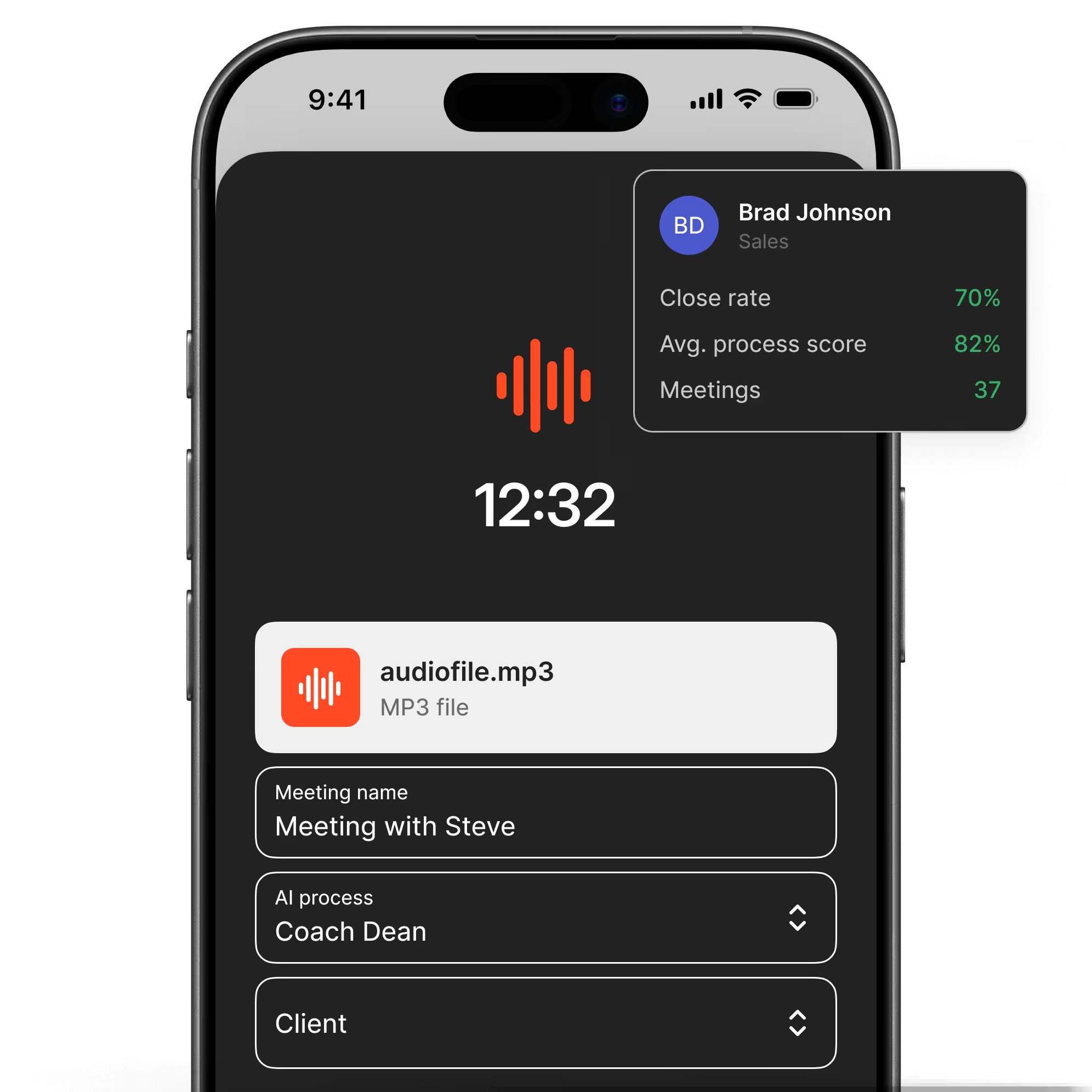
With AI coaching, Dean (our AI, but the concept applies to any real-time system) whispers in their ear: “Acknowledge the concern, then ask about their budget expectations.” The rep repeats it in their own words: “I get that. What were you expecting to invest in this project?”
The customer gives a number. Dean says, “Bridge to the good-better-best options.” The rep pivots: “Okay, let me show you three ways we can work within that range.”
That’s AI training. Not replacing the script you taught them—reinforcing it in the moment when they need it most.
The Real Difference: Consistency at Scale
Traditional training is inconsistent by design. Your best rep gets feedback from the sales manager once a month. Your weakest rep gets feedback every week because they’re struggling. Your middle performers—the ones who could improve with just a nudge—get ignored.
AI gives everyone the same level of feedback, every call. That’s the unlock. It’s not that AI is better at coaching than your manager. It’s that AI is always there. Your manager can’t be.
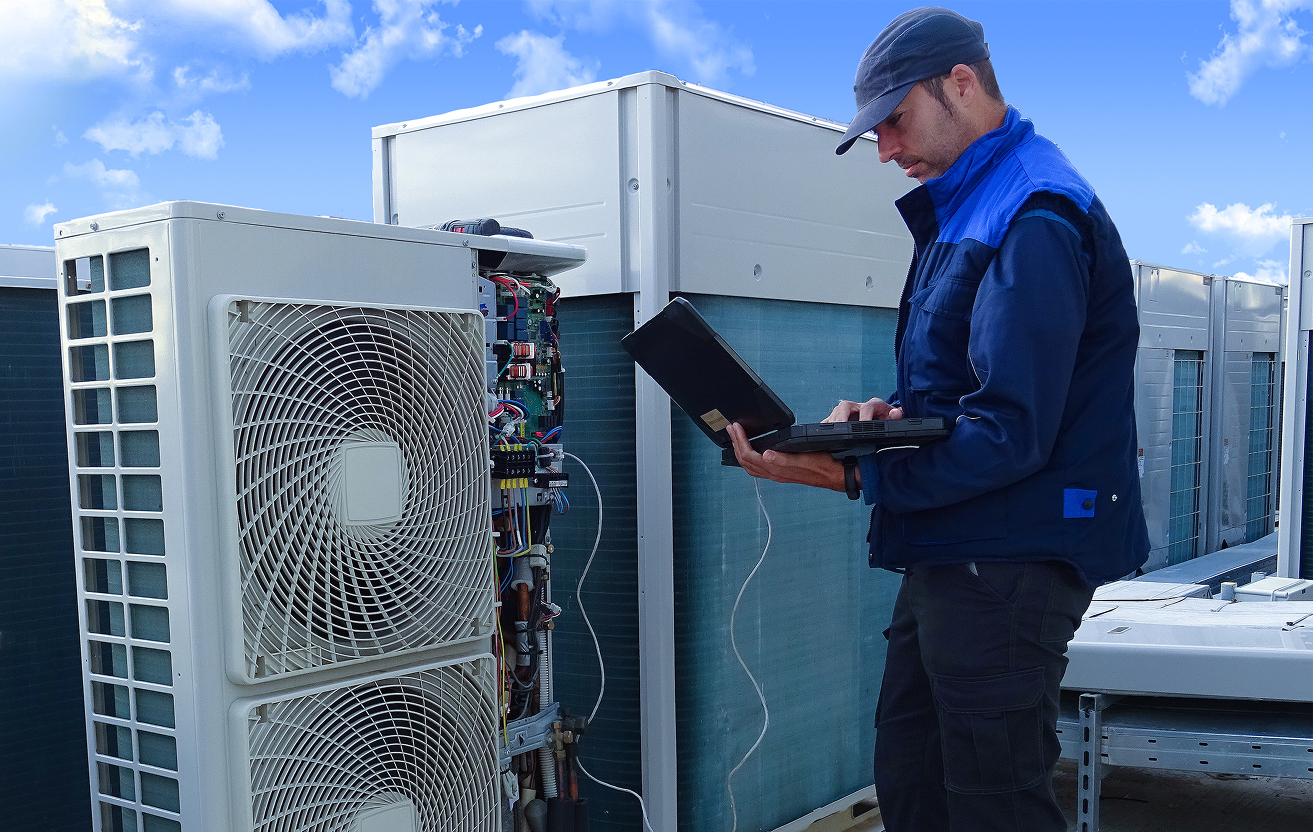
One HVAC company we talked to had 22 reps. Their top 3 reps closed at 45%. Their bottom 5 closed at 18%. Middle performers were around 28%. Traditional training hadn’t moved the needle in two years.
They added AI coaching. Six months later, their bottom 5 were closing at 25%. Not because AI magically made them better—it just caught the obvious mistakes (talking too much, skipping financing, not asking for timeline) in real-time. Small fixes, compounded over dozens of calls, added up.
Their top 3 reps stayed at 45%. AI didn’t help them much—they were already nailing the basics. But the middle and bottom moved up, which is where most of your revenue growth lives anyway.
What AI Can’t Replace (Yet)
AI can’t teach your reps how to read a room. If a customer is stressed about money and your rep pushes financing too hard, AI might suggest the script, but it can’t read the micro-expressions that tell you to back off.
AI also can’t handle the weird stuff. One painting contractor told us about a call where the customer started crying because the house was her late husband’s childhood home and she felt guilty remodeling it. Your rep needs empathy and judgment to navigate that. AI would probably say something dumb like “Acknowledge the emotion and refocus on project details.” That’s technically correct but tonally wrong.
And AI can’t teach sales philosophy. It can teach scripts, techniques, objection responses—but it can’t explain why building trust matters more than closing fast. That’s the stuff your sales manager teaches over lunch or on a ride-along. That’s still human work.
Blending Both: The Hybrid Model
The companies that win aren’t choosing AI or traditional training. They’re blending both.
Here’s what that looks like:
Monthly in-person training: Your sales manager teaches one core skill (e.g., handling “I need to talk to my spouse”). Everyone roleplays it. You refine the script together. That’s traditional.
AI coaching on every call: The next 30 days, Dean reminds reps of that script when customers actually say “I need to talk to my spouse.” The training sticks because it’s reinforced in real situations. That’s AI.
Weekly review: Your manager pulls the top 5 calls where reps used the script well and the 5 where they didn’t. You review as a team. You adjust the script. That’s feedback loops.
That’s the model. Teach in person, reinforce with AI, refine with data.
Cost Comparison: Traditional vs AI
Let’s talk money.
Traditional training: - Sales manager time: 4 hours/month per rep (training + ride-alongs) = $80/hour × 4 = $320/rep/month - Opportunity cost: Manager isn’t closing or managing pipeline during training - Travel costs: If reps are distributed, add mileage and time for ride-alongs - Total: $300-500/rep/month in actual + opportunity costs
AI training: - SalesAsk: $150/user/month - Rilla or Siro: $200-400/user/month - Setup time: 2-3 hours upfront, then mostly automated - Manager time: 1-2 hours/month reviewing flagged calls - Total: $150-400/rep/month
The costs are comparable. The difference is scale. Your manager can train 5-10 reps effectively. AI can train 500. If you’re a small shop (under 10 reps), traditional training might actually be cheaper. If you’re scaling past 20 reps, AI becomes mandatory.
Which One Should You Choose?
If your reps are brand new—never sold before—start with traditional training. Teach them the basics: how to introduce themselves, the sales process, what questions to ask. AI can’t teach foundational skills from scratch. It’s a coach, not a teacher.
Once they know the basics, add AI. It’ll catch the mistakes they keep making (talking too long, forgetting to ask for timeline, skipping financing mentions) and remind them in the moment. That’s when AI becomes valuable—when there’s something to reinforce.
If your reps are experienced but inconsistent, go straight to AI. They know what to do; they just don’t do it every time. AI makes sure they do. Consistency is the gap, and AI fixes consistency.
If your reps are top performers, traditional training is probably enough. They don’t need real-time reminders—they’ve internalized the process. Use your budget elsewhere.
The Transition Period
Switching from traditional to AI (or adding AI on top of traditional) feels weird for about two weeks. Reps don’t like someone—or something—listening to every call. They think it’s Big Brother. They complain.
Here’s how to smooth that transition:
Week 1: Run AI in “shadow mode.” It listens to calls but doesn’t coach. You’re just building a baseline. Reps get used to being recorded.
Week 2: Turn on coaching for one or two reps (your most receptive ones). Let them report back to the team. Usually, they say “It’s actually helpful—it reminded me to ask about financing.”
Week 3: Roll out to everyone. By now, the early adopters are advocates. Resistance drops.
Week 4: Share wins. Pull a call where AI helped close a deal. Play it for the team. Suddenly it’s not surveillance—it’s a competitive advantage.
What We’re Seeing in 2026
The home services companies that are scaling fastest right now are the ones that stopped treating sales training as an event and started treating it as a system.
Training used to be something you did once a quarter when you had budget. Now it’s infrastructure—AI running in the background, managers reviewing flagged calls, reps getting better every week without needing a big training push.
Traditional training taught reps what to do. AI makes sure they actually do it. That’s the difference between knowing and doing. And in sales, doing is what pays.
Similar Blogs


Sell More with
AI & Coach your
sales team.
Get Results in 21 Days. See it in action now!

Join 15,000+ reps


The #1 Ai Sales Growth System for Home Builders, Home service and Home remodeling companies.
Mon-Fri 9-6pm