Landscaping Sales Training: How to Sell Design-Build Projects That Actually Close
Landscaping is a weird sales game. You're not selling a product someone can touch or a service they immediately need. You're selling transformation — their backyard nightmare turned into something they'll brag about on Instagram. And here's the problem: most landscape contractors show up with a truck full of sod samples and zero sales training.
The difference between a $3,000 mow-and-blow contract and a $50,000 full redesign isn't your plants or your crew. It's your ability to sell the vision before you sell the scope. This guide covers how to train your sales team to close high-ticket landscaping projects without sounding like every other guy with a truck and a leaf blower.
Why Most Landscaping Sales Training Fails
Traditional sales training for landscapers focuses on the wrong things: how to bid jobs, how to measure square footage, how to price materials. That's estimating, not selling.
Here's what actually matters in landscaping sales:
You're selling lifestyle, not lawn care. Nobody wakes up excited about irrigation zones. They want outdoor living spaces, curb appeal, a place where their kids can play. If your sales pitch sounds like a hardware store catalog, you've already lost.
The consultation is your close. Unlike roofing or HVAC where you quote and follow up, landscaping sales happen on the walk. If you can't paint the picture while standing in their backyard pointing at the dead grass, no proposal will save you.
Design-build requires design-sell. The best landscape companies don't just design beautiful spaces — they sell the design phase itself. That's where the real money is, and that's where 90% of contractors fumble.
The Landscape Sales Process That Works
Step 1: Pre-Qualify Before You Drive
Don't waste gas on tire-kickers. Before you schedule the consultation, ask three questions:
- "What's prompting this project right now?" (urgency)
- "Have you worked with a landscape designer before?" (budget awareness)
- "What's your rough budget range?" (qualification)
If they say "just exploring" and won't give a number, they're not ready. Politely send them a brochure and move on.
Step 2: The Walk-and-Talk Consultation
This is where most landscapers blow it. They walk the property taking measurements and saying things like "mmhmm" and "yep, we can do that." That's not selling. That's being a human tape measure.
Instead, use the Vision-First Method:
Start with the dream. "Before we talk about plants or pavers, what does the perfect version of this space look like to you? Close your eyes — who's using it? What are they doing?"
Point and narrate. As you walk, describe what you see in your mind. "So right here, I'm picturing a flagstone patio with built-in seating. Your kids are running through that area, so we'd want to soften it with a play lawn. Over there, I see a privacy screen with vertical planters."
Anchor on lifestyle benefits. Not "we'll install a fire pit." Instead: "You mentioned you love entertaining — imagine having people over in October, fire going, string lights above, no bugs because we'll plant strategically."
Step 3: The Tiered Proposal (Good/Better/Best)
Never give one price. Always give three:
Good: Basic scope, standard materials, functional but not fancy
Better: Upgraded materials, phased lighting, one signature feature
Best: Full transformation — lighting, irrigation, hardscape, plantings, the works
Most people pick Better. But presenting Good makes Better look reasonable. And Best? That's for the 10% who fall in love with the vision.
Step 4: The Close (Before You Leave)
Here's the landscaping sales secret: don't leave without a commitment.
If they love the vision, ask: "If we can hit your budget and timeline, is there any reason you wouldn't move forward with us?"
If yes, close on the spot. If they need to "think about it," they're comparing you to two other guys who will also give three-tier proposals. Game over.
Common Landscaping Sales Objections (And How to Handle Them)
"We're getting three bids."
Bad response: "Okay, let me know."
Good response: "Of course. Just so you know, the lowest bid will always win if you're comparing apples to apples. But no two landscape designs are the same. When you're reviewing bids, ask yourself: who actually showed me a vision I want to live in? That's your answer."
"We want to phase the project."
Bad response: "Sure, we can break it up."
Good response: "Smart. Most of our best clients phase. The key is designing it all upfront so Phase 1 works on its own but connects seamlessly to Phase 2. If we design in phases without a master plan, you end up redoing things. Let me show you what a three-phase plan looks like."
"Can we DIY some of it to save money?"
Bad response: "I guess, but..."
Good response: "Absolutely. I've seen homeowners do great work on planting beds and mulch. Where it gets tricky is grading, drainage, and hardscape — if those aren't done right, you're ripping everything out in two years. Let me show you where DIY makes sense and where it'll cost you more long-term."
Training Your Landscape Sales Team
If you're training reps to sell landscape projects (not just mowing contracts), here's the curriculum:
Week 1: Lifestyle selling basics
- Study high-end landscape portfolios (Houzz, Instagram, design magazines)
- Practice describing spaces in lifestyle terms, not material terms
- Role-play the Vision-First consultation method
Week 2: Design-phase sales
- Learn how to sell the design process itself ($2K-$5K for full design before build)
- Practice explaining why design costs money (and why it saves them money)
- Role-play objections: "Why do I need to pay for a design when other guys design for free?"
Week 3: Proposal strategy
- Practice building Good/Better/Best proposals on real properties
- Learn how to present tiered pricing without overwhelming the client
- Drill the "commitment close" before leaving the property
Week 4: Field ride-alongs
- Shadow experienced reps on consultations
- Get feedback on their own consultations
- Refine their personal style (every rep sells differently — that's fine)
Tools That Make Landscape Sales Easier
Design visualization software — Tools like iScape or PRO Landscape let you show clients a before/after mockup on an iPad during the consultation. Game-changer for visual thinkers.
Proposal software — Use something like Jobber, Arborgold, or LMN for professional multi-tier proposals with photos. Emailed PDFs with your logo beat handwritten bids every time.
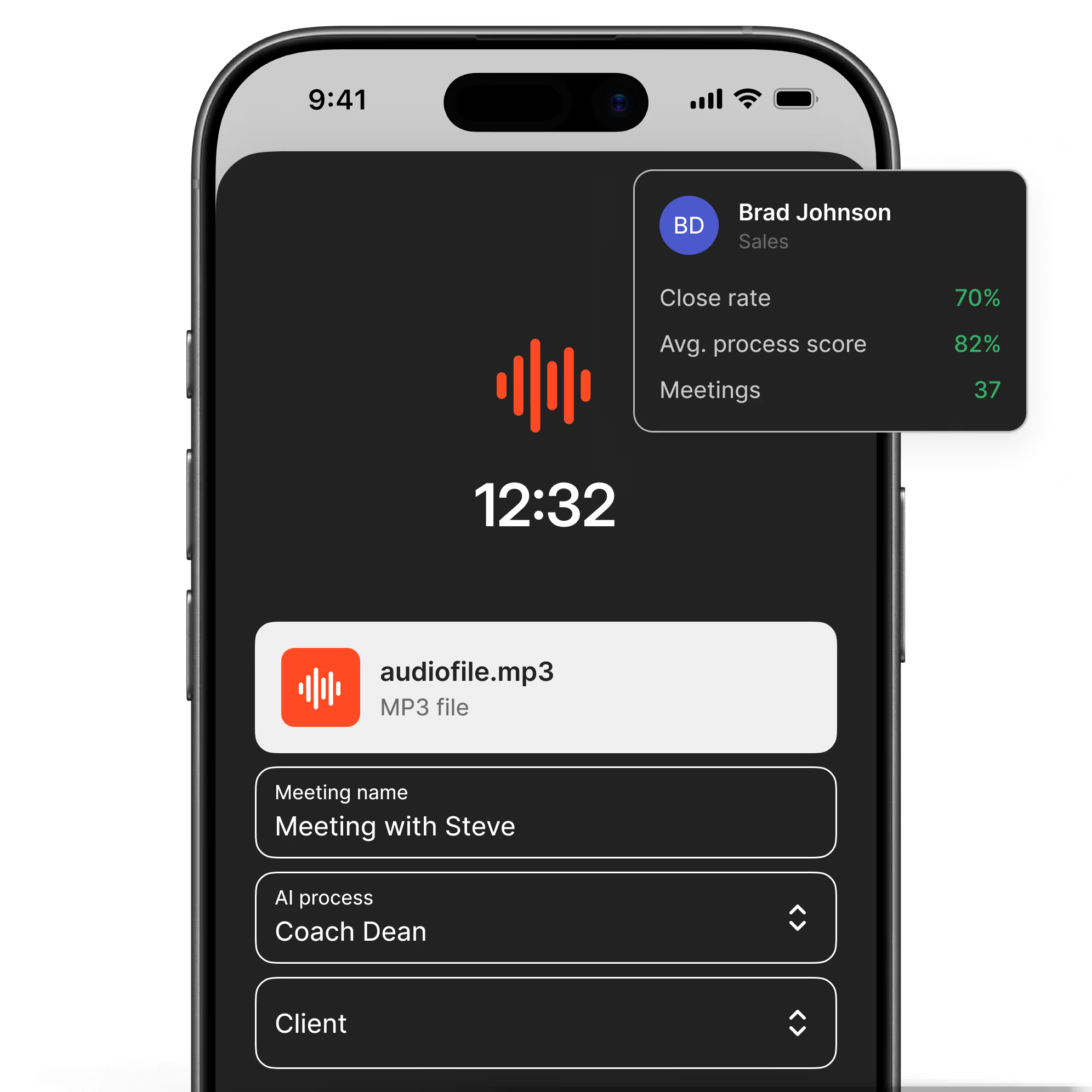
AI sales coaching — Tools like SalesAsk let you review actual sales conversations and coach reps on what they missed. You can't ride along with every rep to every consultation, but AI can catch patterns you'd never see otherwise.
The Landscaping Sales Metric That Matters
Forget close rate for a second. The real metric is average ticket size.
If your team is closing 40% but every job is $5K, you're working too hard for too little. If they close 25% but average $25K per job, you're winning.
Train your team to walk away from small jobs and anchor high on big ones. That's the difference between running a mow crew and running a design-build company.
What Great Landscape Sales Sounds Like
Here's a snippet from a consultation that closed a $60K project:
Homeowner: "We just hate looking at this backyard. It's so boring."
Rep: "I get it. Right now it's just grass and a fence, right? Let me ask you this — if money wasn't the issue, what would make you actually want to be out here?"
Homeowner: "Honestly, a place to have friends over. Maybe a fire pit, some lighting... I don't know."
Rep: "Okay, so imagine this: You've got a custom flagstone patio right here, big enough for your table and chairs. Built-in seating along this edge with cushions. Fire pit in the center — gas, so you're not messing with logs. String lights above, pathway lights along the side. Planters with tall grasses for privacy. You walk out here at 8 PM in July and it feels like a resort. That what you're thinking?"
Homeowner: "Yes. Exactly that."
Rep: "Great. Let me show you what that looks like in three different budget ranges."
That's not a pitch. That's a conversation. And that's what training your team to sell landscaping actually looks like.
Final Thought: Sell the Backyard They'll Instagram, Not the One They'll Mow
If your sales team is talking about grass types and irrigation schedules, they're losing to the rep who's talking about summer BBQs and string lights. Landscaping is emotional. Train your team to sell the feeling, and the rest takes care of itself.
Related Topics: outdoor living space sales training, design-build sales process, landscape consultation techniques, hardscape sales strategies, high-ticket landscaping sales, Good Better Best pricing for landscapers, lifestyle-based sales training
Related Resources
Similar Blogs


Sell More with
AI & Coach your
sales team.
Get Results in 21 Days. See it in action now!

Join 15K+ reps


The #1 Ai Sales Growth System for Home Builders, Home service, Dental/DSO and Home remodeling companies.
Mon-Fri 9-6pm
Join 15K+ reps