Tree Service Sales Training: AI Coaching for Arborists and Tree Care Contractors

Moe Abbas
CEO and Founder, SalesAsk
April 24, 2026
7
On this page
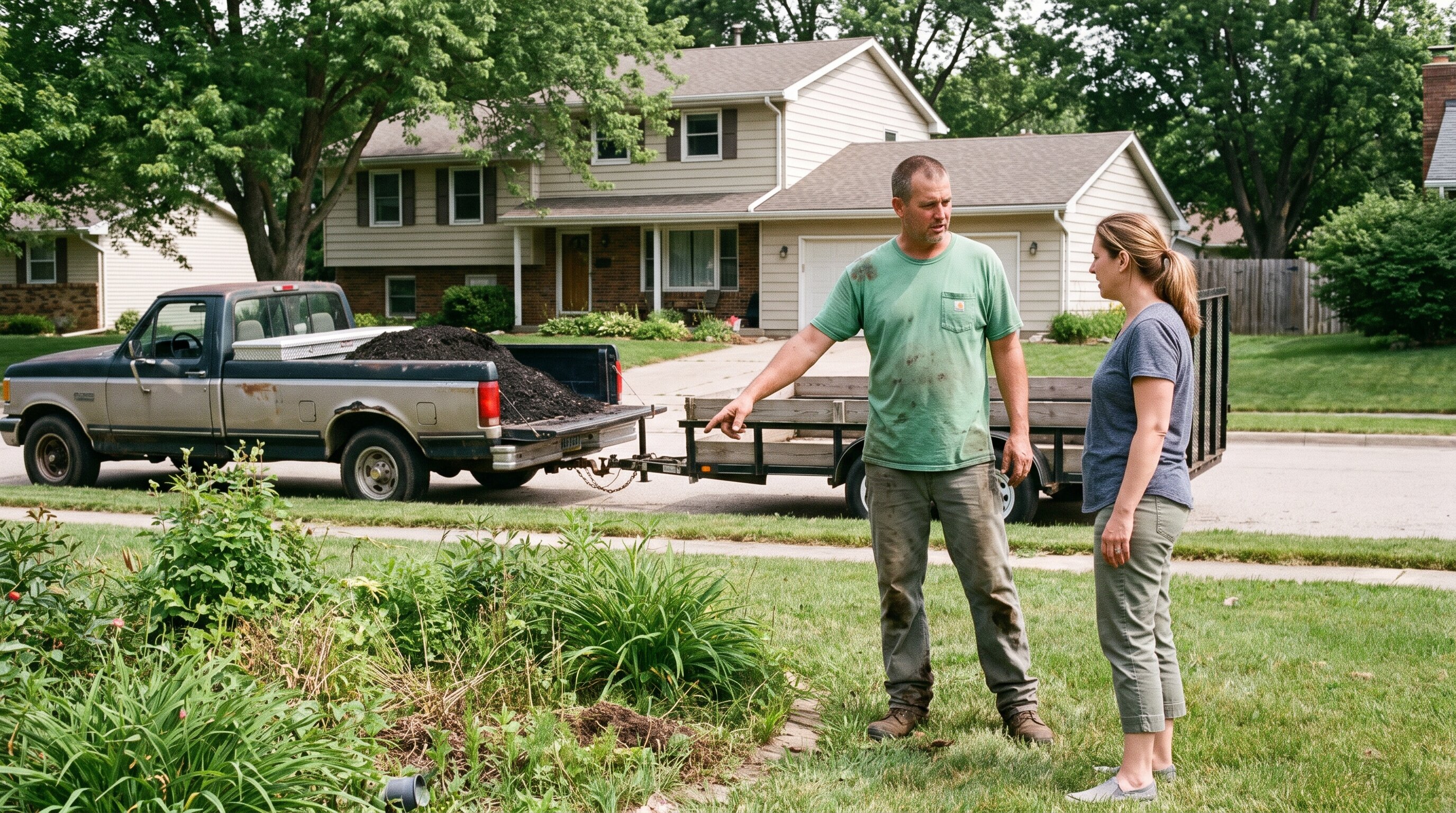
Most tree service companies live or die on their estimators. One guy who can look at a 70-foot oak, talk through the risks, explain the process, and close at $4,800, and three other guys who quote $2,200 and wonder why they’re still not profitable.
The gap isn’t the price. It’s the conversation.
Traditional sales training in tree care has always meant riding along with the experienced estimator, watching how he works, and hoping something sticks. That worked when you had one crew. When you’re scaling to three, five, ten crews, you can’t clone your best closer. You need a system.
That’s where AI coaching changes the game.
Why Tree Service Sales Is Uniquely Difficult
Tree work is emotional. Homeowners have lived next to that maple for twenty years. When you tell them it needs to come down, you’re not just selling a service. You’re managing grief, skepticism, and sticker shock simultaneously.
The technical complexity compounds it. Unlike replacing a water heater, where the customer can’t really argue with you about the job scope, tree work invites second-guessing. “Do I really need to remove it, or can we just trim it?” “The guy down the street quoted half your price.” “Why does hazard removal cost more than regular removal?”
Every objection has a legitimate answer. Most estimators don’t have them ready when it counts.
Add to that the seasonal swings, summer storm damage creates a rush of emergency calls where speed matters more than polish, while dormant-season removal requires a different kind of consultative sell. Your training needs to handle both.
The Estimator Bottleneck
In most tree service companies, the owner or lead estimator handles the high-value assessments. Everyone else does the work. This creates a hard ceiling on growth: you can only take on as much work as your best estimator can quote.
When you try to break through that ceiling by training newer estimators, the results are usually disappointing. They underprice to win bids. They struggle with objections. They quote the obvious work and miss the upsell: the stump grinding, the cable bracing, the ongoing maintenance program.
Real training, not one afternoon shadowing the boss, is what changes this. And real training, at scale, now means AI.
What AI Sales Coaching Looks Like for Tree Service
AI sales coaching listens to your estimators’ actual sales conversations and gives them specific, actionable feedback on what’s working and what isn’t. Not generic advice. Not “be more confident.” Line-by-line analysis of how the conversation unfolded.
If an estimator failed to address the price objection before it came up, AI coaching flags it. If they explained the hazard assessment process in a way that created confusion rather than trust, AI coaching shows them exactly where the conversation went sideways.
Building a Consistent Sales Process
The best tree service operations have a process that every estimator follows. It’s not a script, but it’s a framework: how you assess the site, how you present the scope, how you explain pricing, how you handle the “I need to get other quotes” response.
Virtual ridealong tools let you capture that process from your top performers and systematically transfer it to everyone else on your team. The frameworks your best estimator has internalized over ten years can be distilled, documented, and trained into someone with six months of experience.
That’s leverage. That’s how you scale past the estimator bottleneck.
The Objections That Kill Tree Service Sales
“The guy down the street quoted $1,500 less.”
This one needs to be handled before it appears, not after. Estimators who build trust and explain their process thoroughly, safety credentials, insurance, disposal methodology, follow-up care, make it harder for a lowball competitor to undercut them on price alone. AI coaching identifies which estimators are skipping the value-building steps early in the conversation and paying for it at closing.
“Can’t you just trim it instead of removing it?”
When this objection comes up, it’s often because the estimator didn’t clearly explain why removal is the right call. The homeowner isn’t trying to cheap out. They’re confused. Great estimators anticipate this and address it proactively. AI coaching tracks how often this objection surfaces and whether each estimator has a consistent, persuasive response.
“I need to think about it / get other quotes.”
The classic delay. It’s not always about price, sometimes it’s about trust, or the homeowner needs a spouse involved, or they’re overwhelmed. Trained estimators know how to diagnose which it is and respond accordingly. AI coaching highlights the conversation patterns that lead to more same-day decisions versus more “I’ll call you back” responses.
Real-World Results: What Changes When You Train Better
Companies that implement structured AI coaching consistently see the same outcomes:
- Newer estimators close at rates closer to their senior counterparts within 60-90 days
- Average ticket values go up as upselling (stump removal, cable bracing, maintenance programs) becomes more consistent
- “Think about it” conversions improve because estimators learn to diagnose hesitation rather than just accept it
The Cache case study shows how one home services company used AI coaching to get new hires performing without constant oversight. The same principles apply directly to tree service estimators: faster ramp-up, less management burden, better outcomes.
See how AI-powered coaching helps lawn and landscape contractors close more profitable service upgrades, our irrigation and sprinkler sales training guide shows how teams can handle homeowner objections, present water-saving solutions with confidence, and turn more estimates into long-term maintenance contracts.
Getting Started Without Disrupting Operations
You don’t need to overhaul your entire training program to see results. Most tree service companies start with one crew, one estimator, and one month of coaching data.
What typically happens: the AI identifies two or three consistent patterns, places where the estimator’s approach diverges from what actually converts. The estimator adjusts those specific behaviors. The close rate moves.
Then you do it with the next estimator. And the next.
Request a demo to see how the platform works with service-based contractors. The setup is simple; the data you get in the first two weeks is usually enough to change how you think about your entire sales process.
The Seasonal Opportunity You’re Probably Leaving on the Table
One more thing worth mentioning: post-storm upselling is one of the highest-margin opportunities in tree service, and most companies handle it haphazardly.
When a storm brings down a limb, the homeowner is already in the mindset of dealing with their trees. An estimator who shows up for the cleanup and proactively walks the entire property, flagging other hazards, presenting a maintenance plan, discussing the dead elm in the backyard, is in a unique position to expand the ticket significantly.
AI coaching can be specifically configured to track how well your estimators are taking advantage of these moments. If they’re consistently doing the cleanup and leaving without having the broader conversation, that’s revenue walking out the door.
The goal is to build estimators who see the whole picture, not just the job they were called for.
Related Topics: tree service sales training, arborist sales coaching, tree care estimating tips, AI coaching for contractors, tree removal sales objections, estimator training for tree companies, home services AI sales software*
About the author
Moe Abbas
CEO and Founder, SalesAsk
Moe Abbas is the CEO and founder of SalesAsk, the AI platform that records and coaches in-home sales conversations for home service, home improvement and home builder teams.
He spent more than 20 years in the trades before software, building and scaling companies that generate more than $40M a year. That is where his book, The One Meeting Close: How the Top 1% of Reps in Home Services Close in the First Meeting, came from: his own kitchen table appointments and his reps'.
At SalesAsk he created Coach Dean, the AI sales and compliance coach that hears every visit, scores every step and writes coaching back to the rep. He speaks at industry events on the first-visit close, safety-first selling and building a coaching culture without more ride-alongs.
Everything he writes here comes from recorded conversations and the teams that run them, not from theory.
Moe Abbas
About SalesAsk
Written by the SalesAsk team
SalesAsk records and coaches in-home sales conversations for home service, home improvement and home builder teams.
More postsKeep reading
All posts



Most tree service companies live or die on their estimators. One guy who can look at a 70-foot oak, talk through the risks, explain the process, and close at $4,800, and three other guys who quote $2,200 and wonder why they’re still not profitable.
The gap isn’t the price. It’s the conversation.
Traditional sales training in tree care has always meant riding along with the experienced estimator, watching how he works, and hoping something sticks. That worked when you had one crew. When you’re scaling to three, five, ten crews, you can’t clone your best closer. You need a system.
That’s where AI coaching changes the game.
Why Tree Service Sales Is Uniquely Difficult
Tree work is emotional. Homeowners have lived next to that maple for twenty years. When you tell them it needs to come down, you’re not just selling a service. You’re managing grief, skepticism, and sticker shock simultaneously.
The technical complexity compounds it. Unlike replacing a water heater, where the customer can’t really argue with you about the job scope, tree work invites second-guessing. “Do I really need to remove it, or can we just trim it?” “The guy down the street quoted half your price.” “Why does hazard removal cost more than regular removal?”
Every objection has a legitimate answer. Most estimators don’t have them ready when it counts.
Add to that the seasonal swings, summer storm damage creates a rush of emergency calls where speed matters more than polish, while dormant-season removal requires a different kind of consultative sell. Your training needs to handle both.
The Estimator Bottleneck
In most tree service companies, the owner or lead estimator handles the high-value assessments. Everyone else does the work. This creates a hard ceiling on growth: you can only take on as much work as your best estimator can quote.
When you try to break through that ceiling by training newer estimators, the results are usually disappointing. They underprice to win bids. They struggle with objections. They quote the obvious work and miss the upsell: the stump grinding, the cable bracing, the ongoing maintenance program.
Real training, not one afternoon shadowing the boss, is what changes this. And real training, at scale, now means AI.
What AI Sales Coaching Looks Like for Tree Service
AI sales coaching listens to your estimators’ actual sales conversations and gives them specific, actionable feedback on what’s working and what isn’t. Not generic advice. Not “be more confident.” Line-by-line analysis of how the conversation unfolded.
If an estimator failed to address the price objection before it came up, AI coaching flags it. If they explained the hazard assessment process in a way that created confusion rather than trust, AI coaching shows them exactly where the conversation went sideways.
Building a Consistent Sales Process
The best tree service operations have a process that every estimator follows. It’s not a script, but it’s a framework: how you assess the site, how you present the scope, how you explain pricing, how you handle the “I need to get other quotes” response.
Virtual ridealong tools let you capture that process from your top performers and systematically transfer it to everyone else on your team. The frameworks your best estimator has internalized over ten years can be distilled, documented, and trained into someone with six months of experience.
That’s leverage. That’s how you scale past the estimator bottleneck.
The Objections That Kill Tree Service Sales
“The guy down the street quoted $1,500 less.”
This one needs to be handled before it appears, not after. Estimators who build trust and explain their process thoroughly, safety credentials, insurance, disposal methodology, follow-up care, make it harder for a lowball competitor to undercut them on price alone. AI coaching identifies which estimators are skipping the value-building steps early in the conversation and paying for it at closing.
“Can’t you just trim it instead of removing it?”
When this objection comes up, it’s often because the estimator didn’t clearly explain why removal is the right call. The homeowner isn’t trying to cheap out. They’re confused. Great estimators anticipate this and address it proactively. AI coaching tracks how often this objection surfaces and whether each estimator has a consistent, persuasive response.
“I need to think about it / get other quotes.”
The classic delay. It’s not always about price, sometimes it’s about trust, or the homeowner needs a spouse involved, or they’re overwhelmed. Trained estimators know how to diagnose which it is and respond accordingly. AI coaching highlights the conversation patterns that lead to more same-day decisions versus more “I’ll call you back” responses.
Real-World Results: What Changes When You Train Better
Companies that implement structured AI coaching consistently see the same outcomes:
- Newer estimators close at rates closer to their senior counterparts within 60-90 days
- Average ticket values go up as upselling (stump removal, cable bracing, maintenance programs) becomes more consistent
- “Think about it” conversions improve because estimators learn to diagnose hesitation rather than just accept it
The Cache case study shows how one home services company used AI coaching to get new hires performing without constant oversight. The same principles apply directly to tree service estimators: faster ramp-up, less management burden, better outcomes.
See how AI-powered coaching helps lawn and landscape contractors close more profitable service upgrades, our irrigation and sprinkler sales training guide shows how teams can handle homeowner objections, present water-saving solutions with confidence, and turn more estimates into long-term maintenance contracts.
Getting Started Without Disrupting Operations
You don’t need to overhaul your entire training program to see results. Most tree service companies start with one crew, one estimator, and one month of coaching data.
What typically happens: the AI identifies two or three consistent patterns, places where the estimator’s approach diverges from what actually converts. The estimator adjusts those specific behaviors. The close rate moves.
Then you do it with the next estimator. And the next.
Request a demo to see how the platform works with service-based contractors. The setup is simple; the data you get in the first two weeks is usually enough to change how you think about your entire sales process.
The Seasonal Opportunity You’re Probably Leaving on the Table
One more thing worth mentioning: post-storm upselling is one of the highest-margin opportunities in tree service, and most companies handle it haphazardly.
When a storm brings down a limb, the homeowner is already in the mindset of dealing with their trees. An estimator who shows up for the cleanup and proactively walks the entire property, flagging other hazards, presenting a maintenance plan, discussing the dead elm in the backyard, is in a unique position to expand the ticket significantly.
AI coaching can be specifically configured to track how well your estimators are taking advantage of these moments. If they’re consistently doing the cleanup and leaving without having the broader conversation, that’s revenue walking out the door.
The goal is to build estimators who see the whole picture, not just the job they were called for.
Related Topics: tree service sales training, arborist sales coaching, tree care estimating tips, AI coaching for contractors, tree removal sales objections, estimator training for tree companies, home services AI sales software*