Window Replacement Sales Training: The High-Ticket Home Sale That Changes Everything
Moe Abbas
CEO and Founder, SalesAsk
March 3, 2026
5
On this page
Window replacement is one of the most challenging sales in home services. You're not selling a repair. You're selling a $15,000 to $50,000 investment that most homeowners will only make once in their lifetime.
The decision cycle is long. The competition is brutal. And every homeowner has heard horror stories about pushy window sales reps who wouldn't leave their kitchen table.
If you run a home improvement sales team and want every appointment coached, not only the ones a manager can sit in on, book a SalesAsk demo.
But here's what most training programs get wrong: they focus on closing techniques instead of consultative selling. They teach reps to overcome objections instead of preventing them in the first place.
This guide is different. It's built on what actually works in 2026, because the window industry has changed, and your sales process needs to catch up.
Why Window Sales Is Different from Other Home Services
Most home service sales fall into two categories: emergency repairs or planned upgrades. Window replacement is neither.
It's a "someday" project that suddenly becomes urgent when the first utility bill of winter arrives. Or when a neighbor gets new windows and theirs look dated by comparison.
That timing mismatch creates a unique challenge. Homeowners aren't in pain when you show up, they're in research mode. They want education, not pressure.
The best window reps understand this. They show up as consultants, not closers. They measure twice (literally) and present once. And they never, ever use the "today only" discount tactic that's plagued this industry for decades.
The Five-Stage Window Sales Process
Stage 1: The Initial Contact (Phone or Digital)
Your first conversation sets the tone for everything that follows. Most window companies blow this by jumping straight to "when can we come measure?"
Wrong move.
Instead, ask diagnostic questions:
These questions do two things. First, they qualify the lead. Second, they position you as someone who cares about their specific situation.
Stage 2: The Measure Appointment
This is where most reps lose the sale, because they treat it like a sales call instead of a diagnostic visit.
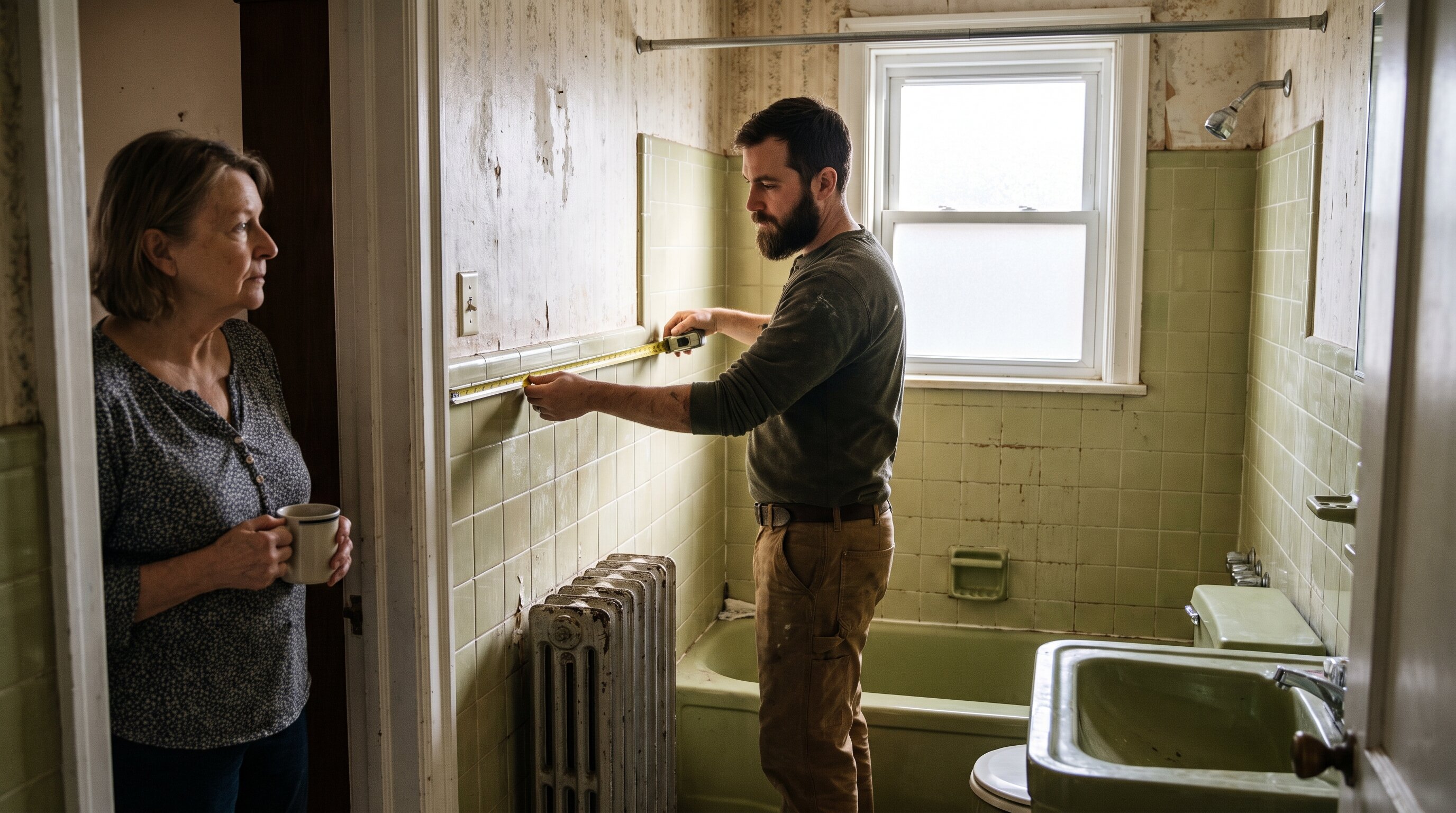
Homeowners expect you to measure, take notes, and leave. If you try to close on the first visit, you trigger their defenses.
So don't.
Instead, use this appointment to build credibility:
Then say this: "I'll take all these measurements back and build a custom proposal for your home. When's a good time for me to come back and walk you through the options?"
That's it. No presentation. No pricing. Just professional service.
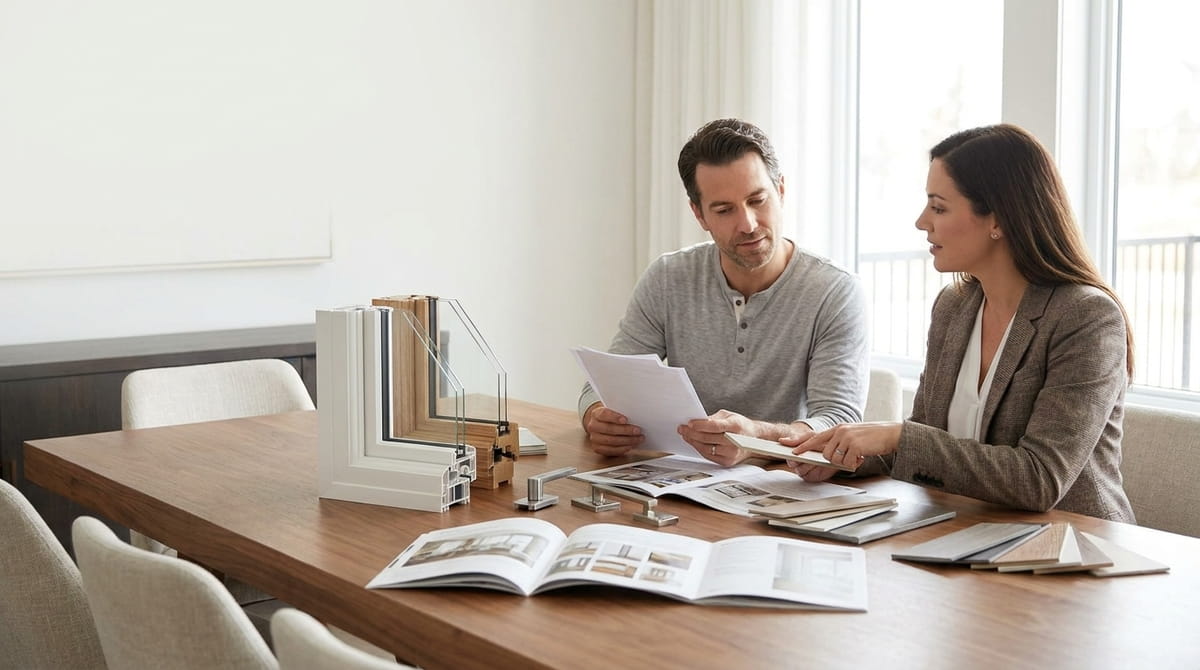
Stage 3: The Presentation Appointment
This is where you actually sell. But not with pressure, with clarity.
Start with their priorities: energy efficiency, noise reduction, curb appeal, low maintenance. Then present three options that address those priorities at different price points.
The good-better-best framework works here because window replacement has natural tiers:
Don't sell features. Sell outcomes. "This glass package will cut your cooling costs by 30%" beats "this is Low-E366" every time.
Stage 4: The Financing Conversation
Most window sales stall here. Not because homeowners can't afford it, because you didn't normalize financing early enough.
Introduce payment options during the presentation, not after. Say something like: "Most of our clients finance this project, which puts it at around $250 per month. Does that fit what you were thinking?"
That reframes the $25,000 investment as a manageable monthly payment. And it surfaces budget concerns before you waste time building proposals for buyers who can't pay cash.
Stage 5: The Follow-Up
If they don't buy on the presentation appointment, you're entering the long game. Window buyers take weeks, sometimes months, to decide.
Your job isn't to pressure them. It's to stay relevant.
Send helpful content:
And check in every 7-10 days. Not to ask "have you decided?" but to offer new information: "I just finished a project two streets over from you, would you like to see how it turned out?"
The Objections You'll Hear (and How to Handle Them)
"We're getting three bids"
Good. You should want them to compare.
Response: "I'd be surprised if you weren't. Most homeowners get 3-5 quotes before choosing. Can I ask, what criteria are you using to compare? Price, warranty, installer experience?"
This flips the dynamic. You're not competing on price alone, you're helping them evaluate their options intelligently.
"Can you do better on price?"
Only if you can afford to. But here's a better approach than discounting: offer financing terms.
Response: "I can't reduce the price without changing the scope, but I can get you better financing terms. Would 12 months same-as-cash work better than our standard option?"
"We're not ready yet"
This isn't an objection, it's information. Find out why.
Response: "No problem. What needs to happen before you're ready? Waiting for tax refund? Want to finish another project first?"
Their answer tells you when to follow up and what to emphasize when you do.
How AI Sales Coaching Accelerates Window Sales Training
Traditional window sales training happens in a classroom once a year. Reps practice on real customers, which means they learn slowly and lose deals in the process.
AI sales coaching flips this model. Reps practice objection handling, financing conversations, and presentation skills in realistic simulations, before they ever sit at a customer's kitchen table.
Every rep gets personalized feedback. Every scenario adapts to their skill level. And managers see exactly where each rep needs coaching.
What the training has to cover
Window replacement sales requires patience, product knowledge, and a consultative approach. You're selling a major home investment to people who are naturally skeptical of your industry.
The reps who win are the ones who earn trust early, present clearly, and follow up consistently. They don't use gimmicks. They don't pressure. They just show up as the expert their customers need.
That's the training that matters. And with tools like AI roleplays, you can now scale that training across your entire team, without relying on annual sales meetings or hoping reps figure it out on the job.
The teams that solve this scale AI-coached practice before reps see a real customer. The Kitchen Tune-Up case study shows how a home improvement franchise standardized rep performance across dozens of locations, without relying on annual training events.
Related Resources
Window replacement is one of the most coaching-intensive sales in home services, high ticket, multi-decision-maker, almost always a same-day-or-never close. SalesAsk's AI coaching for windows and doors contractors is built for that reality. The AI sales coaching platform helps reps handle the price objection, the spouse conversation, and the multiple-bids moment, in real time. Book a demo to see it on a real window replacement call.
About the author
Moe Abbas
CEO and Founder, SalesAsk
Moe Abbas is the CEO and founder of SalesAsk, the AI platform that records and coaches in-home sales conversations for home service, home improvement and home builder teams.
He spent more than 20 years in the trades before software, building and scaling companies that generate more than $40M a year. That is where his book, The One Meeting Close: How the Top 1% of Reps in Home Services Close in the First Meeting, came from: his own kitchen table appointments and his reps'.
At SalesAsk he created Coach Dean, the AI sales and compliance coach that hears every visit, scores every step and writes coaching back to the rep. He speaks at industry events on the first-visit close, safety-first selling and building a coaching culture without more ride-alongs.
Everything he writes here comes from recorded conversations and the teams that run them, not from theory.
Moe Abbas
About SalesAsk
Written by the SalesAsk team
SalesAsk records and coaches in-home sales conversations for home service, home improvement and home builder teams.
More postsKeep reading
All posts

Window replacement is one of the most challenging sales in home services. You're not selling a repair. You're selling a $15,000 to $50,000 investment that most homeowners will only make once in their lifetime.
The decision cycle is long. The competition is brutal. And every homeowner has heard horror stories about pushy window sales reps who wouldn't leave their kitchen table.
If you run a home improvement sales team and want every appointment coached, not only the ones a manager can sit in on, book a SalesAsk demo.
But here's what most training programs get wrong: they focus on closing techniques instead of consultative selling. They teach reps to overcome objections instead of preventing them in the first place.
This guide is different. It's built on what actually works in 2026, because the window industry has changed, and your sales process needs to catch up.
Why Window Sales Is Different from Other Home Services
Most home service sales fall into two categories: emergency repairs or planned upgrades. Window replacement is neither.
It's a "someday" project that suddenly becomes urgent when the first utility bill of winter arrives. Or when a neighbor gets new windows and theirs look dated by comparison.
That timing mismatch creates a unique challenge. Homeowners aren't in pain when you show up, they're in research mode. They want education, not pressure.
The best window reps understand this. They show up as consultants, not closers. They measure twice (literally) and present once. And they never, ever use the "today only" discount tactic that's plagued this industry for decades.
The Five-Stage Window Sales Process
Stage 1: The Initial Contact (Phone or Digital)
Your first conversation sets the tone for everything that follows. Most window companies blow this by jumping straight to "when can we come measure?"
Wrong move.
Instead, ask diagnostic questions:
These questions do two things. First, they qualify the lead. Second, they position you as someone who cares about their specific situation.
Stage 2: The Measure Appointment
This is where most reps lose the sale, because they treat it like a sales call instead of a diagnostic visit.
Homeowners expect you to measure, take notes, and leave. If you try to close on the first visit, you trigger their defenses.
So don't.
Instead, use this appointment to build credibility:
Then say this: "I'll take all these measurements back and build a custom proposal for your home. When's a good time for me to come back and walk you through the options?"
That's it. No presentation. No pricing. Just professional service.
Stage 3: The Presentation Appointment
This is where you actually sell. But not with pressure, with clarity.
Start with their priorities: energy efficiency, noise reduction, curb appeal, low maintenance. Then present three options that address those priorities at different price points.
The good-better-best framework works here because window replacement has natural tiers:
Don't sell features. Sell outcomes. "This glass package will cut your cooling costs by 30%" beats "this is Low-E366" every time.
Stage 4: The Financing Conversation
Most window sales stall here. Not because homeowners can't afford it, because you didn't normalize financing early enough.
Introduce payment options during the presentation, not after. Say something like: "Most of our clients finance this project, which puts it at around $250 per month. Does that fit what you were thinking?"
That reframes the $25,000 investment as a manageable monthly payment. And it surfaces budget concerns before you waste time building proposals for buyers who can't pay cash.
Stage 5: The Follow-Up
If they don't buy on the presentation appointment, you're entering the long game. Window buyers take weeks, sometimes months, to decide.
Your job isn't to pressure them. It's to stay relevant.
Send helpful content:
And check in every 7-10 days. Not to ask "have you decided?" but to offer new information: "I just finished a project two streets over from you, would you like to see how it turned out?"
The Objections You'll Hear (and How to Handle Them)
"We're getting three bids"
Good. You should want them to compare.
Response: "I'd be surprised if you weren't. Most homeowners get 3-5 quotes before choosing. Can I ask, what criteria are you using to compare? Price, warranty, installer experience?"
This flips the dynamic. You're not competing on price alone, you're helping them evaluate their options intelligently.
"Can you do better on price?"
Only if you can afford to. But here's a better approach than discounting: offer financing terms.
Response: "I can't reduce the price without changing the scope, but I can get you better financing terms. Would 12 months same-as-cash work better than our standard option?"
"We're not ready yet"
This isn't an objection, it's information. Find out why.
Response: "No problem. What needs to happen before you're ready? Waiting for tax refund? Want to finish another project first?"
Their answer tells you when to follow up and what to emphasize when you do.
How AI Sales Coaching Accelerates Window Sales Training
Traditional window sales training happens in a classroom once a year. Reps practice on real customers, which means they learn slowly and lose deals in the process.
AI sales coaching flips this model. Reps practice objection handling, financing conversations, and presentation skills in realistic simulations, before they ever sit at a customer's kitchen table.
Every rep gets personalized feedback. Every scenario adapts to their skill level. And managers see exactly where each rep needs coaching.
What the training has to cover
Window replacement sales requires patience, product knowledge, and a consultative approach. You're selling a major home investment to people who are naturally skeptical of your industry.
The reps who win are the ones who earn trust early, present clearly, and follow up consistently. They don't use gimmicks. They don't pressure. They just show up as the expert their customers need.
That's the training that matters. And with tools like AI roleplays, you can now scale that training across your entire team, without relying on annual sales meetings or hoping reps figure it out on the job.
The teams that solve this scale AI-coached practice before reps see a real customer. The Kitchen Tune-Up case study shows how a home improvement franchise standardized rep performance across dozens of locations, without relying on annual training events.
Related Resources
Window replacement is one of the most coaching-intensive sales in home services, high ticket, multi-decision-maker, almost always a same-day-or-never close. SalesAsk's AI coaching for windows and doors contractors is built for that reality. The AI sales coaching platform helps reps handle the price objection, the spouse conversation, and the multiple-bids moment, in real time. Book a demo to see it on a real window replacement call.