
There’s a category of home improvement where the customer already wants to spend money — they just need help spending it on the right thing. Pergolas and shade structures are in that category. Homeowners don’t call you because their outdoor space is broken. They call because they’ve been staring at their backyard all summer imagining what it could be.
That’s actually a harder sales situation than it sounds.
When the motivation is desire rather than need, the conversation can go sideways fast. “We’ll think about it” isn’t uncertainty about your price — it’s uncertainty about whether what you’re proposing will actually feel the way they imagined. The job of a pergola and shade structure salesperson is less about convincing someone to spend money and more about closing the gap between what they picture in their head and what you’re proposing on paper.
Most contractors in this space haven’t been trained on that distinction. They’re excellent at the product and the build. The sales conversation is something they figured out on their own, usually by losing enough jobs to learn what not to say.
Why Pergola Sales Are Different From Other Outdoor Projects
Deck sales have urgency baked in — the old deck is rotting, it’s a safety issue, it needs to go. Fence sales have clear scope — here’s the perimeter, here’s the gate, done. Outdoor kitchen sales have specificity — the homeowner has a Pinterest board and knows what they want.
Pergola and shade structure sales are fuzzier on all three dimensions. There’s rarely urgency. The scope can expand dramatically based on what you present. And the customer’s vision is often half-formed — they know they want “something out there,” but they haven’t nailed down the materials, the style, or whether they want a louvered roof, a fixed pergola, or a sail shade system.
That fuzziness is an opportunity if you know how to navigate it. It’s a trap if you don’t.
The Scope Creep Problem — in Reverse
Most contractors worry about scope creep during a job. In outdoor shade structure sales, the bigger problem is scope collapse before the job even starts. A customer calls excited about a bioclimatic pergola. By the time the estimate arrives, they’ve talked themselves down to a basic wood structure. Your quote was for the bigger job. Their mental commitment quietly shrunk.
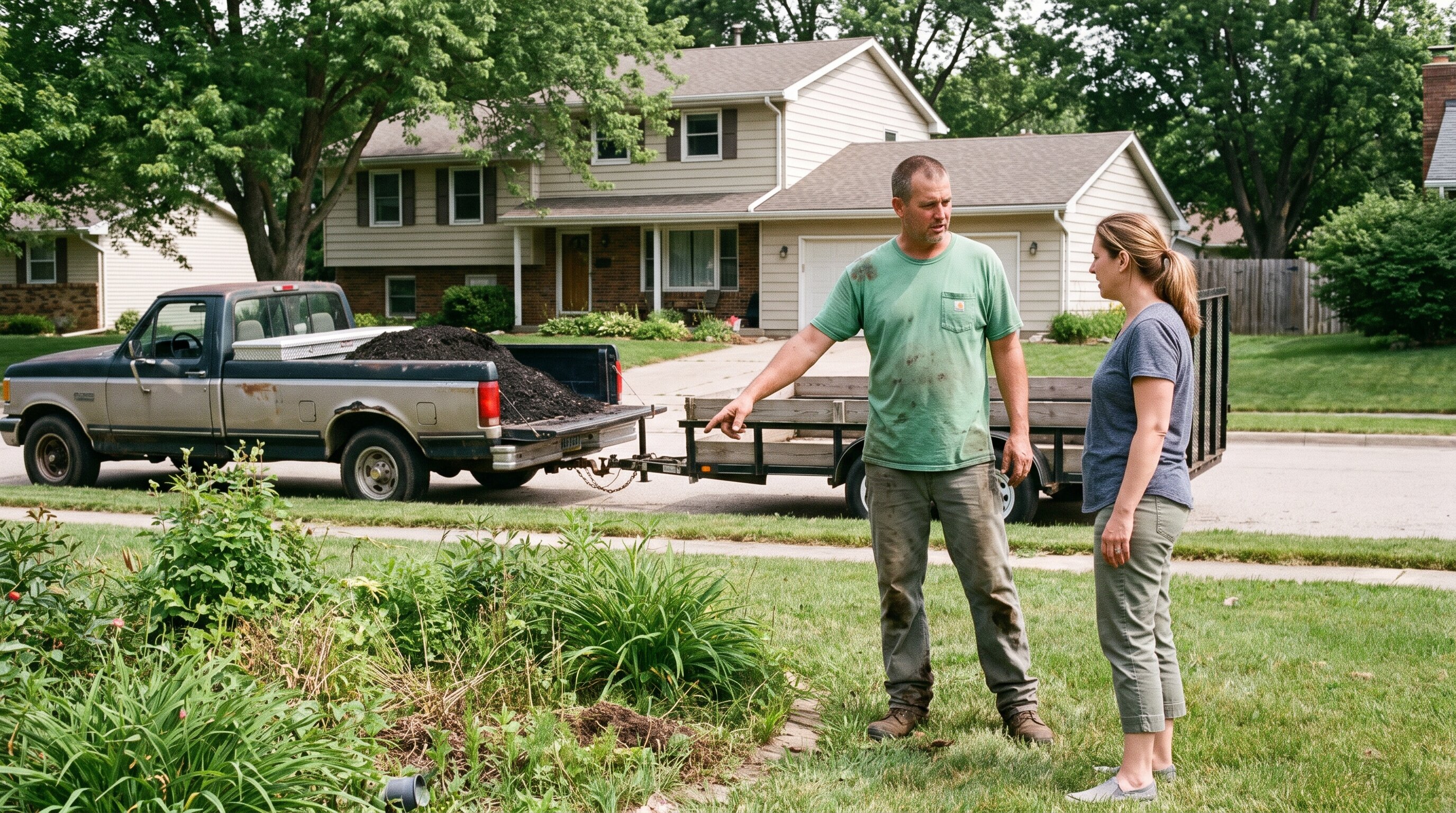
This happens because the sales conversation didn’t actively anchor their original vision. When you validate what they initially wanted — ask them to describe the space they’re imagining, have them show you reference photos, walk the area with them and point out where the afternoon sun hits — you make that vision real. Real enough that they resist talking themselves out of it.
It’s a skill that can be trained. It rarely is.
What Training for This Trade Actually Needs to Cover
Outdoor living sales have a shorter decision cycle than full kitchen or bathroom remodeling, but a longer cycle than service and repair. Most deals close between one and three weeks from first contact. The training program needs to respect that window.
Visual selling techniques. Pergola sales are won in the backyard, not on the showroom floor. Reps who can articulate the light, the shadow patterns, the sightlines — who can help a homeowner actually see the finished project while standing in the unfinished space — convert at dramatically higher rates. This isn’t a natural skill for most people trained in construction. It can be taught.
Materials education as differentiation. Homeowners often don’t know the difference between a pressure-treated wood pergola, an aluminum louvered system, and a cedar or vinyl option until you explain it. The rep who leads the education conversation becomes the trusted advisor. The rep who just quotes to spec becomes a commodity.
Objection patterns specific to outdoor living. The most common objections — “we want to wait until spring,” “we might move in a couple years,” “my husband needs to see it” — have specific responses that actually work. Generic objection handling doesn’t cut it here. Trade-specific prep does.
Follow-up cadence for a 2–3 week cycle. One follow-up is not enough. Two feels aggressive if they’re timed wrong. The right cadence — and the right content at each touchpoint — requires training and usually isn’t something contractors document until they’ve lost enough deals to realize it matters.
AI-powered sales coaching can build this program faster than most contractors expect. Instead of developing training from scratch, you record real estimate conversations, identify what your top performers do differently, and build training around those actual moments.
Fixing the Gap Between the Great Salesperson and Everyone Else
Almost every outdoor living contracting company has one rep who closes at 50–60% and several who close at 25–30%. The owner usually attributes the gap to personality or natural talent. In practice, the gap is almost always behavioral — the top performer asks different questions, handles the “I need to think about it” moment differently, and does something specific in the first five minutes of the estimate conversation that changes the dynamic.
Virtual ridealongs let you find that behavioral gap and teach it. Instead of guessing why one rep outperforms, you compare their recorded estimate conversations. The patterns become obvious quickly. Coaching becomes specific instead of generic.
Connell Roofing used this approach to systematically coach reps without adding manager ride-along hours. The same model applies to outdoor living contractors — especially as teams grow past three or four reps and the owner can no longer personally oversee every estimate.
The First Five Minutes Matter More Than You Think
Most outdoor living reps start estimates by measuring the space and asking what materials the homeowner is considering. That’s fine. But the reps who consistently close are doing something else in the first five minutes: they’re asking the homeowner to describe what they want the space to feel like, not just look like.
“What do you picture doing out here on a Saturday evening?” is a different opener than “So you were thinking a pergola over the patio?”
The first question gets the homeowner telling a story. The second asks them to react to your framing. When they tell you their story, they reveal what they actually care about — privacy, shade, entertaining space, something the kids can use. You can build your entire scope recommendation around that story. When you lead with your framing, you’re just presenting specs.
That’s a trainable difference. And it’s the kind of difference that shows up directly in your close rate.
If you want to see how AI coaching applies to outdoor living and shade structure sales specifically, request a demo and we can walk through examples from comparable trades.
The backyard is one of the highest-margin spaces in home improvement right now. Homeowners are spending more time outside. The demand for well-designed outdoor living is real. The contractors who win this market consistently won’t be the ones with the best pergola — they’ll be the ones with the best conversation.
Related Topics: pergola sales training, shade structure contractor sales coaching, outdoor living contractor sales, AI sales coaching for home improvement, pergola estimate conversion, backyard structure sales training

Related articles

Ready to convert
every conversation?
See exactly what’s holding your team back and fix it fast.
.avif)