Comfort Advisor Training: How the Best HVAC Closers Actually Work
Dara Shabnam
Head of Growth, SalesAsk
August 22, 2026
10
On this page
Two comfort advisors run the same marketed leads in the same suburb, selling the same equipment at the same price book. One closes 35 percent. The other closes 52. I have watched this exact spread play out inside contractor after contractor, and the difference is almost never charisma. It is craft: a set of learnable habits that live in the fifteen feet between the front door and the kitchen table. This is my field guide to that craft: what the comfort advisor role really is, what the top closers do differently, and how I would build the first 90 days if I were starting the job on Monday.
What does a comfort advisor actually do?
A comfort advisor is an HVAC contractor's in-home salesperson: they run replacement and system-upgrade appointments, diagnose the home rather than the equipment, and close five-figure projects at the kitchen table.
If you run a home services sales team and want every appointment coached, not only the ones a manager can sit in on, book a SalesAsk demo.
The title confuses people outside the trade because it sounds like customer service. It is not. When a technician finds a cracked heat exchanger on a service call and the homeowner needs a new system, the tech "turns over" the lead, and the comfort advisor is the one who shows up, often the same evening, to design and sell the replacement. The role sits somewhere between estimator, designer, and closer. On a good day you are measuring supply runs in a crawlspace at 2 p.m. and presenting good-better-best options to a couple at their kitchen table at 6.
The inputs vary. Tech-generated turnovers are the warmest calls you will ever run; the homeowner already trusts the company because the tech was just there. Marketed leads, the ones that come from paid search or radio, are colder, more price-driven, and more likely to be a three-bid situation. A comfort advisor who closes 50 percent of turnovers may close 25 percent of marketed leads, and both numbers can be respectable. Blending them into one close rate hides more than it reveals, which matters later when we talk about what to measure.
Why do comfort advisor close rates vary so much?
Because close rate is mostly a function of call mix and process discipline, not talent. The same advisor can look elite or mediocre depending on lead type and whether anyone ever inspects how they actually sell.
The benchmark data backs this up. MarginPlug's 2025 HVAC benchmarks put residential service close rates at 65 to 75 percent on average, with top performers at 82 to 88 percent, but system replacements presented on a repair call close at just 35 to 52 percent. That 17-point spread on replacements is the comfort advisor's entire world. Nearly every advisor I have seen lands somewhere inside it, and where you land is determined by things that happen in the home, invisible to your manager.
Here is the uncomfortable part: most comfort advisors have never been observed selling. The sales manager rode along twice during onboarding, the advisor was on best behavior both times, and every appointment since has been a black box. The advisor who quietly drops a discount the moment a homeowner hesitates, the one who presents one option instead of three because it is faster, the one who talks past the buying signal at minute 40, none of it surfaces. What surfaces is the monthly number, long after the habit has calcified.
What separates a 35 percent closer from a 52 percent closer?
Top closers run a repeatable in-home process, discovery before diagnosis, three options every time, and an ask at the table, while average closers improvise and follow up by voicemail.
When I compare recordings from top and bottom performers on the same team, the same patterns show up so reliably that I can usually predict the close rate within a few points from one appointment. The differences concentrate in four places.
Discovery first. Weak advisors head straight to the equipment closet. Strong ones sit down first and ask about the house: which rooms never cool, what the summer bills look like, who has allergies, how long they plan to stay. Fifteen minutes of questions does two jobs at once, it surfaces the real problem (often airflow or duct design, not tonnage) and it gives the advisor the homeowner's own words to sell with later.
Three options, priced aloud. Good-better-best is old advice because it works. The top closers present all three without apology and without pre-judging the wallet. The bottom third of advisors consistently present a single option to homes they have decided are "price shoppers." They are wrong about which homes those are roughly half the time, and every single-option presentation quietly converts a design conversation into a bid comparison.
The ask happens at the table. Replacement decisions are made emotionally while both spouses are present and the problem is vivid. Advisors who ask for the business in the home, and are comfortable with the silence that follows, close at kitchen-table rates. Advisors who "leave the quote for you to look over" have voluntarily entered the follow-up lottery, where contractors lose most of their deals to silence rather than to competitors.
Price confidence. This one is subtle on paper and unmistakable on a recording. The moment an advisor's voice speeds up or softens while saying the number, homeowners hear doubt and start negotiating. The fix is not a script; it is reps, hearing yourself say $14,800 out loud enough times that it stops sounding like an apology.
| Metric | Where average advisors sit | Where top advisors sit |
|---|---|---|
| Replacement close rate (repair-call turnovers) | ~35% | ~52% |
| Options presented per appointment | 1 to 2 | 3, every time |
| Ask made in the home | Sometimes | Nearly always |
| Deals decided after the advisor leaves | Most | A minority |
The close-rate row comes from MarginPlug's published benchmark range for replacements presented on repair calls; the rest is the pattern I see across recorded appointments, and your mix will shift the numbers. A team running mostly marketed leads should expect the whole table to slide down and should judge itself against its own baseline, not someone else's turnover-rich mix.
How should a new comfort advisor spend the first 90 days?
Spend the first month learning the craft of the home, the second month running real appointments with every call reviewed, and the third month specializing in whichever lead type you will actually be fed.
Days 1 to 30: learn the trade beneath the sale. You do not need to be a licensed tech, but you need to speak the language honestly, what a load calculation is and why oversizing is malpractice, why a two-stage system fixes the bedroom that never cools, what an IAQ add-on genuinely does versus what the brochure claims. Homeowners forgive a salesperson who says "let me confirm that with my install manager." They do not forgive one who bluffs and gets caught by their brother-in-law who "knows HVAC."
Days 31 to 60: run appointments and review every one. This is where recording changes the economics of onboarding. A ride-along costs your sales manager four hours and changes your behavior while they are watching. A recorded appointment costs nobody anything and captures how you actually sell. New advisors who listen back to even two of their own calls a week self-correct at a speed that used to take a season of Saturdays. The honest tradeoff: some advisors hate being recorded at first, and a manager who uses recordings to ambush people will poison the well permanently. Recording works when it is framed, and used, as game film, not surveillance.
Days 61 to 90: specialize in your feed. If your company feeds you tech turnovers, spend your energy on the handoff, ride with your best techs, agree on exactly what the tech says before you arrive, and treat the tech as the opener whose trust you are inheriting. If you live on marketed leads, drill the first ten minutes instead; you are building trust from zero with a homeowner who has two other bids scheduled, and the discovery conversation is where those deals are won or lost.
Which numbers should a comfort advisor track?
Track close rate by lead type, average ticket, options presented per appointment, and follow-up conversion, and treat any blended, all-leads close rate as a vanity number.
Close rate by lead type is the headline metric, for the reasons above. Average ticket is the quiet one: two advisors can close at the same rate while one sells $2,000 more per job simply by presenting the "best" option with conviction and offering financing every time rather than only when the kitchen looks expensive. Options-per-appointment is a leading indicator you can control this week, unlike close rate, which lags a month behind whatever you change. And follow-up conversion, how many of your "let me think about it" homes ever sign, tells you whether your process after the appointment exists at all. For most advisors it hovers near zero, which is less a personal failing than a structural one, as the next section argues.
What happens after you leave the driveway?
For most comfort advisors, nothing happens: the paper proposal goes on the counter, the spouse who missed the appointment never hears the real pitch, and the deal dies of silence.
Here is a position I will defend: the follow-up gap costs comfort advisors more revenue than any weakness inside the appointment itself. The one-legger who genuinely needed to talk to a spouse, the couple who wanted one night to think. These are winnable deals, and the industry's follow-up tooling is a voicemail and a hope. The homeowner who was leaning yes on Tuesday cannot re-experience your presentation on Thursday. All they can re-experience is a number on a sheet of paper, stripped of every reason you gave for it.
This is the problem we built Homeplan for: a digital home the proposal lives in after you leave, where the options stay visual, the reasoning stays attached, and you can see when the household is back inside looking, which turns follow-up from cold-calling into answering. I will concede the tradeoff plainly: a digital proposal only helps if your in-home process is already sound, and an advisor who skips discovery will simply lose deals slightly more legibly. Fix the kitchen table first. Then stop losing the deals you already earned there.
Frequently asked questions
How much do comfort advisors make?
Most are paid on commission, commonly in the 5 to 10 percent range of sold revenue depending on structure and self-generated versus company-fed leads. A capable advisor closing solid volume on healthy tickets can out-earn most roles in the trades; pay varies enough by market and comp plan that you should model it against a specific offer rather than an average.
Do I need HVAC technician experience to become a comfort advisor?
No, and some of the best advisors come from retail or hospitality rather than the trades. You need enough technical fluency to design honestly and answer questions without bluffing, which a motivated person can build in a few months with ride-alongs and a good install manager.
What is a good close rate for a comfort advisor?
On replacements presented from repair calls, published benchmarks run 35 to 52 percent, so above 50 on turnovers is strong. On marketed leads, mid-20s to 30s can be excellent. Always ask what mix a quoted number was earned on.
What is a turnover in HVAC sales?
A turnover is a lead handed from a service technician to the comfort advisor, the tech finds a failing system on a repair call and "turns it over" for a replacement conversation. Turnovers are the warmest lead type in the industry because the company has already earned trust in the home.
How is a comfort advisor different from a selling technician?
A selling tech repairs and offers replacement options within a service call; a comfort advisor runs dedicated sales appointments with time for full discovery, load considerations, and multi-option presentations. Companies running both well use the tech as the opener and the advisor as the closer.
Does recording in-home sales appointments actually improve close rates?
In my experience, yes, not because the recording itself sells, but because it makes coaching specific: managers stop guessing why deals die and start fixing the exact minute where they do. The caveat is adoption: framed as surveillance it fails, and consent rules vary by state, so check recording law where you operate.
Where I would start
If you run a team: pick your two lowest closers, get their next five appointments recorded or ridden, and count options presented and asks made. You will find the leak in a week. If you are the advisor: listen to one of your own appointments this Friday, from the awkward doorstep hello to the goodbye. It is uncomfortable exactly once. After that it is just game film, and the players who watch film win more.
For the complete HVAC sales process, see our HVAC sales training guide.
For a full rundown of the category, see our guide to the best AI tools for HVAC contractors.
Sources
- MarginPlug: HVAC Close Rate Benchmarks (2025): residential service close rates of 65 to 75% (average) and 82 to 88% (top performers); system replacement presented on repair calls at 35 to 52%.
- LennoxPROs: 6 Ways to Measure Comfort Advisor Success: background on comfort advisor performance measurement.
About the author
Dara Shabnam
Head of Growth, SalesAsk
Dara Shabnam leads growth at SalesAsk. She writes about in-home sales training, recording consent, and what the recorded conversations of home service and trades teams show about how jobs are actually won.
Dara Shabnam
About SalesAsk
Written by the SalesAsk team
SalesAsk records and coaches in-home sales conversations for home service, home improvement and home builder teams.
More postsKeep reading
All posts

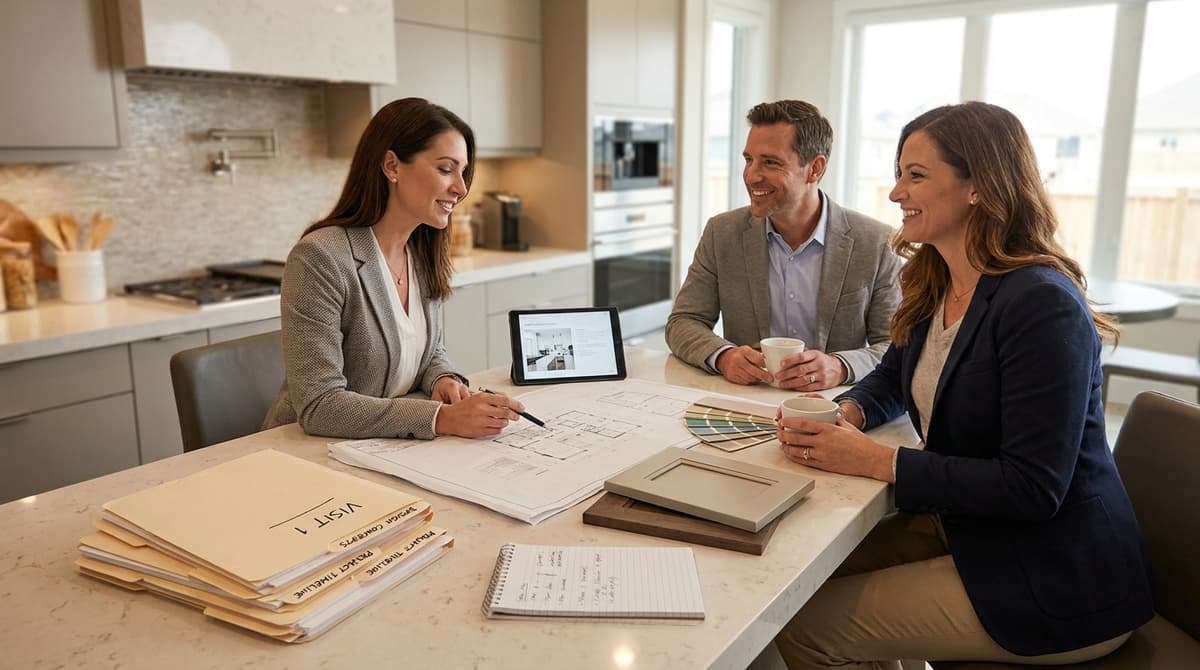

Two comfort advisors run the same marketed leads in the same suburb, selling the same equipment at the same price book. One closes 35 percent. The other closes 52. I have watched this exact spread play out inside contractor after contractor, and the difference is almost never charisma. It is craft: a set of learnable habits that live in the fifteen feet between the front door and the kitchen table. This is my field guide to that craft: what the comfort advisor role really is, what the top closers do differently, and how I would build the first 90 days if I were starting the job on Monday.
What does a comfort advisor actually do?
A comfort advisor is an HVAC contractor's in-home salesperson: they run replacement and system-upgrade appointments, diagnose the home rather than the equipment, and close five-figure projects at the kitchen table.
If you run a home services sales team and want every appointment coached, not only the ones a manager can sit in on, book a SalesAsk demo.
The title confuses people outside the trade because it sounds like customer service. It is not. When a technician finds a cracked heat exchanger on a service call and the homeowner needs a new system, the tech "turns over" the lead, and the comfort advisor is the one who shows up, often the same evening, to design and sell the replacement. The role sits somewhere between estimator, designer, and closer. On a good day you are measuring supply runs in a crawlspace at 2 p.m. and presenting good-better-best options to a couple at their kitchen table at 6.
The inputs vary. Tech-generated turnovers are the warmest calls you will ever run; the homeowner already trusts the company because the tech was just there. Marketed leads, the ones that come from paid search or radio, are colder, more price-driven, and more likely to be a three-bid situation. A comfort advisor who closes 50 percent of turnovers may close 25 percent of marketed leads, and both numbers can be respectable. Blending them into one close rate hides more than it reveals, which matters later when we talk about what to measure.
Why do comfort advisor close rates vary so much?
Because close rate is mostly a function of call mix and process discipline, not talent. The same advisor can look elite or mediocre depending on lead type and whether anyone ever inspects how they actually sell.
The benchmark data backs this up. MarginPlug's 2025 HVAC benchmarks put residential service close rates at 65 to 75 percent on average, with top performers at 82 to 88 percent, but system replacements presented on a repair call close at just 35 to 52 percent. That 17-point spread on replacements is the comfort advisor's entire world. Nearly every advisor I have seen lands somewhere inside it, and where you land is determined by things that happen in the home, invisible to your manager.
Here is the uncomfortable part: most comfort advisors have never been observed selling. The sales manager rode along twice during onboarding, the advisor was on best behavior both times, and every appointment since has been a black box. The advisor who quietly drops a discount the moment a homeowner hesitates, the one who presents one option instead of three because it is faster, the one who talks past the buying signal at minute 40, none of it surfaces. What surfaces is the monthly number, long after the habit has calcified.
What separates a 35 percent closer from a 52 percent closer?
Top closers run a repeatable in-home process, discovery before diagnosis, three options every time, and an ask at the table, while average closers improvise and follow up by voicemail.
When I compare recordings from top and bottom performers on the same team, the same patterns show up so reliably that I can usually predict the close rate within a few points from one appointment. The differences concentrate in four places.
Discovery first. Weak advisors head straight to the equipment closet. Strong ones sit down first and ask about the house: which rooms never cool, what the summer bills look like, who has allergies, how long they plan to stay. Fifteen minutes of questions does two jobs at once, it surfaces the real problem (often airflow or duct design, not tonnage) and it gives the advisor the homeowner's own words to sell with later.
Three options, priced aloud. Good-better-best is old advice because it works. The top closers present all three without apology and without pre-judging the wallet. The bottom third of advisors consistently present a single option to homes they have decided are "price shoppers." They are wrong about which homes those are roughly half the time, and every single-option presentation quietly converts a design conversation into a bid comparison.
The ask happens at the table. Replacement decisions are made emotionally while both spouses are present and the problem is vivid. Advisors who ask for the business in the home, and are comfortable with the silence that follows, close at kitchen-table rates. Advisors who "leave the quote for you to look over" have voluntarily entered the follow-up lottery, where contractors lose most of their deals to silence rather than to competitors.
Price confidence. This one is subtle on paper and unmistakable on a recording. The moment an advisor's voice speeds up or softens while saying the number, homeowners hear doubt and start negotiating. The fix is not a script; it is reps, hearing yourself say $14,800 out loud enough times that it stops sounding like an apology.
| Metric | Where average advisors sit | Where top advisors sit |
|---|---|---|
| Replacement close rate (repair-call turnovers) | ~35% | ~52% |
| Options presented per appointment | 1 to 2 | 3, every time |
| Ask made in the home | Sometimes | Nearly always |
| Deals decided after the advisor leaves | Most | A minority |
The close-rate row comes from MarginPlug's published benchmark range for replacements presented on repair calls; the rest is the pattern I see across recorded appointments, and your mix will shift the numbers. A team running mostly marketed leads should expect the whole table to slide down and should judge itself against its own baseline, not someone else's turnover-rich mix.
How should a new comfort advisor spend the first 90 days?
Spend the first month learning the craft of the home, the second month running real appointments with every call reviewed, and the third month specializing in whichever lead type you will actually be fed.
Days 1 to 30: learn the trade beneath the sale. You do not need to be a licensed tech, but you need to speak the language honestly, what a load calculation is and why oversizing is malpractice, why a two-stage system fixes the bedroom that never cools, what an IAQ add-on genuinely does versus what the brochure claims. Homeowners forgive a salesperson who says "let me confirm that with my install manager." They do not forgive one who bluffs and gets caught by their brother-in-law who "knows HVAC."
Days 31 to 60: run appointments and review every one. This is where recording changes the economics of onboarding. A ride-along costs your sales manager four hours and changes your behavior while they are watching. A recorded appointment costs nobody anything and captures how you actually sell. New advisors who listen back to even two of their own calls a week self-correct at a speed that used to take a season of Saturdays. The honest tradeoff: some advisors hate being recorded at first, and a manager who uses recordings to ambush people will poison the well permanently. Recording works when it is framed, and used, as game film, not surveillance.
Days 61 to 90: specialize in your feed. If your company feeds you tech turnovers, spend your energy on the handoff, ride with your best techs, agree on exactly what the tech says before you arrive, and treat the tech as the opener whose trust you are inheriting. If you live on marketed leads, drill the first ten minutes instead; you are building trust from zero with a homeowner who has two other bids scheduled, and the discovery conversation is where those deals are won or lost.
Which numbers should a comfort advisor track?
Track close rate by lead type, average ticket, options presented per appointment, and follow-up conversion, and treat any blended, all-leads close rate as a vanity number.
Close rate by lead type is the headline metric, for the reasons above. Average ticket is the quiet one: two advisors can close at the same rate while one sells $2,000 more per job simply by presenting the "best" option with conviction and offering financing every time rather than only when the kitchen looks expensive. Options-per-appointment is a leading indicator you can control this week, unlike close rate, which lags a month behind whatever you change. And follow-up conversion, how many of your "let me think about it" homes ever sign, tells you whether your process after the appointment exists at all. For most advisors it hovers near zero, which is less a personal failing than a structural one, as the next section argues.
What happens after you leave the driveway?
For most comfort advisors, nothing happens: the paper proposal goes on the counter, the spouse who missed the appointment never hears the real pitch, and the deal dies of silence.
Here is a position I will defend: the follow-up gap costs comfort advisors more revenue than any weakness inside the appointment itself. The one-legger who genuinely needed to talk to a spouse, the couple who wanted one night to think. These are winnable deals, and the industry's follow-up tooling is a voicemail and a hope. The homeowner who was leaning yes on Tuesday cannot re-experience your presentation on Thursday. All they can re-experience is a number on a sheet of paper, stripped of every reason you gave for it.
This is the problem we built Homeplan for: a digital home the proposal lives in after you leave, where the options stay visual, the reasoning stays attached, and you can see when the household is back inside looking, which turns follow-up from cold-calling into answering. I will concede the tradeoff plainly: a digital proposal only helps if your in-home process is already sound, and an advisor who skips discovery will simply lose deals slightly more legibly. Fix the kitchen table first. Then stop losing the deals you already earned there.
Frequently asked questions
How much do comfort advisors make?
Most are paid on commission, commonly in the 5 to 10 percent range of sold revenue depending on structure and self-generated versus company-fed leads. A capable advisor closing solid volume on healthy tickets can out-earn most roles in the trades; pay varies enough by market and comp plan that you should model it against a specific offer rather than an average.
Do I need HVAC technician experience to become a comfort advisor?
No, and some of the best advisors come from retail or hospitality rather than the trades. You need enough technical fluency to design honestly and answer questions without bluffing, which a motivated person can build in a few months with ride-alongs and a good install manager.
What is a good close rate for a comfort advisor?
On replacements presented from repair calls, published benchmarks run 35 to 52 percent, so above 50 on turnovers is strong. On marketed leads, mid-20s to 30s can be excellent. Always ask what mix a quoted number was earned on.
What is a turnover in HVAC sales?
A turnover is a lead handed from a service technician to the comfort advisor, the tech finds a failing system on a repair call and "turns it over" for a replacement conversation. Turnovers are the warmest lead type in the industry because the company has already earned trust in the home.
How is a comfort advisor different from a selling technician?
A selling tech repairs and offers replacement options within a service call; a comfort advisor runs dedicated sales appointments with time for full discovery, load considerations, and multi-option presentations. Companies running both well use the tech as the opener and the advisor as the closer.
Does recording in-home sales appointments actually improve close rates?
In my experience, yes, not because the recording itself sells, but because it makes coaching specific: managers stop guessing why deals die and start fixing the exact minute where they do. The caveat is adoption: framed as surveillance it fails, and consent rules vary by state, so check recording law where you operate.
Where I would start
If you run a team: pick your two lowest closers, get their next five appointments recorded or ridden, and count options presented and asks made. You will find the leak in a week. If you are the advisor: listen to one of your own appointments this Friday, from the awkward doorstep hello to the goodbye. It is uncomfortable exactly once. After that it is just game film, and the players who watch film win more.
For the complete HVAC sales process, see our HVAC sales training guide.
For a full rundown of the category, see our guide to the best AI tools for HVAC contractors.
Sources
- MarginPlug: HVAC Close Rate Benchmarks (2025): residential service close rates of 65 to 75% (average) and 82 to 88% (top performers); system replacement presented on repair calls at 35 to 52%.
- LennoxPROs: 6 Ways to Measure Comfort Advisor Success: background on comfort advisor performance measurement.