How Homeowners Choose Between Contractor Bids (and Why the Decision Happens Without You)
Dara Shabnam
Head of Growth, SalesAsk
September 6, 2026
8

On this page
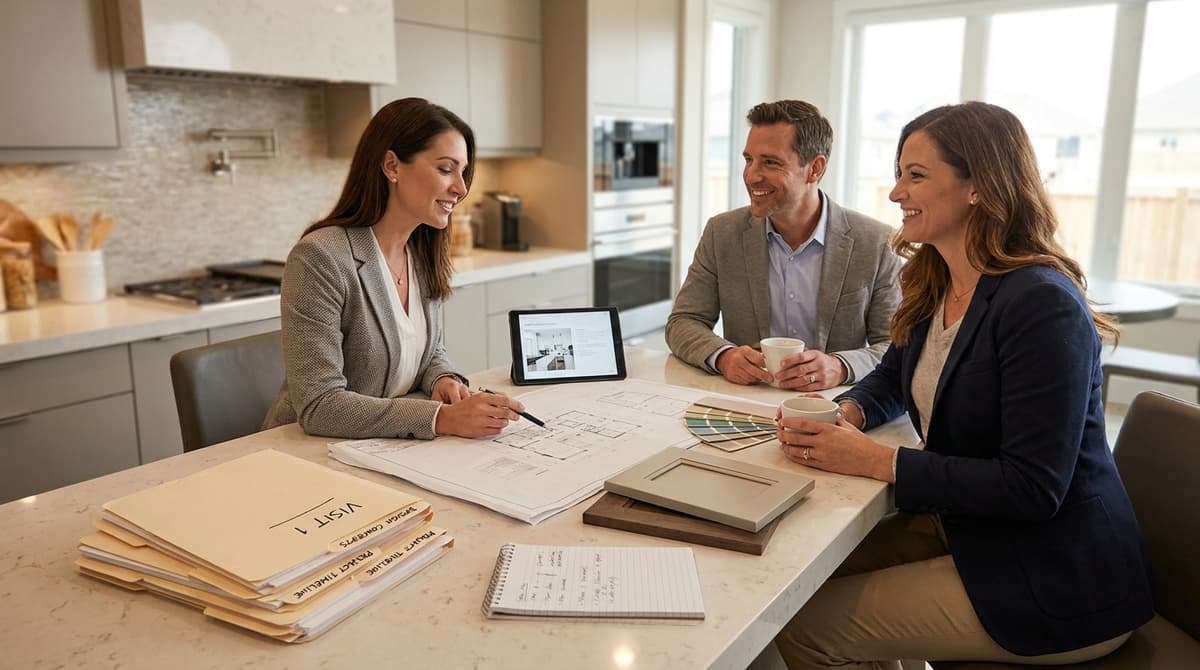
Two nights after your comfort advisor gave the best presentation of his career, three quotes are fanned out on a kitchen table in a house he will never enter again. It is 8:40 pm. The homeowner's husband, who was at work during the appointment, is reading your proposal for the first time with a beer in one hand and his phone in the other. Your rep spent ninety minutes building trust in that living room. He gets zero minutes in this one.
I have spent the past year watching recorded sales appointments across HVAC, roofing, and remodeling companies, and the pattern that bothers me most has nothing to do with what reps say. It is what happens after they say it. We coach the appointment obsessively and then hand the actual decision, the twenty-minute kitchen-table conversation where the winner gets picked, to chance. This post is about that conversation: who is in it, what they weigh, and what you can do to be present when you are not.
If you run a home services sales team and want every appointment coached, not only the ones a manager can sit in on, book a SalesAsk demo.
Who is actually in the room when the decision gets made?
Almost never your rep: the decision is typically made by two homeowners comparing paperwork days after the last appointment, often with a spouse who never met you.
Think about the mechanics. A homeowner replacing a furnace or a roof books two or three appointments across a week or two. Each contractor gets their sit. Then the appointments end, and the household deliberates. If one spouse was absent for your visit, the classic one-legger, your entire case is now being argued secondhand by an amateur. The homeowner who liked your rep is paraphrasing a ninety-minute presentation from memory, badly, to the household's real skeptic.
Meanwhile the phone is out. Clear Seas Research found that 91% of homeowners rate online reviews as important when choosing an HVAC contractor, with Google (56%) and the contractor's own website (51%) as the top places they look. So the kitchen-table conversation is not just your quote versus two competitors. It is your quote versus two competitors, versus your Google reviews, versus a one-star rant from 2023 that nobody at your company ever answered.
How many bids are you really competing against?
Plan on three: roughly two-thirds of homeowners collect three quotes before choosing, and the serious ones collect more.
Roofing Contractor's homeowner survey put it at about 67% of homeowners gathering three quotes before selecting a contractor, with another 6% seeking four or more. Modernize's data lands in the same range, with roughly 70% comparing two to three quotes. This is not indecision. It is a deliberate strategy homeowners are taught by every consumer-advice article ever written: get three bids, throw out the weird one, negotiate with the middle.
Here is the uncomfortable part for anyone who believes a great sit wins the job. If the average project has three bidders and you close one in three, you are performing exactly at random. The presentation earned you a seat at the table. It did not earn you the table.
What do homeowners actually weigh besides price?
Trust signals beat price for most buyers. A large majority say they would pay more for a contractor with a better reputation.
The research here is more one-sided than most sales managers expect:
| What homeowners say | Share | Source |
|---|---|---|
| Online reviews are important to their choice | 91% | Clear Seas Research / ACHR News |
| Would pay more for a contractor with a better reputation | 72% | Housecall Pro |
| Worry about hiring an unreliable contractor | ~70% | Leaf Home / Morning Consult |
| Say a contractor has deceived them before | 41% | Leaf Home / Morning Consult |
| Expect a response within one to two days | 54% | Roofing Contractor survey |
Read that middle of the table again. Seven in ten homeowners are worried you will burn them, and four in ten believe a contractor already has. The kitchen-table conversation is not really a price comparison. It is a risk assessment conducted by people with trust scars. The bid that wins is usually the one that makes saying yes feel safest, which is why the cheap bid loses more often than contractors think, and why the confident, documented, well-reviewed bid can carry a 10-15% premium.
I will concede the other side: in a true commodity repair, a water heater swap, a like-for-like condenser, price weighs heavier, and no amount of proposal polish rescues a number that is 40% high. Trust wins ties and small gaps. It does not erase large ones.
Why does your best presentation lose to a mediocre quote?
Because the presentation does not travel, the only part of your ninety minutes that survives into the decision room is the paperwork you left behind.
This is the asymmetry that took me too long to see. Your rep's discovery, his load calculation walkthrough, the moment he caught the duct leak the other guys missed: none of it is in the room on decision night. What is in the room is a three-page PDF with a model number and a price. Your competitor's PDF looks nearly identical. On paper, the $18,400 craftsman and the $16,900 corner-cutter are the same font.
Every contractor sales methodology pours effort into the live appointment, and I understand why: it is the part we can watch, coach, and roleplay. But the homeowner spends ninety minutes with your rep and roughly two weeks with your quote. The quote does more selling than the rep does, by sheer time in the room, and at most companies it is the least-designed artifact in the entire sales process.
So the practical question is not "how do I present better?" Your team is probably already decent at that. The question is: what argues for you at the kitchen table?
How do you win a conversation you are not in?
You send a better proxy, a proposal built to be re-read, compared, and defended by the homeowner who is on your side.
A few things measurably change what happens after the rep leaves:
Give the quote a voice. A static PDF states a price. A digital proposal restates your case, photos of the actual problem from their actual attic, the options laid out good-better-best, financing as a monthly payment next to each one, your reviews and license embedded where the skeptical spouse will trip over them. This is exactly the gap we built Homeplan to close: a living decision space the homeowner can reopen on their phone at 8:40 pm, instead of a piece of paper that says $18,400 and nothing else. I am biased about the product; I am not biased about the gap. Any format that lets your evidence travel beats one that does not.
Arm your advocate. One person at that table liked you. Give them ammunition: a plain-English recap of what you found and why the fix costs what it costs, written for the spouse who was not home. Reps who record their appointments have an unfair advantage here, because the recap can quote what was actually discussed instead of what the rep remembers pitching.
Answer the review check before they run it. They will look you up mid-conversation. If your last response to a Google review is from before the pandemic, fix that this week. It is the cheapest close-rate improvement in this entire post.
Time your follow-up to the deliberation, not your pipeline. Most households deliberate for days, and 54% of homeowners expect to hear from a contractor within a day or two. A day-two check-in lands inside the decision window. A day-seven check-in is a eulogy.
The tradeoff to concede: none of this rescues a bad appointment. A digital proposal built on lazy discovery is a prettier version of nothing. The proxy amplifies the sit. It cannot replace it. And a minority of homeowners, usually older, will print whatever you send and compare it on paper anyway. You are improving odds, not guaranteeing outcomes.
FAQ
How long do homeowners take to decide after the last bid?
Most households deliberate for several days to two weeks after the final appointment, longer for five-figure remodels. The decision usually happens in one or two concentrated conversations, which is why follow-up inside the first 48 hours matters so much.
Should I try to be the last bid instead of the first?
Being last helps if your rep is trained to reset the criteria the other bids were judged on. But you rarely control the order, and a proposal that keeps arguing after you leave matters more than sequence. First with great follow-through beats last with silence.
Does offering three options in the quote actually change the decision?
Yes. A single-option quote forces a yes/no referendum on one number and invites comparison purely on price. Options move the kitchen-table conversation from "should we pick them?" to "which of theirs should we pick?" A materially better question for you.
What if the homeowner just wants the cheapest bid?
Some do, and you should let a fraction of those walk. But the survey data says most are risk-shoppers, not price-shoppers: 72% claim they would pay more for a better reputation. If you lose most ties on price, the problem is usually undifferentiated paperwork, not the market.
Can recording appointments help with the after-the-visit problem?
Indirectly, a lot. Recorded appointments let you send recaps grounded in what was actually said, coach reps on how they set up the comparison, and see which objections surfaced before the silence started. Recording does not follow the homeowner home, but it makes everything you send home smarter.
The short version
The job is usually won or lost at a table your rep never sits at, by a comparison you never see, argued by a homeowner working from memory. Stop treating the appointment as the whole game. This week: rewrite one quote so the absent spouse could understand why it costs what it costs, answer your ten most recent Google reviews, and move your first follow-up to within 48 hours. Then make your proposal do what your rep cannot, stay in the room.
Sources
- Roofing Contractor, 2024 Homeowner Survey (bid-gathering behavior, response-time expectations): roofingcontractor.com/articles/99160-homeowner-survey
- Clear Seas Research via ACHR News, homeowner review reliance survey (91% figure, platform breakdown): achrnews.com/articles/155206
- improveit360, "Major Shifts in How Homeowners Choose Contractors" (Leaf Home/Morning Consult trust data, Modernize quote-comparison data, Housecall Pro reputation-premium figure): improveit360.com/blog/homeowner-behavior-shifts-2026
About the author
Dara Shabnam
Head of Growth, SalesAsk
Dara Shabnam leads growth at SalesAsk. She writes about in-home sales training, recording consent, and what the recorded conversations of home service and trades teams show about how jobs are actually won.
Dara Shabnam
About SalesAsk
Written by the SalesAsk team
SalesAsk records and coaches in-home sales conversations for home service, home improvement and home builder teams.
More postsKeep reading
All posts


Two nights after your comfort advisor gave the best presentation of his career, three quotes are fanned out on a kitchen table in a house he will never enter again. It is 8:40 pm. The homeowner's husband, who was at work during the appointment, is reading your proposal for the first time with a beer in one hand and his phone in the other. Your rep spent ninety minutes building trust in that living room. He gets zero minutes in this one.
I have spent the past year watching recorded sales appointments across HVAC, roofing, and remodeling companies, and the pattern that bothers me most has nothing to do with what reps say. It is what happens after they say it. We coach the appointment obsessively and then hand the actual decision, the twenty-minute kitchen-table conversation where the winner gets picked, to chance. This post is about that conversation: who is in it, what they weigh, and what you can do to be present when you are not.
If you run a home services sales team and want every appointment coached, not only the ones a manager can sit in on, book a SalesAsk demo.
Who is actually in the room when the decision gets made?
Almost never your rep: the decision is typically made by two homeowners comparing paperwork days after the last appointment, often with a spouse who never met you.
Think about the mechanics. A homeowner replacing a furnace or a roof books two or three appointments across a week or two. Each contractor gets their sit. Then the appointments end, and the household deliberates. If one spouse was absent for your visit, the classic one-legger, your entire case is now being argued secondhand by an amateur. The homeowner who liked your rep is paraphrasing a ninety-minute presentation from memory, badly, to the household's real skeptic.
Meanwhile the phone is out. Clear Seas Research found that 91% of homeowners rate online reviews as important when choosing an HVAC contractor, with Google (56%) and the contractor's own website (51%) as the top places they look. So the kitchen-table conversation is not just your quote versus two competitors. It is your quote versus two competitors, versus your Google reviews, versus a one-star rant from 2023 that nobody at your company ever answered.
How many bids are you really competing against?
Plan on three: roughly two-thirds of homeowners collect three quotes before choosing, and the serious ones collect more.
Roofing Contractor's homeowner survey put it at about 67% of homeowners gathering three quotes before selecting a contractor, with another 6% seeking four or more. Modernize's data lands in the same range, with roughly 70% comparing two to three quotes. This is not indecision. It is a deliberate strategy homeowners are taught by every consumer-advice article ever written: get three bids, throw out the weird one, negotiate with the middle.
Here is the uncomfortable part for anyone who believes a great sit wins the job. If the average project has three bidders and you close one in three, you are performing exactly at random. The presentation earned you a seat at the table. It did not earn you the table.
What do homeowners actually weigh besides price?
Trust signals beat price for most buyers. A large majority say they would pay more for a contractor with a better reputation.
The research here is more one-sided than most sales managers expect:
| What homeowners say | Share | Source |
|---|---|---|
| Online reviews are important to their choice | 91% | Clear Seas Research / ACHR News |
| Would pay more for a contractor with a better reputation | 72% | Housecall Pro |
| Worry about hiring an unreliable contractor | ~70% | Leaf Home / Morning Consult |
| Say a contractor has deceived them before | 41% | Leaf Home / Morning Consult |
| Expect a response within one to two days | 54% | Roofing Contractor survey |
Read that middle of the table again. Seven in ten homeowners are worried you will burn them, and four in ten believe a contractor already has. The kitchen-table conversation is not really a price comparison. It is a risk assessment conducted by people with trust scars. The bid that wins is usually the one that makes saying yes feel safest, which is why the cheap bid loses more often than contractors think, and why the confident, documented, well-reviewed bid can carry a 10-15% premium.
I will concede the other side: in a true commodity repair, a water heater swap, a like-for-like condenser, price weighs heavier, and no amount of proposal polish rescues a number that is 40% high. Trust wins ties and small gaps. It does not erase large ones.
Why does your best presentation lose to a mediocre quote?
Because the presentation does not travel, the only part of your ninety minutes that survives into the decision room is the paperwork you left behind.
This is the asymmetry that took me too long to see. Your rep's discovery, his load calculation walkthrough, the moment he caught the duct leak the other guys missed: none of it is in the room on decision night. What is in the room is a three-page PDF with a model number and a price. Your competitor's PDF looks nearly identical. On paper, the $18,400 craftsman and the $16,900 corner-cutter are the same font.
Every contractor sales methodology pours effort into the live appointment, and I understand why: it is the part we can watch, coach, and roleplay. But the homeowner spends ninety minutes with your rep and roughly two weeks with your quote. The quote does more selling than the rep does, by sheer time in the room, and at most companies it is the least-designed artifact in the entire sales process.
So the practical question is not "how do I present better?" Your team is probably already decent at that. The question is: what argues for you at the kitchen table?
How do you win a conversation you are not in?
You send a better proxy, a proposal built to be re-read, compared, and defended by the homeowner who is on your side.
A few things measurably change what happens after the rep leaves:
Give the quote a voice. A static PDF states a price. A digital proposal restates your case, photos of the actual problem from their actual attic, the options laid out good-better-best, financing as a monthly payment next to each one, your reviews and license embedded where the skeptical spouse will trip over them. This is exactly the gap we built Homeplan to close: a living decision space the homeowner can reopen on their phone at 8:40 pm, instead of a piece of paper that says $18,400 and nothing else. I am biased about the product; I am not biased about the gap. Any format that lets your evidence travel beats one that does not.
Arm your advocate. One person at that table liked you. Give them ammunition: a plain-English recap of what you found and why the fix costs what it costs, written for the spouse who was not home. Reps who record their appointments have an unfair advantage here, because the recap can quote what was actually discussed instead of what the rep remembers pitching.
Answer the review check before they run it. They will look you up mid-conversation. If your last response to a Google review is from before the pandemic, fix that this week. It is the cheapest close-rate improvement in this entire post.
Time your follow-up to the deliberation, not your pipeline. Most households deliberate for days, and 54% of homeowners expect to hear from a contractor within a day or two. A day-two check-in lands inside the decision window. A day-seven check-in is a eulogy.
The tradeoff to concede: none of this rescues a bad appointment. A digital proposal built on lazy discovery is a prettier version of nothing. The proxy amplifies the sit. It cannot replace it. And a minority of homeowners, usually older, will print whatever you send and compare it on paper anyway. You are improving odds, not guaranteeing outcomes.
FAQ
How long do homeowners take to decide after the last bid?
Most households deliberate for several days to two weeks after the final appointment, longer for five-figure remodels. The decision usually happens in one or two concentrated conversations, which is why follow-up inside the first 48 hours matters so much.
Should I try to be the last bid instead of the first?
Being last helps if your rep is trained to reset the criteria the other bids were judged on. But you rarely control the order, and a proposal that keeps arguing after you leave matters more than sequence. First with great follow-through beats last with silence.
Does offering three options in the quote actually change the decision?
Yes. A single-option quote forces a yes/no referendum on one number and invites comparison purely on price. Options move the kitchen-table conversation from "should we pick them?" to "which of theirs should we pick?" A materially better question for you.
What if the homeowner just wants the cheapest bid?
Some do, and you should let a fraction of those walk. But the survey data says most are risk-shoppers, not price-shoppers: 72% claim they would pay more for a better reputation. If you lose most ties on price, the problem is usually undifferentiated paperwork, not the market.
Can recording appointments help with the after-the-visit problem?
Indirectly, a lot. Recorded appointments let you send recaps grounded in what was actually said, coach reps on how they set up the comparison, and see which objections surfaced before the silence started. Recording does not follow the homeowner home, but it makes everything you send home smarter.
The short version
The job is usually won or lost at a table your rep never sits at, by a comparison you never see, argued by a homeowner working from memory. Stop treating the appointment as the whole game. This week: rewrite one quote so the absent spouse could understand why it costs what it costs, answer your ten most recent Google reviews, and move your first follow-up to within 48 hours. Then make your proposal do what your rep cannot, stay in the room.
Sources
- Roofing Contractor, 2024 Homeowner Survey (bid-gathering behavior, response-time expectations): roofingcontractor.com/articles/99160-homeowner-survey
- Clear Seas Research via ACHR News, homeowner review reliance survey (91% figure, platform breakdown): achrnews.com/articles/155206
- improveit360, "Major Shifts in How Homeowners Choose Contractors" (Leaf Home/Morning Consult trust data, Modernize quote-comparison data, Housecall Pro reputation-premium figure): improveit360.com/blog/homeowner-behavior-shifts-2026