The Roofing Project Manager Is a Sales Job. Train It Like One.
Dara Shabnam
Head of Growth, SalesAsk
September 1, 2026
8
On this page
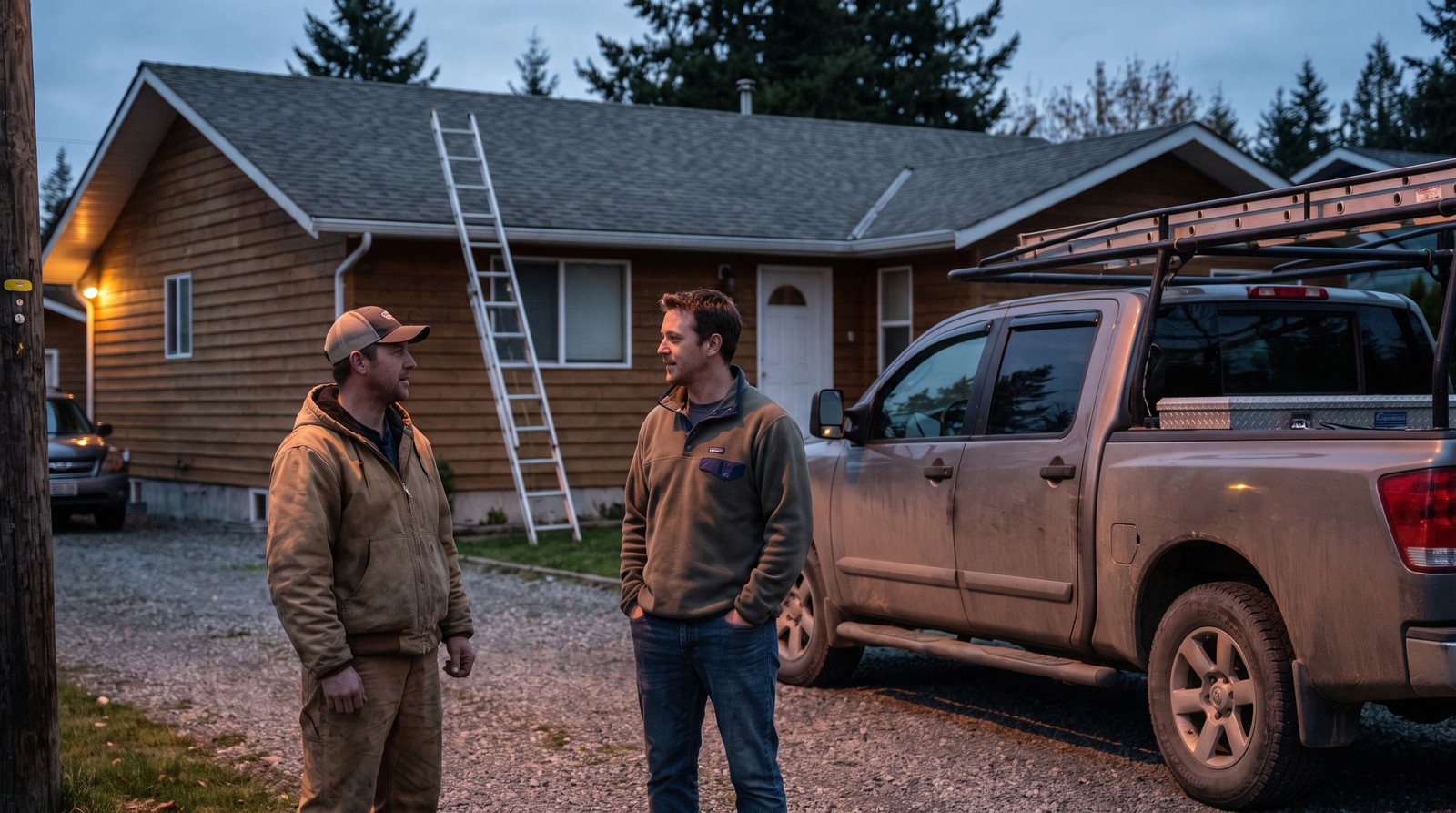
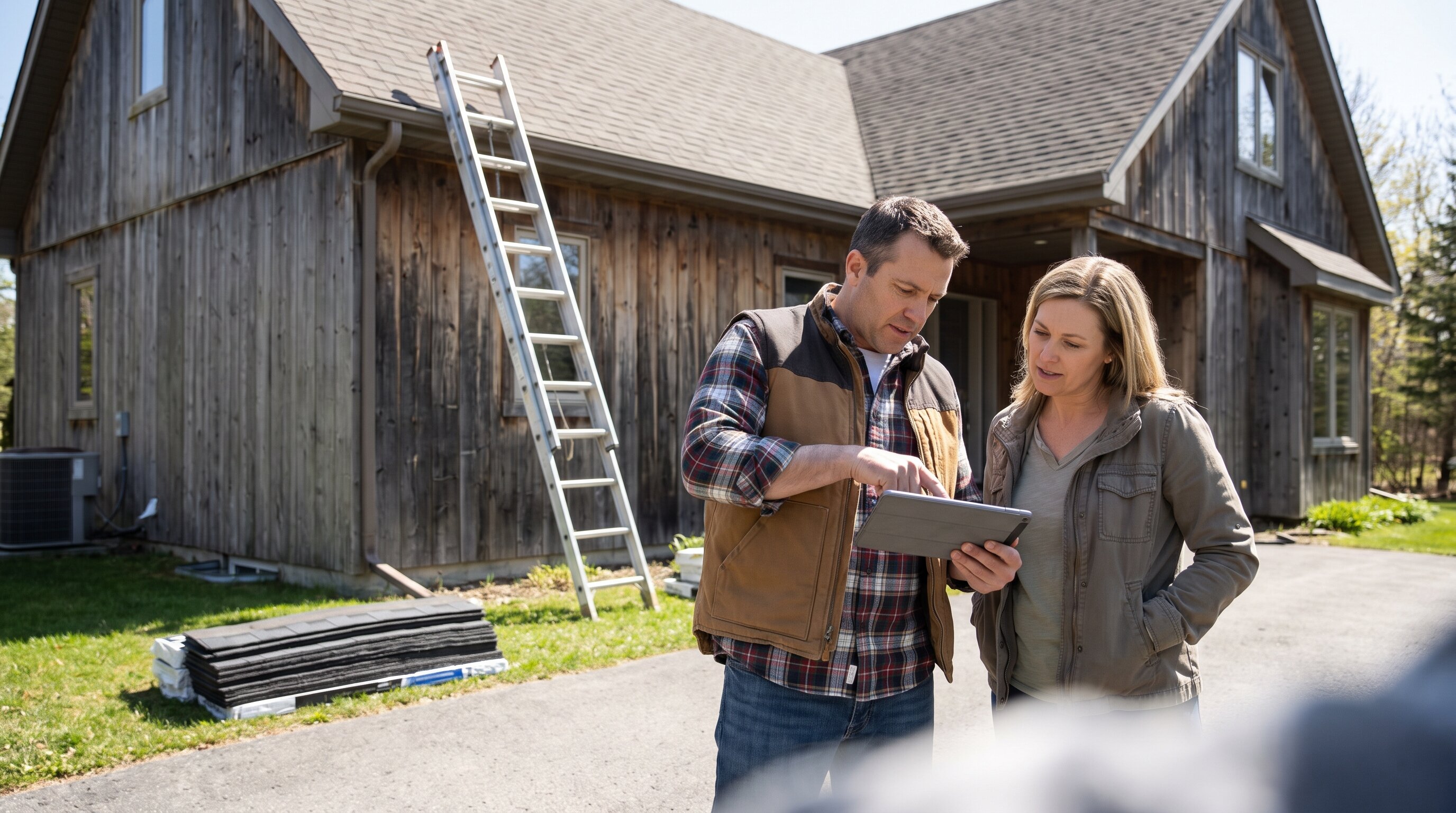
The business card says project manager. The job description mentions scheduling crews, ordering materials, maybe some light customer service. Then the new hire spends his first Saturday after a hailstorm knocking doors in a cul-de-sac, climbing ladders, photographing creased shingles, and asking a stranger at her kitchen table to sign a contingency agreement. Nobody told him he took a sales job. In storm restoration, the roofing project manager is the closer, the claims sherpa, and the customer's only translator for a process that terrifies them, and most companies still train the role like it's production work with a clipboard.
I've sat in on enough onboarding weeks at roofing companies to see the pattern. New PMs get shingle knowledge, safety training, and a CRM login. What they don't get is coaching on the four or five conversations that actually decide whether a roof gets sold: the door approach, the inspection walkthrough, the contingency signing, the adjuster meeting, and the deductible talk. This post is about training those conversations deliberately, in the language roofers actually use.
If you run a roofing sales team and want every appointment coached, not only the ones a manager can sit in on, book a SalesAsk demo.
What does a roofing project manager actually do?
In most storm-restoration companies, the roofing project manager is a commissioned salesperson who also happens to shepherd the job through production, roughly three-quarters of the role is selling and claim navigation, not managing crews.
Look at the actual week. A PM canvasses storm-hit neighborhoods, runs free inspections, documents damage with test squares and photos, gets a contingency agreement signed, meets the insurance adjuster on the roof, walks the homeowner through their scope of loss, explains recoverable depreciation and the deductible, upsells upgrades like class 4 impact-resistant shingles or ridge venting, and only then hands the file to a production coordinator. The industry's own job boards confirm the shape of the role: listings for "roofing sales project manager" read like sales reqs with a hard hat on, and the insurance-claim workflow guides written for contractors treat the PM as the person driving the claim from first inspection to final invoice.
That mismatch between title and reality has a cost. When you hire someone who wants to manage projects and hand them a sales quota, they either quit in ninety days or limp along at a close rate that bleeds your lead spend. Naming the job honestly is the first training decision you make, and it happens before day one.
Why is the adjuster meeting the highest-stakes conversation in the job?
Because it's the only sales conversation where the audience is a professional skeptic, the homeowner is watching, and the outcome directly sets the size of the job.
The adjuster meeting is strange territory for sales training because the person being persuaded isn't the buyer. Your PM is on the roof making the case that the damage warrants replacement, not repair, pointing to granule loss, fractured mats, damaged soft metals, while the adjuster writes the scope that becomes the money. A PM who can't speak Xactimate line items, who doesn't know what a supplement is or when to file one, leaves thousands on the table per job. Supplementing for missed items like drip edge, ice-and-water shield, or code-required decking is standard, documented practice in the claims world, and the contractors who do it well treat it as a literacy skill, not a dark art.
Here's the part most training misses: the homeowner is usually standing in the driveway during that meeting. They can't evaluate the technical argument, so they evaluate the confidence of the person making it. A PM who stammers in front of an adjuster loses the homeowner's trust even if the claim gets approved. That's a coachable performance, and almost nobody rehearses it.
How is selling an insurance job different from selling retail?
An insurance sale is won on trust and process fluency because the price is largely set by the carrier, while a retail sale is a classic in-home close where you must build value against a real price objection.
Most roofing companies do both, and the conversations barely resemble each other. Training PMs on one playbook for both is how you get reps who lead with "we work with your insurance" on a retail lead where nobody filed a claim.
| Insurance-funded job | Retail replacement | |
|---|---|---|
| What the homeowner fears | The claims process, being dropped by their carrier | Overpaying, being pressured |
| The real competitor | Doing nothing, or the door-knocker who came yesterday | Two other bids on the counter |
| Price conversation | Deductible plus upgrades; the carrier sets the rest | Full price defense, financing options |
| Closing instrument | Contingency agreement, signed before the adjuster meeting | Proposal with good-better-best options |
| Kill-shot objection | "The other guy said he'd cover my deductible" | "We're getting three quotes" |
| Timeline | Carrier-paced, weeks to months | Homeowner-paced, days to weeks |
The deductible line in that table deserves its own paragraph, because it's where new PMs get eaten alive. In state after state, "waiving" or absorbing the homeowner's deductible is insurance fraud, and the industry guidance on claims work is blunt about it. The right training isn't just "don't do it". It's rehearsing the sixty seconds where a PM explains why the guy offering to eat the deductible is committing a crime with the homeowner's name attached to it. Said plainly and without panic, that answer wins the job more often than it loses it. You will still lose some deals to deductible-eaters. Concede that in training, out loud, so your reps stop treating a lost deal as proof the rules are optional.
How do you train a PM when every roof and every claim is different?
You stop teaching scripts and start coaching from real recorded conversations, because the job's variability is exactly why canned pitches fail and pattern recognition wins.
The traditional answer is ride-alongs: a senior rep spends windshield time with the rookie for a few weeks. Ride-alongs still have value, there are things about ladder safety and roof reads you can only show in person, but as a coaching system they're brutally expensive. Your best closer produces nothing while babysitting, the rookie sees maybe two appointments a day, and the storm doesn't wait.
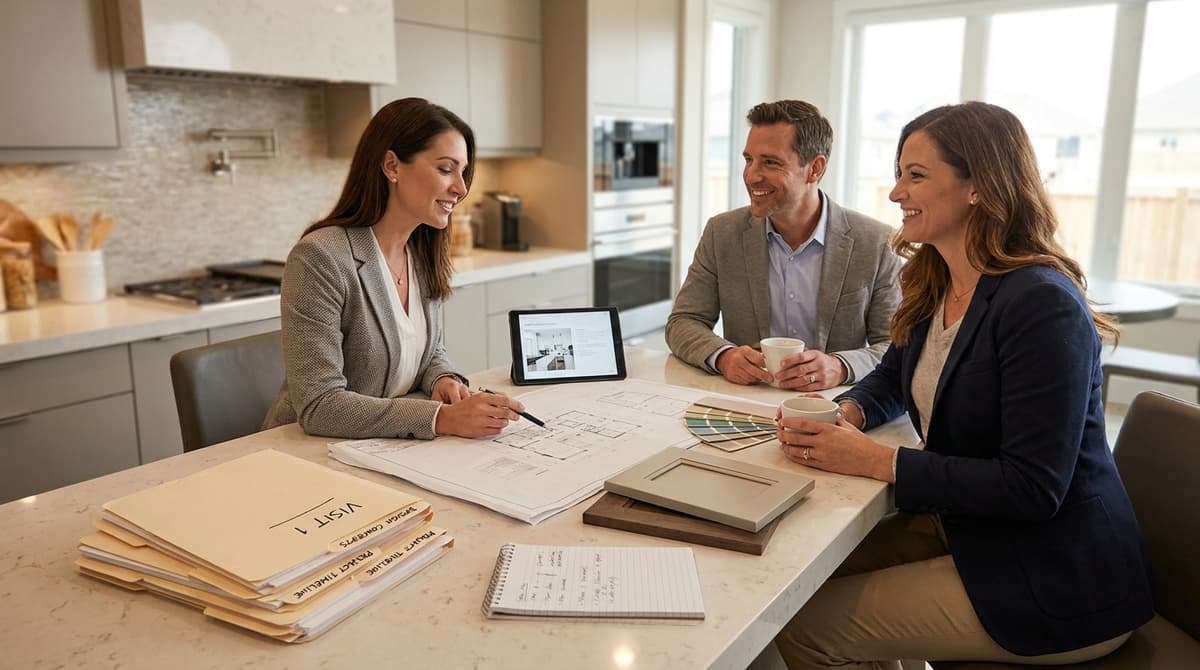
This is where I'll be direct about what we build at SalesAsk, because it maps cleanly onto this trade. When PMs record their driveway and kitchen-table conversations, a sales manager can review the moments that matter, the contingency ask, the deductible explanation, the upgrade offer, across every rep, every day, without sitting in a single truck. The rookie hears what the top closer's inspection walkthrough actually sounds like, not what the closer remembers it sounding like. Coaching stops being a Friday meeting about last week's gut feelings and becomes specific: here's the ten seconds where you rushed past her mortgage-company question, here's how Marcus handles the same moment.
Two honest caveats. First, you're not going to record the rooftop portion of an adjuster meeting in any practical way, and depending on your state's consent laws you may not want to record a third party at all, know your recording law before you turn anything on, the same way you'd check licensing requirements before selling across a state line. Second, recording only works if reps adopt it, and adoption is a leadership problem before it's a software problem. Frame it as film study for their commission checks, review calls to praise before you review them to correct, and the resistance mostly evaporates.
What should the first 90 days of a new roofing PM look like?
Vocabulary first, conversations second, solo storms third, with recorded debriefs from the first week so the rep builds the habit before they build bad tape.
A ramp that works looks something like this. Weeks one and two are language and legs: shingle anatomy, reading a scope of loss, what RCV and ACV mean, how a supplement gets filed, plus door approaches shadowing a veteran. Weeks three and four move to the high-stakes conversations in role-play, contingency signing, deductible talk, the "my insurance will just handle it" brush-off, rehearsed until the rep can do them tired, on a doorstep, in the rain. Month two is solo inspections on second-tier leads with every recordable conversation reviewed within a day or two. Month three adds adjuster meetings, first shadowing a closer's, then running their own with the manager listening to the driveway debrief afterward. By day ninety you know whether you hired a project manager or a salesperson, and so do they.
The thing to resist is the storm-chaser shortcut: a hail event hits, leads flood in, and the ninety-day plan collapses into "go knock." Every roofing owner I've talked to has done it. Most regret it, because untrained reps burn prime storm leads that a coached rep would have closed, and the leads were the scarce asset all along.
For the full process see our roofing sales training guide.
FAQ
Is a roofing project manager a sales job?
In storm restoration, almost always. The title is a customer-comfort choice, homeowners open the door for a project manager more readily than for a salesperson, but the pay plan is commission and the job is won or lost in conversations.
What is a contingency agreement?
A document the homeowner signs agreeing that if the insurance claim is approved, your company does the work at the insurance-approved price. It protects the contractor's inspection and claim work from being shopped to a competitor after approval.
Can a roofing company pay or waive the homeowner's deductible?
In most states, no: it's treated as insurance fraud, and homeowners can be exposed too. Train reps to explain this calmly rather than dodge it. I'm not a lawyer, and consent and fraud statutes vary by state, so have counsel confirm the rules where you operate.
Should new PMs run adjuster meetings alone?
Not at first. The adjuster meeting sets the value of the entire job, so shadow-first ramping matters more here than anywhere else in the role. A blown meeting isn't a lost lead, it's a shrunken scope you'll fight to supplement later.
Is it legal to record sales conversations with homeowners?
It depends on your state's consent law, some require one party's consent, others require everyone's. Disclosure is both the safe play and, in our experience, a trust builder when framed as a quality practice. Check the law in every state you sell in.
What's a realistic close rate for a trained roofing PM?
It varies too much by market, storm severity, and lead source for an honest universal number. The more useful metric inside one company is the gap between your best and worst rep on the same lead type. That gap is your coaching opportunity, and it's usually embarrassing.
Where to start this week
Pick your best PM and your newest one. Have both record their next five kitchen-table conversations, then listen to how each handles the deductible question. The difference you hear is your training curriculum, written for you by your own team. Build the ninety-day ramp around closing that gap, keep the ride-alongs for roof reads, and let the recordings do the repetition that windshield time can't afford. The title on the card can stay project manager. Just train the job that's actually underneath it.
Sources
About the author
Dara Shabnam
Head of Growth, SalesAsk
Dara Shabnam leads growth at SalesAsk. She writes about in-home sales training, recording consent, and what the recorded conversations of home service and trades teams show about how jobs are actually won.
Dara Shabnam
About SalesAsk
Written by the SalesAsk team
SalesAsk records and coaches in-home sales conversations for home service, home improvement and home builder teams.
More postsKeep reading
All posts


The business card says project manager. The job description mentions scheduling crews, ordering materials, maybe some light customer service. Then the new hire spends his first Saturday after a hailstorm knocking doors in a cul-de-sac, climbing ladders, photographing creased shingles, and asking a stranger at her kitchen table to sign a contingency agreement. Nobody told him he took a sales job. In storm restoration, the roofing project manager is the closer, the claims sherpa, and the customer's only translator for a process that terrifies them, and most companies still train the role like it's production work with a clipboard.
I've sat in on enough onboarding weeks at roofing companies to see the pattern. New PMs get shingle knowledge, safety training, and a CRM login. What they don't get is coaching on the four or five conversations that actually decide whether a roof gets sold: the door approach, the inspection walkthrough, the contingency signing, the adjuster meeting, and the deductible talk. This post is about training those conversations deliberately, in the language roofers actually use.
If you run a roofing sales team and want every appointment coached, not only the ones a manager can sit in on, book a SalesAsk demo.
What does a roofing project manager actually do?
In most storm-restoration companies, the roofing project manager is a commissioned salesperson who also happens to shepherd the job through production, roughly three-quarters of the role is selling and claim navigation, not managing crews.
Look at the actual week. A PM canvasses storm-hit neighborhoods, runs free inspections, documents damage with test squares and photos, gets a contingency agreement signed, meets the insurance adjuster on the roof, walks the homeowner through their scope of loss, explains recoverable depreciation and the deductible, upsells upgrades like class 4 impact-resistant shingles or ridge venting, and only then hands the file to a production coordinator. The industry's own job boards confirm the shape of the role: listings for "roofing sales project manager" read like sales reqs with a hard hat on, and the insurance-claim workflow guides written for contractors treat the PM as the person driving the claim from first inspection to final invoice.
That mismatch between title and reality has a cost. When you hire someone who wants to manage projects and hand them a sales quota, they either quit in ninety days or limp along at a close rate that bleeds your lead spend. Naming the job honestly is the first training decision you make, and it happens before day one.
Why is the adjuster meeting the highest-stakes conversation in the job?
Because it's the only sales conversation where the audience is a professional skeptic, the homeowner is watching, and the outcome directly sets the size of the job.
The adjuster meeting is strange territory for sales training because the person being persuaded isn't the buyer. Your PM is on the roof making the case that the damage warrants replacement, not repair, pointing to granule loss, fractured mats, damaged soft metals, while the adjuster writes the scope that becomes the money. A PM who can't speak Xactimate line items, who doesn't know what a supplement is or when to file one, leaves thousands on the table per job. Supplementing for missed items like drip edge, ice-and-water shield, or code-required decking is standard, documented practice in the claims world, and the contractors who do it well treat it as a literacy skill, not a dark art.
Here's the part most training misses: the homeowner is usually standing in the driveway during that meeting. They can't evaluate the technical argument, so they evaluate the confidence of the person making it. A PM who stammers in front of an adjuster loses the homeowner's trust even if the claim gets approved. That's a coachable performance, and almost nobody rehearses it.
How is selling an insurance job different from selling retail?
An insurance sale is won on trust and process fluency because the price is largely set by the carrier, while a retail sale is a classic in-home close where you must build value against a real price objection.
Most roofing companies do both, and the conversations barely resemble each other. Training PMs on one playbook for both is how you get reps who lead with "we work with your insurance" on a retail lead where nobody filed a claim.
| Insurance-funded job | Retail replacement | |
|---|---|---|
| What the homeowner fears | The claims process, being dropped by their carrier | Overpaying, being pressured |
| The real competitor | Doing nothing, or the door-knocker who came yesterday | Two other bids on the counter |
| Price conversation | Deductible plus upgrades; the carrier sets the rest | Full price defense, financing options |
| Closing instrument | Contingency agreement, signed before the adjuster meeting | Proposal with good-better-best options |
| Kill-shot objection | "The other guy said he'd cover my deductible" | "We're getting three quotes" |
| Timeline | Carrier-paced, weeks to months | Homeowner-paced, days to weeks |
The deductible line in that table deserves its own paragraph, because it's where new PMs get eaten alive. In state after state, "waiving" or absorbing the homeowner's deductible is insurance fraud, and the industry guidance on claims work is blunt about it. The right training isn't just "don't do it". It's rehearsing the sixty seconds where a PM explains why the guy offering to eat the deductible is committing a crime with the homeowner's name attached to it. Said plainly and without panic, that answer wins the job more often than it loses it. You will still lose some deals to deductible-eaters. Concede that in training, out loud, so your reps stop treating a lost deal as proof the rules are optional.
How do you train a PM when every roof and every claim is different?
You stop teaching scripts and start coaching from real recorded conversations, because the job's variability is exactly why canned pitches fail and pattern recognition wins.
The traditional answer is ride-alongs: a senior rep spends windshield time with the rookie for a few weeks. Ride-alongs still have value, there are things about ladder safety and roof reads you can only show in person, but as a coaching system they're brutally expensive. Your best closer produces nothing while babysitting, the rookie sees maybe two appointments a day, and the storm doesn't wait.
This is where I'll be direct about what we build at SalesAsk, because it maps cleanly onto this trade. When PMs record their driveway and kitchen-table conversations, a sales manager can review the moments that matter, the contingency ask, the deductible explanation, the upgrade offer, across every rep, every day, without sitting in a single truck. The rookie hears what the top closer's inspection walkthrough actually sounds like, not what the closer remembers it sounding like. Coaching stops being a Friday meeting about last week's gut feelings and becomes specific: here's the ten seconds where you rushed past her mortgage-company question, here's how Marcus handles the same moment.
Two honest caveats. First, you're not going to record the rooftop portion of an adjuster meeting in any practical way, and depending on your state's consent laws you may not want to record a third party at all, know your recording law before you turn anything on, the same way you'd check licensing requirements before selling across a state line. Second, recording only works if reps adopt it, and adoption is a leadership problem before it's a software problem. Frame it as film study for their commission checks, review calls to praise before you review them to correct, and the resistance mostly evaporates.
What should the first 90 days of a new roofing PM look like?
Vocabulary first, conversations second, solo storms third, with recorded debriefs from the first week so the rep builds the habit before they build bad tape.
A ramp that works looks something like this. Weeks one and two are language and legs: shingle anatomy, reading a scope of loss, what RCV and ACV mean, how a supplement gets filed, plus door approaches shadowing a veteran. Weeks three and four move to the high-stakes conversations in role-play, contingency signing, deductible talk, the "my insurance will just handle it" brush-off, rehearsed until the rep can do them tired, on a doorstep, in the rain. Month two is solo inspections on second-tier leads with every recordable conversation reviewed within a day or two. Month three adds adjuster meetings, first shadowing a closer's, then running their own with the manager listening to the driveway debrief afterward. By day ninety you know whether you hired a project manager or a salesperson, and so do they.
The thing to resist is the storm-chaser shortcut: a hail event hits, leads flood in, and the ninety-day plan collapses into "go knock." Every roofing owner I've talked to has done it. Most regret it, because untrained reps burn prime storm leads that a coached rep would have closed, and the leads were the scarce asset all along.
For the full process see our roofing sales training guide.
FAQ
Is a roofing project manager a sales job?
In storm restoration, almost always. The title is a customer-comfort choice, homeowners open the door for a project manager more readily than for a salesperson, but the pay plan is commission and the job is won or lost in conversations.
What is a contingency agreement?
A document the homeowner signs agreeing that if the insurance claim is approved, your company does the work at the insurance-approved price. It protects the contractor's inspection and claim work from being shopped to a competitor after approval.
Can a roofing company pay or waive the homeowner's deductible?
In most states, no: it's treated as insurance fraud, and homeowners can be exposed too. Train reps to explain this calmly rather than dodge it. I'm not a lawyer, and consent and fraud statutes vary by state, so have counsel confirm the rules where you operate.
Should new PMs run adjuster meetings alone?
Not at first. The adjuster meeting sets the value of the entire job, so shadow-first ramping matters more here than anywhere else in the role. A blown meeting isn't a lost lead, it's a shrunken scope you'll fight to supplement later.
Is it legal to record sales conversations with homeowners?
It depends on your state's consent law, some require one party's consent, others require everyone's. Disclosure is both the safe play and, in our experience, a trust builder when framed as a quality practice. Check the law in every state you sell in.
What's a realistic close rate for a trained roofing PM?
It varies too much by market, storm severity, and lead source for an honest universal number. The more useful metric inside one company is the gap between your best and worst rep on the same lead type. That gap is your coaching opportunity, and it's usually embarrassing.
Where to start this week
Pick your best PM and your newest one. Have both record their next five kitchen-table conversations, then listen to how each handles the deductible question. The difference you hear is your training curriculum, written for you by your own team. Build the ninety-day ramp around closing that gap, keep the ride-alongs for roof reads, and let the recordings do the repetition that windshield time can't afford. The title on the card can stay project manager. Just train the job that's actually underneath it.