
Insurance work isn’t like regular roofing sales. The homeowner didn’t budget for this. They didn’t plan to replace their roof this spring. A hailstorm or wind event changed their plans, and now they’re handling an industry they know nothing about: dealing with adjusters, depreciation schedules, and terms like “RCV” and “ACV” that mean nothing to them.
Your job isn’t just to sell a roof. It’s to be the guide through a genuinely confusing process. The contractors who understand that close 70% of their storm leads. The ones who treat it like a normal sales call close 20%.
Here’s how to do it right.
Why Insurance Jobs Are Different (And Why That Matters)
When a homeowner calls you for a standard roof replacement, they’ve chosen to spend money. They’ve budgeted for it, maybe saved for it, and they’re making a deliberate purchase decision.
Insurance jobs don’t work that way.
The homeowner didn’t plan for this. In their mind, they’re not spending money. The insurance company is. That shifts the psychology of the entire sale in ways most reps never account for.
Price resistance is lower. If insurance covers 90% of the job, the homeowner’s out-of-pocket is just their deductible. Negotiating over $1,000 feels different when you’re not writing the full check.
But trust is more fragile. The homeowner just went through a storm, dealt with an insurance company, and now a wave of contractors is showing up at the door. They’re nervous about being taken advantage of. The first rep who demonstrates genuine expertise, not just urgency, wins.
The objections are also completely different. You won’t hear “I need to think about it” as often. Instead: “My insurance only approved $12,000,” or “I don’t want to do anything until the adjuster comes out,” or “The other company said they can match the insurance estimate exactly.”
If you’re running a standard kitchen-table sales script on insurance leads, you’re leaving half your jobs behind.
Getting in the Door After a Storm
You have maybe 72-96 hours after major weather before out-of-state companies flood the market. Speed matters.
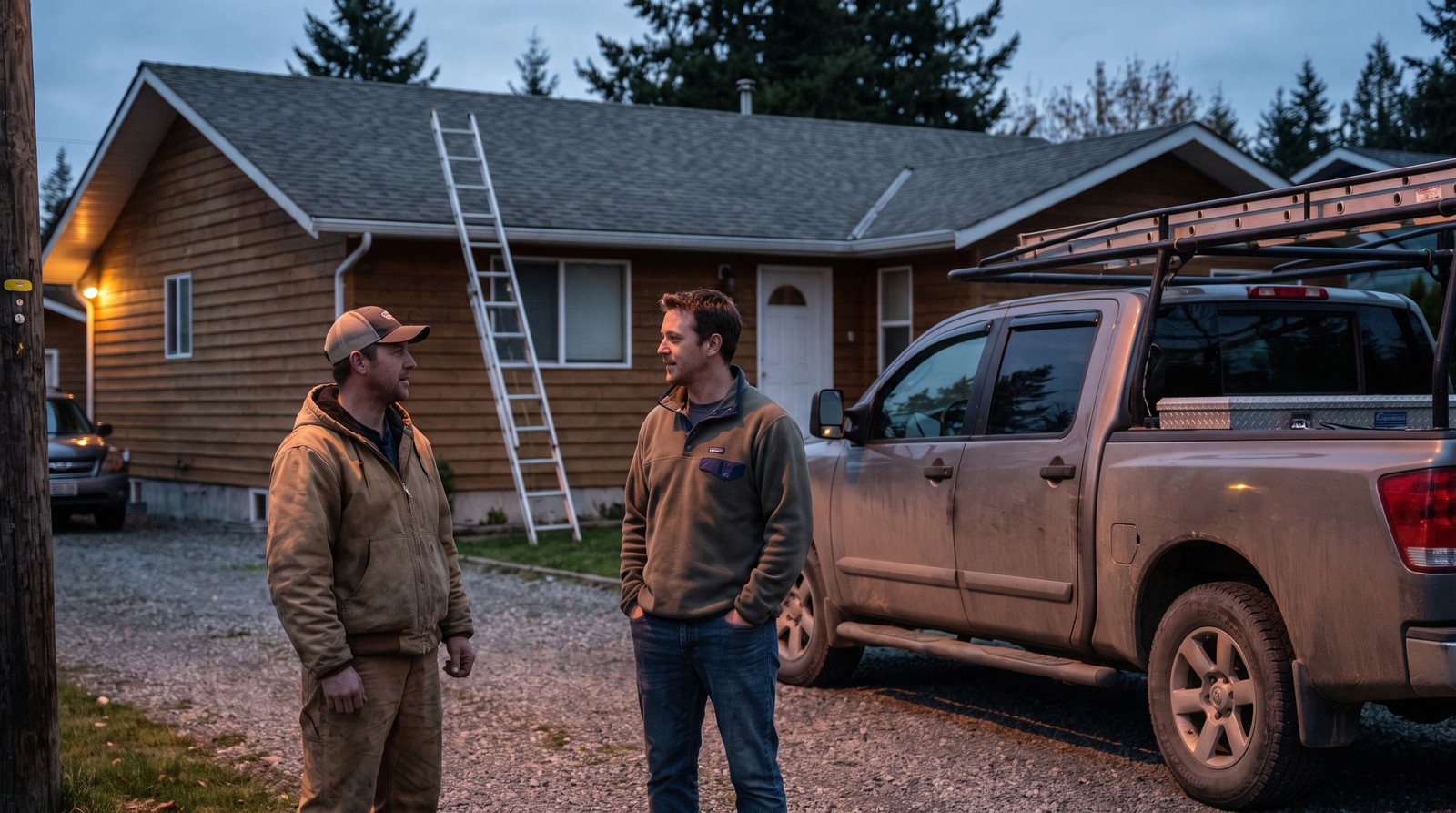
Lead with inspection, not pitch. “I was in your neighborhood checking on some storm damage, would you mind if I took a look at your roof? No charge, takes ten minutes.” You’re offering something useful, not asking for a sale.
Bring documentation. Before you go out, download the hail reports and wind event data for the affected area. When you show a homeowner a weather report proving 1.5” hail hit their zip code on Saturday, you look like a professional. When you say “there was a big storm,” you sound like everyone else.
Check the gutters first. Dented gutters are visible from the ground and are often the clearest indicator of roof damage. “Your gutters show significant impact denting. That’s usually a strong sign of shingle damage. Want me to go up and take a closer look?”
Be honest about timing without manufacturing fake urgency. “Insurance companies apply more scrutiny to claims filed months after a weather event. I’d rather you file while the damage is fresh and documented.”
The Adjuster Meeting: And Why You Need to Be There
This is where most contractors lose the game before it starts.
The homeowner files a claim. An adjuster comes out. The adjuster approves $11,200. The homeowner calls you and says, “My insurance approved $11,200, can you do the job for that?”
If you weren’t at the adjuster inspection, you have no idea what they missed. And they almost always miss something.
Your goal: Be present at the adjuster meeting. Not to argue, not to be aggressive, to make sure everything is properly documented.
“When your adjuster comes out, I’d like to be there if that’s okay. Not to pressure anyone, I just want to make sure everything is noted so there are no disputes after the job starts. Missed items can become out-of-pocket costs for you, and I’d rather prevent that upfront.”
Most homeowners appreciate this framing. You’re protecting them, not fighting their insurance company.
What to watch for during the inspection:
Soft metal damage. Gutters, downspouts, vent caps, AC line sets, window screens, all show hail impact clearly and establish the pattern of damage across the property.
Code upgrade requirements. Many jurisdictions require code upgrades during a full replacement: enhanced underlayment, ice and water shield, proper ventilation. Insurance companies don’t always include these automatically. Point them out during the inspection.
Number of layers. If the home has two layers of existing shingles, tear-off costs jump significantly. Make sure this is in the scope before the adjuster leaves.
Flashings and penetrations. Pipe boots, valley flashing, chimney step flashing: frequently missed, often expensive to do right.
Supplements: The Revenue Your Competitors Are Leaving Behind
A supplement is an additional claim submission for items the original adjuster missed or underestimated. It’s not aggressive. It’s not fraud. It’s the standard process for correcting an incomplete scope.
A well-documented supplement request can add $2,000 to $6,000 to the approved scope on a typical residential job.
Common supplement items: - O&P (overhead and profit): standard on jobs coordinating multiple trades - Steep slope laboranything over 8/12 pitch qualifies for additional labor rates - Code upgradesice and water shield, drip edge requirements, permit fees - Additional wastecomplex rooflines, dormers, skylights, valleys - Soft metalsgutters, caps, boots that were visually damaged but not included
You don’t need to handle supplements yourself. There are supplement specialists and public adjusters who work on a revenue-share basis. Build a relationship with one. When you can legitimately increase the approved scope, the homeowner gets a complete job, you get a fair margin, and nobody’s paying out of pocket for work that should have been included from the start.
Handling the Four Objections You’ll Hear on Every Insurance Job
“The insurance only approved $12,000 and your estimate is $15,000.”
This is the most common objection in insurance roofing, and it’s usually a scope problem, not a price problem.
“Let me compare the approved scope to what we’ve measured. In my experience, adjusters often miss code upgrades, soft metals, or additional tear-off. It’s common to close that gap through a supplement. Would you be okay with me submitting that on your behalf?”
What you’re not doing: agreeing to eat $3,000 to match their number. That erodes your margin and signals to the homeowner that your original estimate was padded.
What you are doing: solving the actual problem.
“I’ll wait until the adjuster comes before I decide anything.”
Completely reasonable.
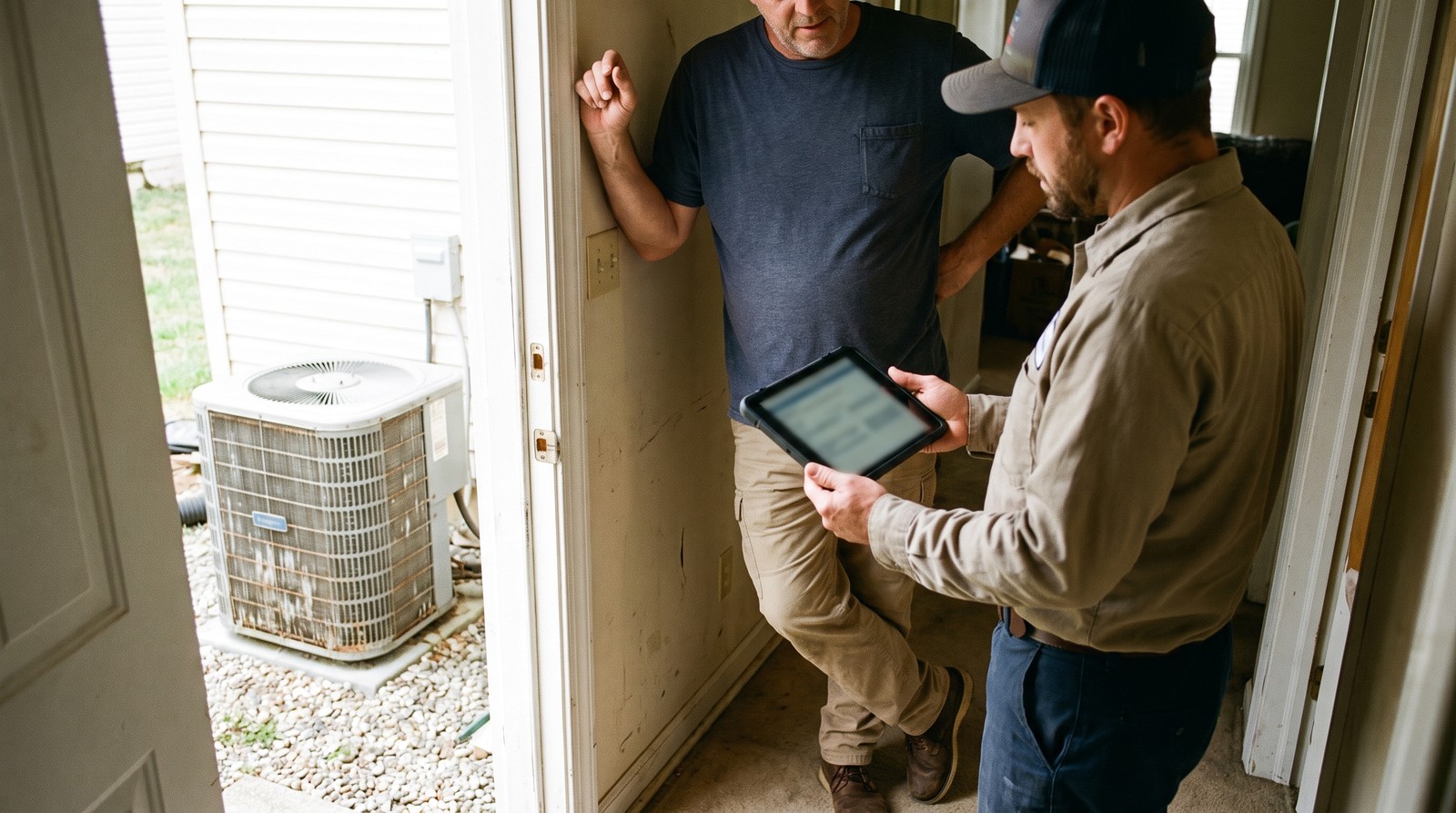
“That makes sense. I’ll be there with you for the inspection, that way I can document what I see at the same time as the adjuster. No obligation. You just get a second set of eyes on the scope.”
Now you’re in the adjuster meeting. Which is exactly where you want to be.
“The other company said they’ll match the insurance estimate exactly.”
“Some contractors can do that by using cheaper materials or skipping items the estimate doesn’t explicitly call out. You end up with a job that looks fine at first but starts showing problems in five to seven years.”
Pause. Let that land.
“I’d rather walk you through the line items in the approved scope so you understand what you’re actually getting, and what might be missing. Can we spend ten minutes on that?”
“Do I have to use your company, or can I pick anyone?”
“You can use any licensed, insured contractor, that’s completely your choice. What I’d recommend is choosing someone who knows the insurance process, because if there are issues with the claim after the job is done, you want a contractor who can document and respond quickly. That’s something we handle for our customers.”
How AI Coaching Builds Consistency in Insurance Sales
The challenge with insurance roofing: every conversation is different. Different storm, different adjuster, different homeowner experience with insurance, different scope issues.
That variability destroys undertrained reps. They close one type of call well and bomb the next because they’re pattern-matching to whatever worked last week instead of following a real process.
This is where AI sales coaching creates an edge. When every call gets analyzed, a rep who consistently skips the “request to attend the adjuster meeting” step will have that flagged in their next session, not when the manager finally rides along once a month, but the day it happens.
Connell Roofing used this kind of real-time coaching to improve rep performance without requiring physical ride-alongs on every call. Their close rate went from 18% to 27% within 90 days. In storm season, that gap between a good year and an exceptional one.
For roofing contractors doing insurance work at scale, the value is consistency. Your best insurance closer has internalized the adjuster process, knows when to push for a supplement, handles the scope objection without hesitation. AI coaching transfers that knowledge to every rep, not through a one-day seminar they forget by Friday, but through specific, call-by-call feedback on real conversations.
For the full picture on building a roofing sales process from first knock to signed contract, see the complete roofing sales training guide.
The Real Advantage in Insurance Sales
Most roofing contractors treat storm work as a quick-hit: knock doors, file claims, close jobs, move on to the next neighborhood. The ones who build lasting businesses understand that insurance work is relationship-based.
When you help a homeowner handle a confusing process, show up to the adjuster meeting, recover scope they didn’t know they were missing, and deliver a job that passes inspection without drama. You get every referral that family has for the next twenty years.
Storm chasers get one job per neighborhood. Local contractors who know the insurance process get called back every time there’s weather.
That’s not a sales strategy. That’s a business model worth building.
Related Topics: roofing insurance claim sales training, storm damage roofing scripts, how to close insurance roofing jobs, adjuster meeting tips for roofing contractors, supplement requests roofing, hail damage sales training, AI coaching for roofing contractors, storm chaser vs local contractor

Related articles

Ready to convert
every conversation?
See exactly what’s holding your team back and fix it fast.
.avif)