Should You Email the Quote or Present It in Person?

On this page
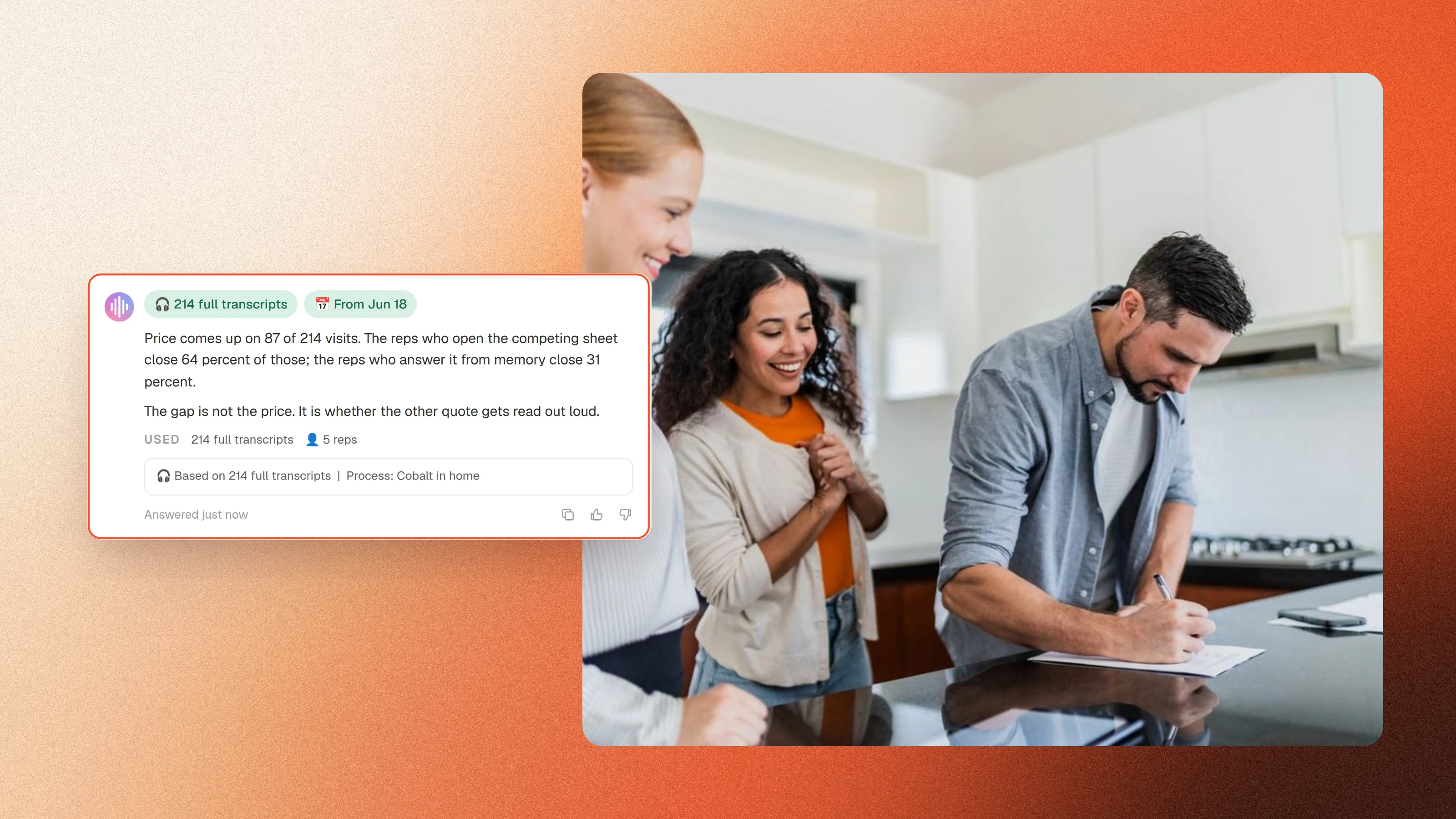
Present the price in person whenever the job is standard enough to price in the home, and send the written version afterward to confirm it. Email the quote first only when the work can't be priced during the visit, the ticket is small, or the buyer is a business. An emailed quote lands in a comparison pile: 42% of homeowners compare two quotes and 28% compare three, according to Modernize, and 65% call pricing very important.
Key takeaways
- "I'll email the numbers tonight" usually appears right after the first sign of price tension.
- Presenting in the home lets the rep see the reaction, answer the real question and book the next step.
- Pushy sales tactics were the top red flag in Modernize's research, named by 12.82% of homeowners. Saying a price out loud isn't pressure. Refusing to leave is.
- Proposals with e-signatures were 3.3 times more likely to close in Proposify's study of 1.28 million proposals.
- Nobody has published whether a live proposal beats a second in-person presentation on remodel-size jobs.
Should you email the quote or present it in person?
Present it in person for standard work, then send it. That covers HVAC replacements, roofs after inspection, windows and doors, water heaters, generators and most electrical and plumbing upgrades. If your rep can build the price on a tablet in the truck, the price belongs at the kitchen table.
| Moment in the sale | Presented in the home | Emailed afterward |
|---|---|---|
| First reaction to the price | The rep sees it and responds | Happens alone |
| Price objection | Handled in the conversation | Often never voiced |
| Three options | Walked through together | Three numbers, read bottom up |
| The absent spouse | A next step booked with both present | Decides from the document alone |
| Other quotes | You frame the comparison first | Your line sits in their pile |
| Next step | Scheduled before you leave | "We'll be in touch" |
Why do reps email quotes when they could present them?
Because emailing the number later lets the rep skip the most uncomfortable moment in the sale. "I'll work up the numbers and email them over tonight" sounds like diligence. Listen to where it shows up on a recording. It almost never comes at the start of the visit. It comes right after the homeowner asks "so what does something like this run?" and the rep feels the temperature drop.
There are real reasons to leave without a price. A custom kitchen needs drawings. A structural repair needs an engineer. I don't mean those jobs. I mean the furnace replacement where the rep has priced the same three systems all season.
The habit persists because nothing corrects it. The appointment ends politely, the CRM says "quote sent," and the pipeline looks full. A sales manager reading month-end numbers sees activity.
What happens to a quote after you email it?
It stops being a conversation and becomes one entry in a pile, judged on the line you least want judged alone. Modernize, which sells leads and financing products to contractors, reports that 42.02% of homeowners compare two quotes, 27.90% compare three and 15.64% compare four or more. In the same research, 64.81% called pricing very important in choosing a contractor.
What made you different in the living room doesn't travel with the attachment. The rep's explanation of why the better system costs more stays behind. A number travels, and it is read next to other numbers, often by a spouse who never met your rep.
Timing matters too. Proposify, which sells proposal software, studied 1,280,657 proposals across 27 industries and found the time from first open to close was about 51 hours. That isn't contractor data, but it matches what Level found for contractors: winning quotes accepted in a median of 2 days. A quote that goes out Thursday and gets opened Sunday has missed most of that.
Isn't pricing on the spot pushy?
No, and the worry is fair. Pushy sales tactics were the most cited red flag in Modernize's research, named by 12.82% of homeowners. But the homeowner invited you over to find out what the project costs.
Pressure is what comes after the price: invented discounts, tonight-only offers, refusing to leave. Sitting at the table, saying the number and answering questions is what they asked you there to do.
When is emailing the quote the right call?
In four situations.
- The job can't be priced in the visit. Custom work, structural work, anything waiting on a supplier.
- The ticket is small. A minor service job doesn't need a sit-down presentation.
- It is a repeat customer. People who know your work often prefer the email, and forcing a presentation wears on the relationship.
- The buyer is a business. Commercial and property management buyers run on written bids by policy.
The multi-visit remodel is the hard case. A kitchen or bath rep can't responsibly price on the first visit, so something written will travel between meetings. There the question is what you send.
If the number has to travel, what should you send?
Send something that reports back. A PDF tells you nothing: not whether it was opened, forwarded or lost under a school permission slip.
Proposify's study found proposals with e-signatures were 3.3 times more likely to close and closed 30% faster. Proposals with automated reminders were 10% more likely to close, and only 7% of sellers used them. Those figures come from a proposal vendor's own platform across many industries, so read them as direction.
SalesAsk's HomePlan is our pick for in-home teams. It builds a plan page from the recording of the appointment, the rep approves it, and the homeowner gets one link to forward. You see every open and share, and the homeowner can approve from the page or say what is holding them back.
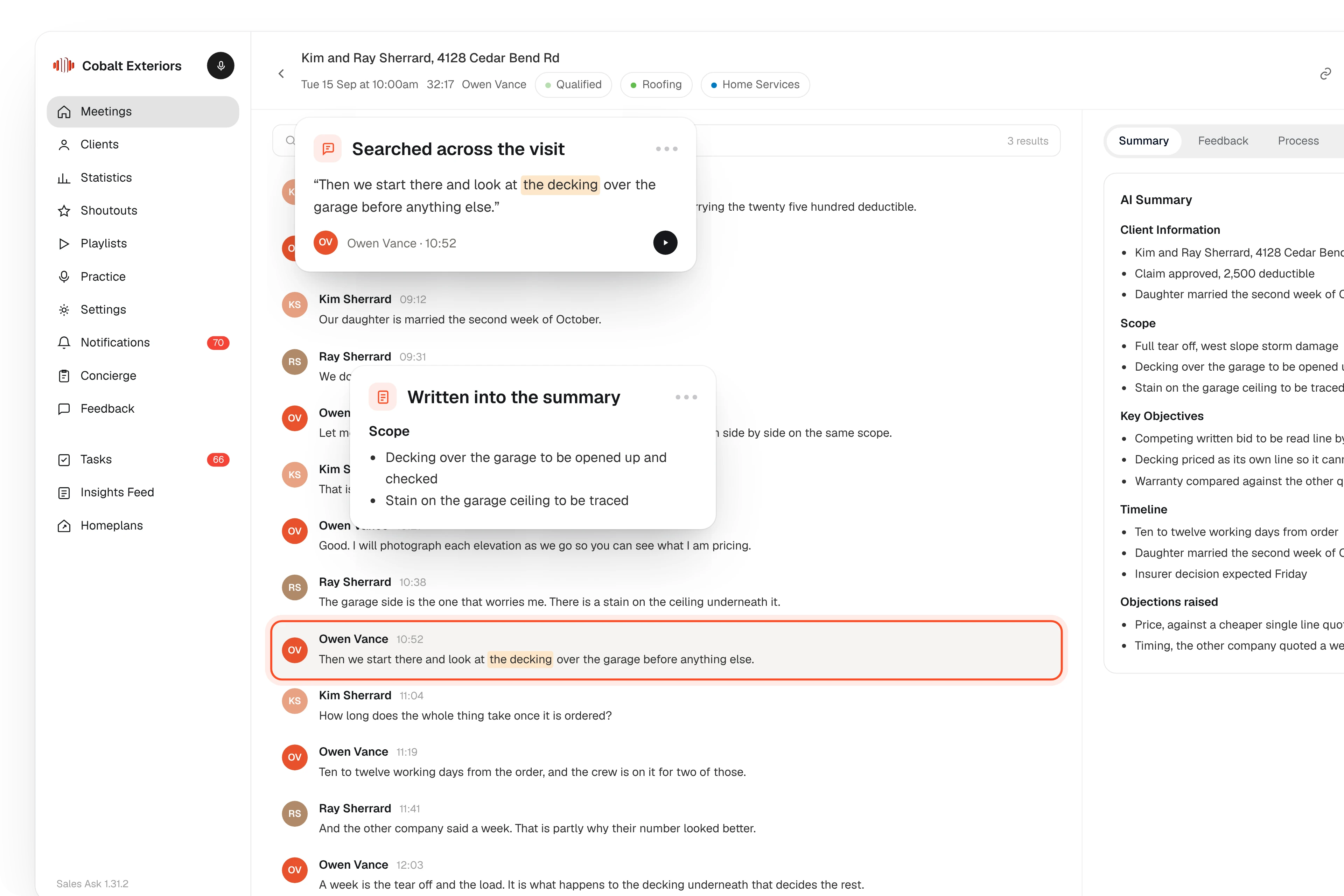
What I can't tell you is whether a well-built plan page beats a second in-person price presentation on remodel-size jobs. We don't have clean data on that, and I haven't seen anyone publish any.
How do you coach the email habit out of a team?
Find the moment in real visits where each rep retreats to "I'll email it over," and rehearse that moment. SalesAsk is built for this: every visit is recorded and scored against your steps, so "presented the price in the home" is marked hit or missed.
- Find the trigger. On the recording, note what the homeowner said in the thirty seconds before the email offer. Most reps have one trigger.
- Make presenting the default. "We present pricing on all replacement work" can be coached. "Use your judgment" spreads the habit to the newest hire.
- Roleplay the reveal. Reps rehearse product knowledge endlessly and rarely rehearse saying a five-figure number out loud. An AI roleplay before the appointment fixes the wobble.
The coaching continues with optional live nudges during the visit and written feedback after. To hear where your own reps retreat, book a SalesAsk demo.
Frequently asked questions
Should I still send something after presenting in person?
Yes, always. The spouse who wasn't home, the comparison with other bids and the financing details all happen after you leave. The written version confirms a conversation that already took place.
What if the homeowner says "just email it to me"?
Offer the short version: "Happy to. It takes me about five minutes to build it right here, and that way I can answer anything on the spot. Then I'll send you the full copy." If they still want email only, respect it.
How fast should an emailed quote arrive?
The same day, and before you're out of the driveway if you can. Level's contractor data shows winning quotes are accepted in a median of 2 days, so a quote that sits unsent spends that time out of the running.
Does this apply to repairs or only replacements?
Mostly replacements and remodels. On a repair, a price on the spot is already normal because the ticket is small and the need is immediate.
Sources
- Modernize, Homeowner Insights: Contractor Selection Trends, updated August 12, 2026.
- Proposify, The State of Proposals 2024. 1,280,657 proposals across 27 industries.
- Level, "The 7-Day Rule: Why Stale Quotes Kill Contractor Revenue," updated November 7, 2026.
- SalesAsk, HomePlan.
Dara Shabnam
Leads growth at SalesAsk and writes about in-home sales training and recording consent.
More posts byWritten by the SalesAsk team
SalesAsk records and coaches in-home sales conversations for home service, home improvement and home builder teams.
More posts