From $350 to $600 a ticket: Moe Abbas on EGIA’s Contractor University podcast
On this page
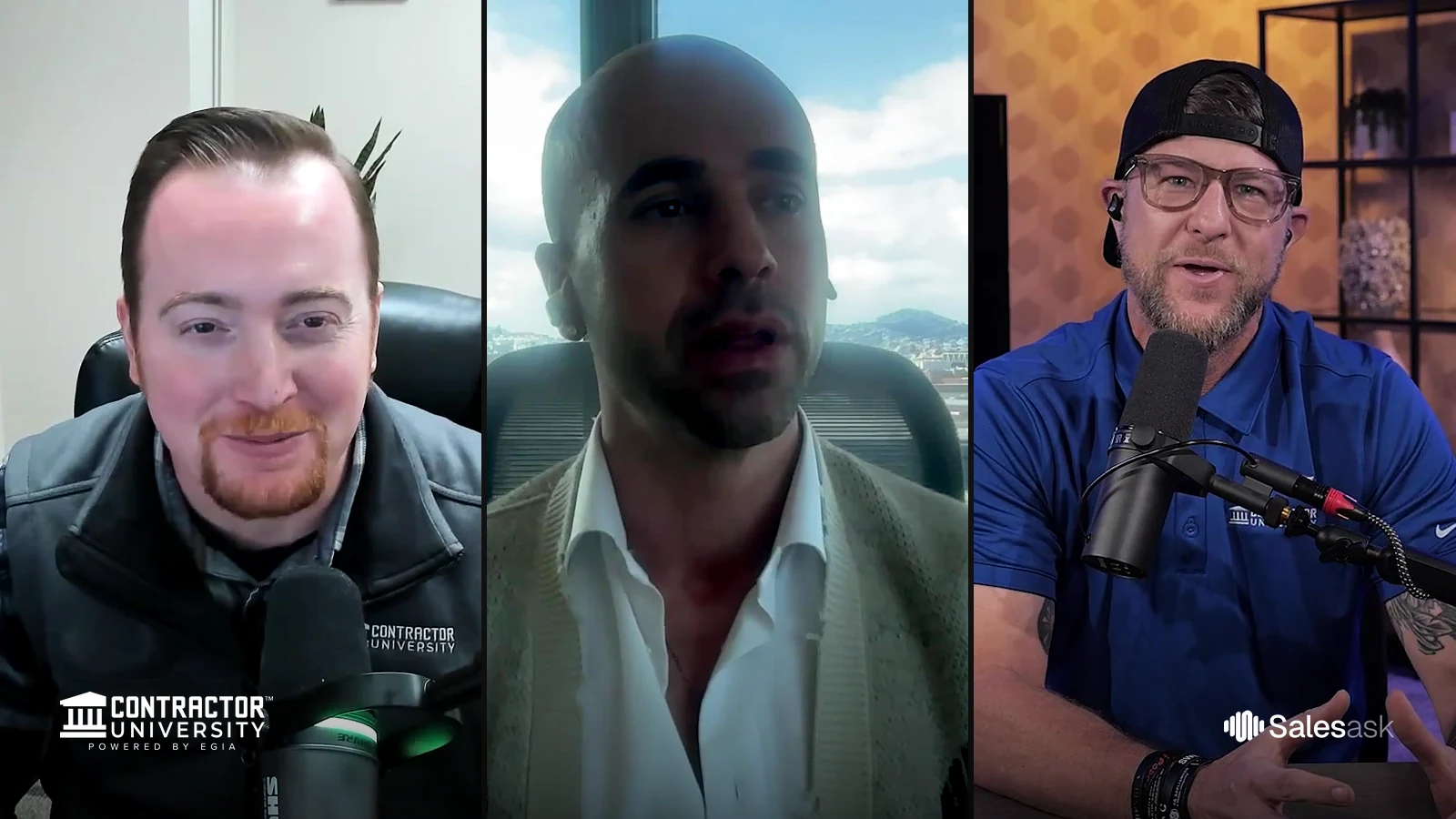
One HVAC company took its average ticket from around $350 to over $600 with the same leads, the same calls and the same technicians. Moe Abbas, founder and CEO of SalesAsk, told that story on EGIA’s Contractor University podcast, in an episode on coaching a sales team with AI on every call. The company coached every visit for a long time, until there was very little left to improve, and it still kept listening to almost every one.
Key takeaways
- Moe described an HVAC company that raised its average ticket from about $350 to over $600 without more leads, more techs or more marketing, by coaching almost every visit.
- The first rep SalesAsk was built around told their manager they were following every step. The recording showed they weren’t asking for the close and had skipped discovery.
- Rep adoption is the number one pushback. Moe’s answer is to build the tool for the tech first, so it saves them paperwork instead of watching them.
- Telling the homeowner you’re recording takes one sentence, and Moe says his teams haven’t had problems with it.
- Onboarding is two 45-minute sessions, one with leadership and one with techs. Moe said a company that signs on a Friday can have visibility into every conversation by the following Wednesday.
The rep who said they were doing everything
Moe is a second-generation builder who has also been building software for about ten years. The idea for SalesAsk came from a partner who runs a $30 million company and was spending one to two hours a day coaching a rep who had stopped closing. The rep kept saying they were taking all the advice. Nothing improved.
Once the partner could listen to the actual conversations, the problem was obvious. The rep wasn’t asking for the close, wasn’t doing real discovery and was missing several steps of the process. Moe said that within a month or two that rep’s close rate went up by about 30%.
The name is simpler than that. You need to ask for the sale.
Why owners don’t make the bigger bet
The $350 to $600 company was, in Moe’s words, a bit of an outlier. It had full-time coaches, invested heavily in its training program and kept listening to almost every meeting long after the obvious fixes were made. Because it had a lot of technicians, he said the result was millions of dollars in added profit without adding headcount or marketing budget. A bigger ticket on the same visit is all margin.
So why don’t more companies do it? Moe’s answer was timing and commitment. Marketing money can produce a lead within a week. Hiring a trainer can take a month and cost $100,000, and making every tech record every visit means tying it to commission or pay. He compared it to the early days of CRMs, when getting a rep to type notes into one felt pointless. Today you won’t find a company doing more than a million dollars a year without one, and he expects recorded conversations to go the same way.
If you do make it mandatory, you’ll see who skipped it. SalesAsk syncs with the CRM, so an appointment with no recording shows up right away.
Getting techs to press record
The pushback Moe hears most is rep adoption. In tech companies every meeting is recorded and nobody thinks about it. In the trades it’s still new. His approach is to design the product for the rep rather than the manager. Techs get their own AI coach, Coach Dean, which they can talk to between visits, from the truck mid-appointment or after the job, and the notes and CRM updates are done for them.
On the homeowner side, some states require you to tell people they’re being recorded, and Moe recommends telling everyone either way. The way he puts it at the door: “I just want to make sure I capture everything, so I’m going to record using my phone. If there’s anything you want noted or not, just let me know.” Then you ask about the furnace. He said it sounds like it could be a problem and in practice it isn’t. Check the rules in each state you work in.
One of the hosts, a national trainer who’s on the road about 150 days a year, made a point worth repeating. Owners often assume their team doesn’t want accountability and worry a tool like this will wreck the culture. In his view, it comes down to how you introduce it.
Your process, scored your way
Moe split the AI into two jobs. Scoring is specific to your company: if you have a 12-step process, each visit is scored against those 12 steps. Coaching is designed for HVAC contractors out of the box and can be tuned, harsher or gentler, or around certain keywords.
Reps can also tell the coach what to watch for, like reminding them every time they skip the agenda or focusing on the close, and it remembers. Moe pointed out that memory in an AI coach wasn’t possible six months earlier. As for the name, Coach Dean is a nod to the Tar Heels coach who coached Michael Jordan in college. The idea, Moe said, is taking an average player and making him a superstar. If you’re not a Tar Heels fan, you can rename the coach.
The halftime report
One host asked whether a comfort advisor could step out before presenting options and ask the coach what to bring up to close the job that day. Moe said that already exists. It’s called a halftime report: the rep goes out to the truck and the coach tells them what to cover in the second half of the visit to get the most out of it.
After the visit, Coach Dean can call the rep to talk through what happened. It can send follow-ups to the customer on the rep’s behalf and prepare a brief before the next appointment by checking the CRM and researching the customer. Moe also mentioned that coaches and admins who use AI assistants of their own can connect SalesAsk data to them and build their own reports.

Who it fits, and how fast it starts
Moe was direct about size. Below three technicians, most companies haven’t settled a sales process, don’t have a manager to own the tool and can stall the moment one rep takes a two-week vacation. The sweet spot is the mid-market, from around 10 technicians up to companies with 100 to 300, which already spend so much on labor that making each visit count pays back fast.
Each company gets a growth advisor, whose job is to look for ways to grow the business rather than answer support tickets. They meet leadership for 45 minutes, load the sales or service process, connect the CRM and any dialer, then run a 45-minute session with the techs. For the first month they meet weekly, and at 30, 60 and 90 days they pull CRM data to show close rates and contract value before and after, and which reps need the most attention.
Where SalesAsk fits
SalesAsk listens to in-home visits from the tech’s phone, scores each one against your process and coaches before the appointment with AI role-play, during it with live guidance and the halftime report, and after it with Coach Dean. Notes sync to your CRM through our integrations, including ServiceTitan. See how it works for HVAC companies, or book a demo.
FAQ
How much can coaching change the average ticket?
Moe described one HVAC company that went from about $350 to over $600 with the same leads and technicians. He called it a bit of an outlier, because that company had full-time coaches and reviewed nearly every visit.
What’s the biggest obstacle to recording sales visits?
Rep adoption. Moe’s approach is to make the tool useful to the tech first, with their own coach and no note-taking, so it doesn’t feel like a big brother tool.
How small is too small for AI sales coaching?
Moe said fewer than three technicians usually isn’t a fit, because there’s rarely a set process or a manager to own it. The mid-market, around 10 technicians and up, is where SalesAsk sees the most value.
Where can I listen to the full episode?
The full episode is on this page, just above the key takeaways, and on EGIA’s Contractor University channel on YouTube.
Sources
- EGIA Contractor University podcast, episode 413, “Coaching Your Sales Team with AI on Every Call,” with Moe Abbas, watch on YouTube.
Dara Shabnam
Leads growth at SalesAsk and writes about in-home sales training and recording consent.
More posts byWritten by the SalesAsk team
SalesAsk records and coaches in-home sales conversations for home service, home improvement and home builder teams.
More posts