Sales Roleplay Examples for Home Services: 12 Scenarios Reps Face

On this page
Here are twelve roleplay scenarios for in-home sales reps, each built around an objection homeowners raise and a hidden fact the rep has to uncover. Run any of them in ten minutes with a manager, or alone against an AI homeowner in SalesAsk, where each take is scored out of 100 on your own criteria. Start with "we're getting three bids": in a 2025 roofing survey, 66% of homeowners said they would gather three quotes.
Key takeaways
- Each scenario has a setup, a hidden fact and one thing to practice.
- Two runs in ten minutes beats one run and a twenty-minute debrief. The second run is the debrief.
- Run "that's more than I expected" first with a new rep. It is where the urge to discount shows up fastest.
- Score only the four or five steps the rep must hit. A brilliant improvisation that skips the monthly figure still failed.
- Roleplay teaches the words. Reading the room still comes from real appointments.
How do you run a sales roleplay in ten minutes?
Use one rep, one "homeowner" and one scenario card. The homeowner can be a manager, another rep or the AI homeowner in SalesAsk. They get the objection and a hidden fact. The rep gets the setup and nothing else.
- Run it once without stopping.
- Say the one thing that would have changed the outcome.
- Run it again.
Two runs, ten minutes, done before morning dispatch. Don't debrief for twenty minutes. The second run does that job.
What are the twelve scenarios?
They fall into three groups: competing bids and price, a missing decision maker, and trust or timing.
Competing bids and price
| Scenario | Setup and hidden fact | What to practice |
|---|---|---|
| "We're getting three bids." | Said before the rep presents the price. You are the second bid, and the first was lower with a shorter warranty | Asking where you are in the order, and what changes as bid two |
| "Your competitor is cheaper." | Roofing. The other quote is face down on the table. It is for three-tab shingles and yours is architectural | Asking to see it, and comparing scope before price |
| "Just give me the price." | HVAC replacement. The homeowner cuts off discovery. They were quoted a total last year and it scared them | Giving a range early without dropping the questions, and reaching the monthly figure before the total |
| "That's more than I expected." | Any trade. The total just landed, and the homeowner expected a little over half | Silence first. Then the question that finds which part of the scope they'd cut, before any discount |
The missing decision maker
| Scenario | Setup and hidden fact | What to practice |
|---|---|---|
| "I need to talk to my wife." | The husband is home and the rep has presented. The wife is the one who made the appointment | The sentence that books the second meeting before the rep leaves |
| The one-legger | Kitchen design meeting with one spouse present. The absent spouse controls the budget | Deciding out loud whether to present or reschedule, and rescheduling without losing the appointment |
| "Can you email me the quote?" | Window replacement. The homeowner is polite and wants the rep gone. A neighbor does windows on the side | What a rep can offer in the room that an email can't |
| The return visit with no notes | Plumbing, second visit, a different tech, four words in the CRM. Last time the homeowner asked about a whole-house filter | The opening question that recovers the last conversation |
Trust and timing
| Scenario | Setup and hidden fact | What to practice |
|---|---|---|
| "We already have a guy." | Plumbing service visit. The tech mentions the water heater is twelve years old. The guy retired eight months ago | Staying curious and not competing |
| "We've been burned before." | Bathroom remodel, first visit. The last contractor took a deposit and vanished for six weeks | Letting them finish the story before saying a word about you |
| The adjuster hasn't been out | Storm roofing. The homeowner has a claim number and thinks the roof is free. They have a deductible | Explaining the process in three sentences and setting the deductible expectation early |
| "We'll wait until spring." | HVAC in October with a furnace that is limping. The homeowner's parents are coming for the holidays | Finding the real timeline without inventing urgency |
"That's more than I expected" is the one I'd run first with a new rep. A rep who learns to sit in that silence for three seconds is worth more than a rep who knows all twelve scripts. For the wording, see handling the price objection and scripts for three bids.
Why does practice with an AI homeowner get used?
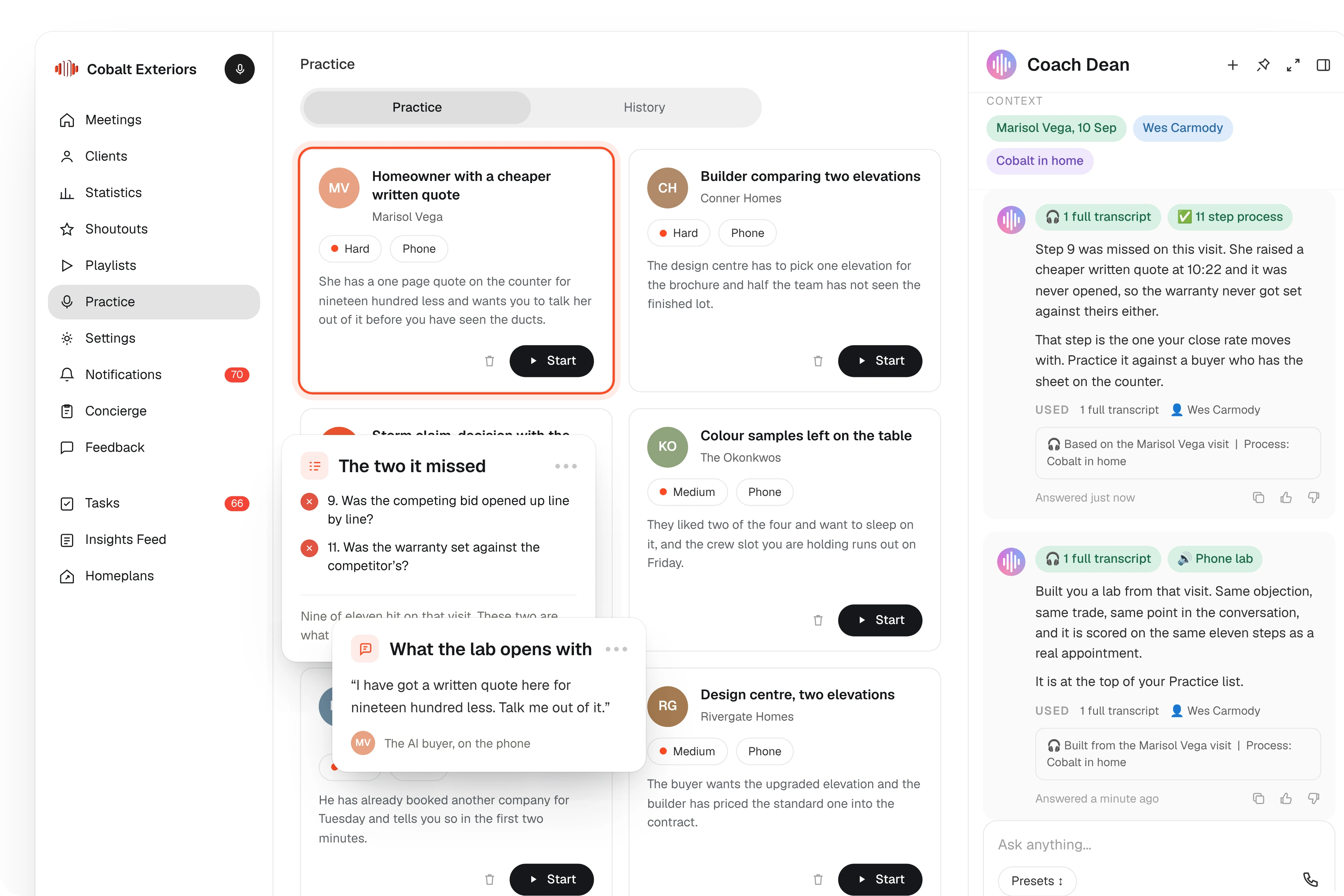
Because the rep can do it alone, at their own pace, without a manager across the table. A manager can run the three-bids scenario with a rep maybe twice before both are tired of it. The AI homeowner in SalesAsk will run it as many times as the rep wants, and it pushes back, interrupts and asks follow-up questions.
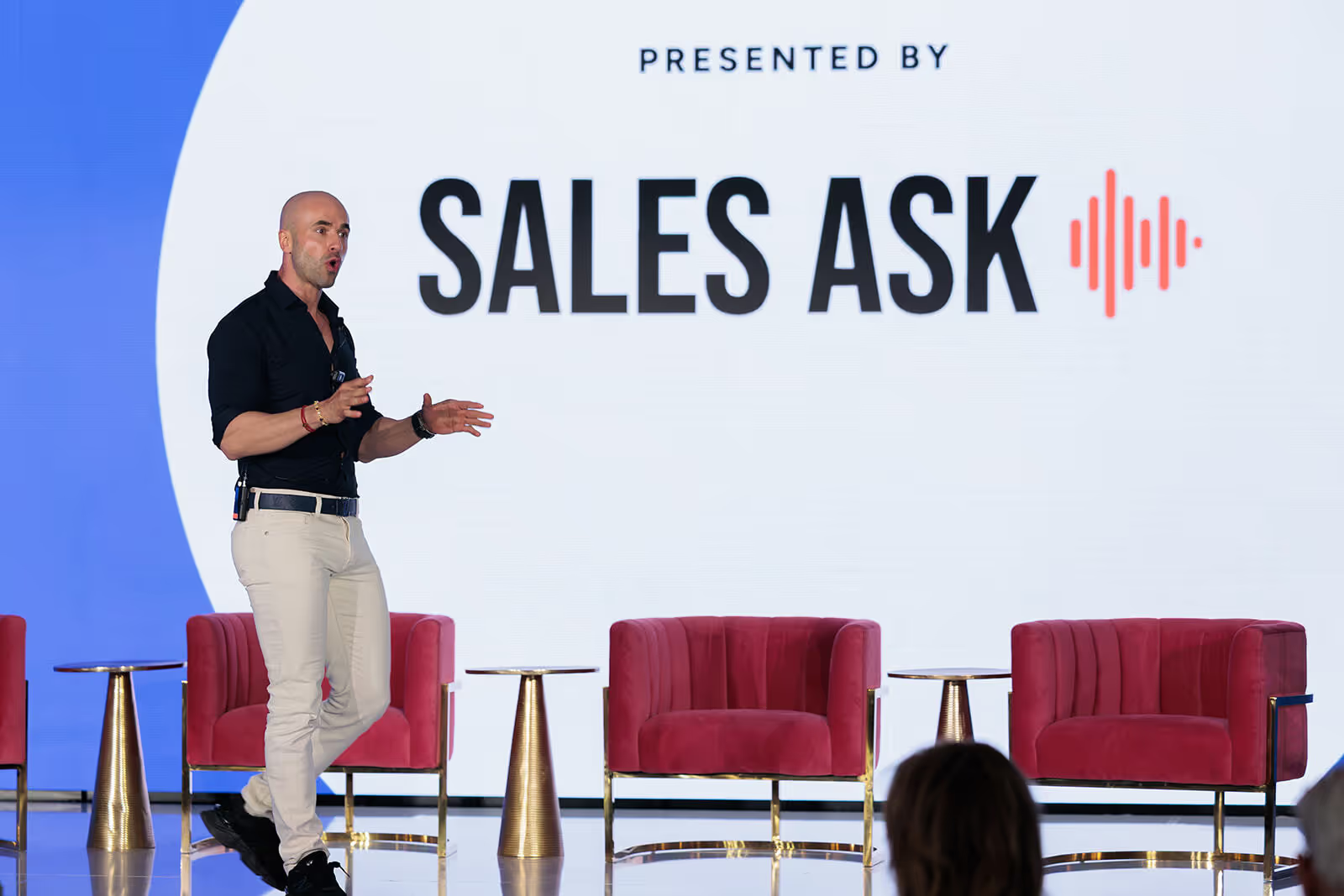
Equity Roofing uses it this way. Ivy Ulrich, its Director of Sales, describes the roleplay: "You can set him to be a difficult customer, a nice customer, a very curious customer, and it actually adapts to that personality and gives your team the chance to just try it out and perfect it before they go live on the phones." The Equity Roofing story says roleplay is now standard for every new hire there.
In SalesAsk, practice is one of three coaching moments: roleplay before the appointment, optional live coaching during it, and written feedback after. When Coach Dean sees a rep keep missing a step on real visits, he builds a practice scenario from that visit.
What should you do with the scores?
Score against a short list, then compare practice with real visits. Before the first session, write down the four or five things the rep must do in that scenario: ask where you are in the bid order, present three options, say the monthly figure, book the next step. Score only those.
Then put the practice score next to the same rep's recorded visits. SalesAsk shows the two side by side. The comparison tells you what kind of problem you have:
- High in practice, low on real visits. The rep knows the words and isn't using them. That is confidence or pressure.
- Low on both. That is training.
- High on both. Give that rep's recordings to the new hires.
Where does roleplay fall short?
The AI homeowner doesn't have a dog barking, a toddler on the counter or a husband who wandered off to the garage. It teaches the words and not the read on the room, which is why the real appointments get recorded too.
A rep who has sold for fifteen years at the top of the board may hate this, and I wouldn't force it. Use their real visits as the examples, with their permission. And no scenario here fixes an appointment that should never have been booked. If one spouse was booked with no budget conversation, the one-legger is the only scenario that matters, and it starts on the phone.
To run the three-bids scenario against the AI homeowner, book a SalesAsk demo.
Frequently asked questions
How often should reps roleplay?
Short and frequent works better than long and rare. Ten minutes before dispatch a few times a week keeps one scenario fresh. New hires need more while they are learning the price reveal.
Which scenario should a new rep start with?
"That's more than I expected." It trains the rep to hold a silence and ask about scope before touching the price. After that, run the three-bids scenario.
Can you write your own scenarios?
Yes. In SalesAsk you can write scenarios from your own playbook, set up to 10 weighted scoring categories, and set a pass mark for each one. You can assign a scenario to one rep or the whole team.
Does roleplay work for experienced reps?
It works for a specific weak spot. A veteran who keeps losing to "we'll wait until spring" can practice that one objection. Running all twelve with them is a poor use of everyone's time.
Sources
- SalesAsk, The Kitchen Table Report 2026, The Conversation, which cites Roofing Contractor's 2026 homeowner survey with Owens Corning.
- SalesAsk customer story: Equity Roofing.
- SalesAsk, AI roleplays.
Moe Abbas
CEO and founder of SalesAsk. Spent 20+ years in the trades before building software.
More posts byWritten by the SalesAsk team
SalesAsk records and coaches in-home sales conversations for home service, home improvement and home builder teams.
More posts