How to Increase Plumbing Sales Without Buying More Leads
Moe Abbas
CEO and Founder, SalesAsk
September 10, 2026
8
On this page
1,142 people searched "how to increase plumbing sales" and landed on our site in the last sixteen months. We were on page three. Not one of them clicked, which is fair, because the page Google showed them was about HVAC.
So here is the plumbing answer, and it starts with a number most owners have never looked up: how many of your service calls end with the tech presenting more than one option.
The short answer
Plumbing sales grow on the calls you are already running, not on the calls you have to buy. A plumber runs somewhere between three and six calls a day. Every one of those is a sales conversation, and on most of them the tech quotes the repair, gets a yes or a no, and leaves. The ticket moves when the tech presents a repair, a better repair, and a replacement, and lets the homeowner choose. Everything else on this page is about making that happen on every call without you riding along.
Where the ticket actually moves
General Air Conditioning and Plumbing put SalesAsk on every tech. Their story on our site says 100 percent of techs are using the AI coach daily. What changed was not the lead count. It was what got said in the basement.
Picture the two versions of the same call. One tech says "your water heater is done, here's the price." The other says "you have three ways to go here." Same house, same failed heater, same hour. The second conversation ends with a bigger number more often, and the homeowner is happier, because they picked it. Their story is on our customer stories page if you want the details in Patrick Somers' own words rather than mine.
Power Selling Pros, an HVAC shop that runs the same playbook on field technicians, reports a 21 percent close rate increase on their customer story page. Field techs. Not comfort advisors, not a sales team. The people who were already in the home fixing something.
I would not expect a plumbing shop to see the same number. Plumbing calls are shorter and more of them are pure repair. But the direction is the same, and the cost is zero new leads.
The three calls a plumber runs, and what gets skipped on each
A service call, a callback, and a quoted install are three different sales, and most training treats them as one.
On the service call the miss is options. The tech diagnoses, quotes one fix, done. Nobody mentioned the water softener the homeowner has been thinking about since the last hard water stain on the glass shower door.
On the callback the miss is the story. The tech who came last time is not the tech who came this time, and the second one has four words in the CRM to go on. "Fixed leak under sink." The homeowner remembers the whole conversation. The tech remembers nothing, so he cannot say "last time we talked about the main line, do you want to look at that today?"
On the quoted install the miss is the follow up. The estimate goes out, the homeowner says they need to think, and the shop's follow up is a text on day three that says "any questions?" We wrote a whole piece on why homeowners go quiet after an estimate. The short version: they are not saying no, they are comparing, and the shop that recalls the specifics of the visit wins the comparison.
The one number to track before you buy anything
Average ticket per call, by tech, by call type.
Not close rate. Close rate on a plumbing service call is high everywhere because the toilet is overflowing. The ticket is where the spread lives. Pull it for the last ninety days. If your best tech and your worst tech are within ten percent of each other on average ticket, your problem is lead flow and this post will not help you. If the gap is wide, you have a coaching problem and every lead you buy is being run through the same leak. Most owners who pull this number for the first time are surprised by the gap. I have not met one who was surprised by which tech was on top.
That is the honest limit of this advice. A two-truck shop doing one call per truck per day has a marketing problem first.
What "coaching" means when you cannot be in the truck
The traditional answer is a ride-along. A manager rides with a tech for a day, hears three or four calls, and coaches off that. It works. It also gets you three or four calls a week per manager, so a ten-tech shop is coaching off less than one call per tech per month.
Recording changes the sample. Every call, every tech, every day, and a summary the manager can read in two minutes instead of a day in the truck. Connell Roofing's story on our site is titled "coaches reps without more ride alongs", which is the whole point in five words, even though they are roofers.
The part nobody tells you: techs hate it for about two weeks. Then the ones who are good realise it proves they are good, and the ones who are new realise it is the fastest way to stop being new. Mr. Roofing's story is about aligning a two-call close: the manager hears the first call, and the second one is better.
Book a demo: see what a plumbing service call looks like recorded and scored
A week that moves the ticket
Monday: pull average ticket by tech for last month. Put it on the wall in the shop. Yes, names.
Tuesday: pick one call type. Water heaters is a good one because the replace-versus-repair decision is real and the price gap is wide. Write down the three options every tech should present, with prices, on one page.
Wednesday to Friday: every water heater call gets the three options, out loud, and the tech writes down which one the homeowner picked.
Following Monday: compare. You will have twenty or thirty calls. Enough to see whether the average moved and which techs presented options and which quoted one fix and left.
That is the entire system. Software makes the Wednesday to Friday part visible without you asking, and makes the following Monday take ten minutes instead of a morning. But the sheet on the wall works on its own, and I would start there before buying anything, including from us.
What this does not fix
It does not fix a CSR who books "guy to look at the sink" instead of "water heater is twelve years old and the homeowner asked about replacement". The sale starts on the phone, and if the tech arrives with no context, options are harder to present. We have seen shops where the CSR conversation was the bigger leak than the tech conversation, and we do not have a clean way to tell you which one is yours without hearing both.
It also does not fix pricing. If your replacement price is 40 percent above the shop down the road, presenting it three ways will not help. Fix the number first.
About the author
Moe Abbas
CEO and Founder, SalesAsk
Moe Abbas is the CEO and founder of SalesAsk, the AI platform that records and coaches in-home sales conversations for home service, home improvement and home builder teams.
He spent more than 20 years in the trades before software, building and scaling companies that generate more than $40M a year. That is where his book, The One Meeting Close: How the Top 1% of Reps in Home Services Close in the First Meeting, came from: his own kitchen table appointments and his reps'.
At SalesAsk he created Coach Dean, the AI sales and compliance coach that hears every visit, scores every step and writes coaching back to the rep. He speaks at industry events on the first-visit close, safety-first selling and building a coaching culture without more ride-alongs.
Everything he writes here comes from recorded conversations and the teams that run them, not from theory.
Moe Abbas
About SalesAsk
Written by the SalesAsk team
SalesAsk records and coaches in-home sales conversations for home service, home improvement and home builder teams.
More postsKeep reading
All posts


1,142 people searched "how to increase plumbing sales" and landed on our site in the last sixteen months. We were on page three. Not one of them clicked, which is fair, because the page Google showed them was about HVAC.
So here is the plumbing answer, and it starts with a number most owners have never looked up: how many of your service calls end with the tech presenting more than one option.
The short answer
Plumbing sales grow on the calls you are already running, not on the calls you have to buy. A plumber runs somewhere between three and six calls a day. Every one of those is a sales conversation, and on most of them the tech quotes the repair, gets a yes or a no, and leaves. The ticket moves when the tech presents a repair, a better repair, and a replacement, and lets the homeowner choose. Everything else on this page is about making that happen on every call without you riding along.
Where the ticket actually moves
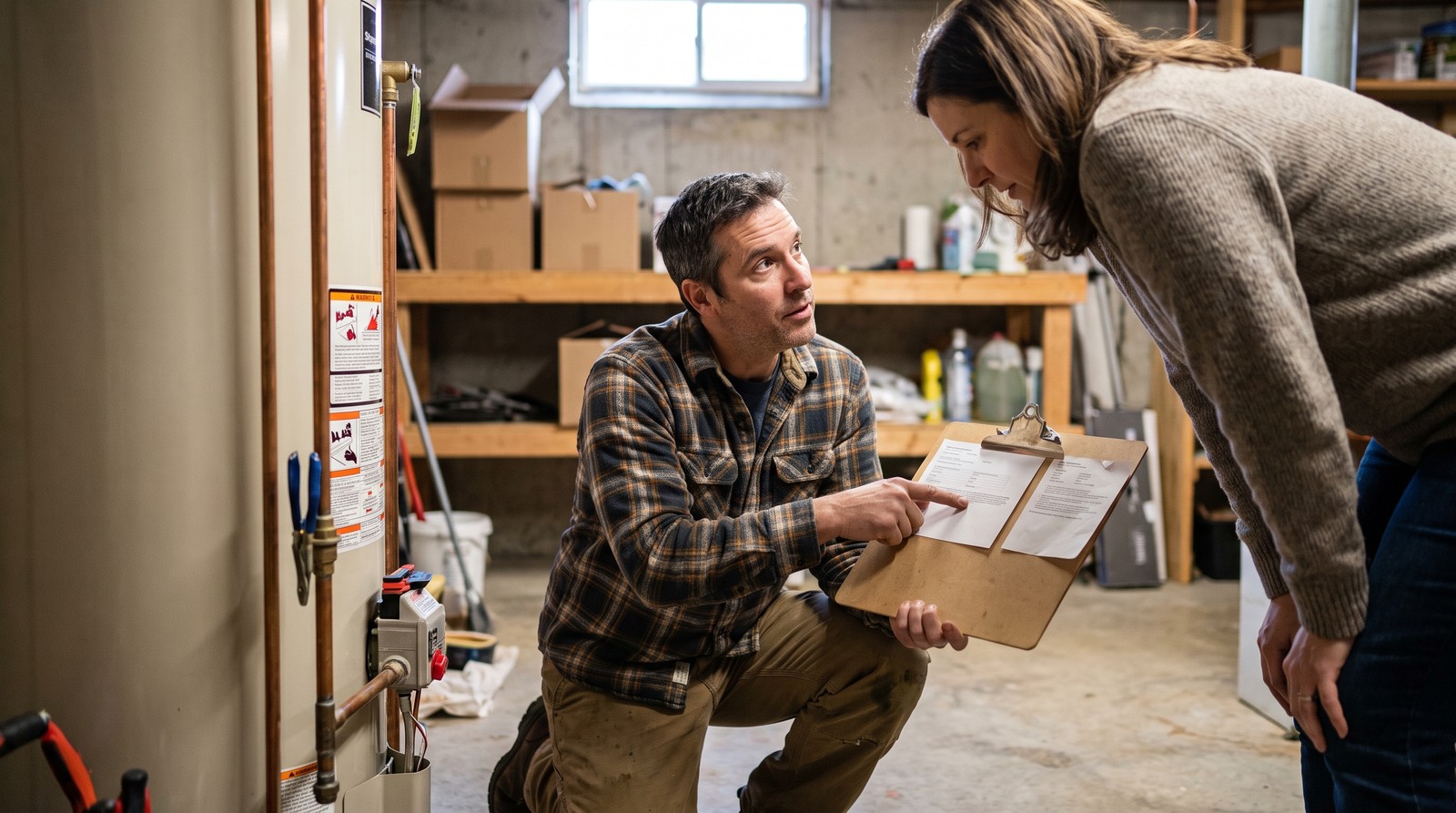
General Air Conditioning and Plumbing put SalesAsk on every tech. Their story on our site says 100 percent of techs are using the AI coach daily. What changed was not the lead count. It was what got said in the basement.
Picture the two versions of the same call. One tech says "your water heater is done, here's the price." The other says "you have three ways to go here." Same house, same failed heater, same hour. The second conversation ends with a bigger number more often, and the homeowner is happier, because they picked it. Their story is on our customer stories page if you want the details in Patrick Somers' own words rather than mine.
Power Selling Pros, an HVAC shop that runs the same playbook on field technicians, reports a 21 percent close rate increase on their customer story page. Field techs. Not comfort advisors, not a sales team. The people who were already in the home fixing something.
I would not expect a plumbing shop to see the same number. Plumbing calls are shorter and more of them are pure repair. But the direction is the same, and the cost is zero new leads.
The three calls a plumber runs, and what gets skipped on each
A service call, a callback, and a quoted install are three different sales, and most training treats them as one.
On the service call the miss is options. The tech diagnoses, quotes one fix, done. Nobody mentioned the water softener the homeowner has been thinking about since the last hard water stain on the glass shower door.
On the callback the miss is the story. The tech who came last time is not the tech who came this time, and the second one has four words in the CRM to go on. "Fixed leak under sink." The homeowner remembers the whole conversation. The tech remembers nothing, so he cannot say "last time we talked about the main line, do you want to look at that today?"
On the quoted install the miss is the follow up. The estimate goes out, the homeowner says they need to think, and the shop's follow up is a text on day three that says "any questions?" We wrote a whole piece on why homeowners go quiet after an estimate. The short version: they are not saying no, they are comparing, and the shop that recalls the specifics of the visit wins the comparison.
The one number to track before you buy anything
Average ticket per call, by tech, by call type.
Not close rate. Close rate on a plumbing service call is high everywhere because the toilet is overflowing. The ticket is where the spread lives. Pull it for the last ninety days. If your best tech and your worst tech are within ten percent of each other on average ticket, your problem is lead flow and this post will not help you. If the gap is wide, you have a coaching problem and every lead you buy is being run through the same leak. Most owners who pull this number for the first time are surprised by the gap. I have not met one who was surprised by which tech was on top.
That is the honest limit of this advice. A two-truck shop doing one call per truck per day has a marketing problem first.
What "coaching" means when you cannot be in the truck
The traditional answer is a ride-along. A manager rides with a tech for a day, hears three or four calls, and coaches off that. It works. It also gets you three or four calls a week per manager, so a ten-tech shop is coaching off less than one call per tech per month.
Recording changes the sample. Every call, every tech, every day, and a summary the manager can read in two minutes instead of a day in the truck. Connell Roofing's story on our site is titled "coaches reps without more ride alongs", which is the whole point in five words, even though they are roofers.
The part nobody tells you: techs hate it for about two weeks. Then the ones who are good realise it proves they are good, and the ones who are new realise it is the fastest way to stop being new. Mr. Roofing's story is about aligning a two-call close: the manager hears the first call, and the second one is better.
Book a demo: see what a plumbing service call looks like recorded and scored
A week that moves the ticket
Monday: pull average ticket by tech for last month. Put it on the wall in the shop. Yes, names.
Tuesday: pick one call type. Water heaters is a good one because the replace-versus-repair decision is real and the price gap is wide. Write down the three options every tech should present, with prices, on one page.
Wednesday to Friday: every water heater call gets the three options, out loud, and the tech writes down which one the homeowner picked.
Following Monday: compare. You will have twenty or thirty calls. Enough to see whether the average moved and which techs presented options and which quoted one fix and left.
That is the entire system. Software makes the Wednesday to Friday part visible without you asking, and makes the following Monday take ten minutes instead of a morning. But the sheet on the wall works on its own, and I would start there before buying anything, including from us.
What this does not fix
It does not fix a CSR who books "guy to look at the sink" instead of "water heater is twelve years old and the homeowner asked about replacement". The sale starts on the phone, and if the tech arrives with no context, options are harder to present. We have seen shops where the CSR conversation was the bigger leak than the tech conversation, and we do not have a clean way to tell you which one is yours without hearing both.
It also does not fix pricing. If your replacement price is 40 percent above the shop down the road, presenting it three ways will not help. Fix the number first.