The Design Consultant's Second Meeting: How Kitchen & Bath Sales Are Won Between Visits
Dara Shabnam
Head of Growth, SalesAsk
August 25, 2026
9 min read
On this page
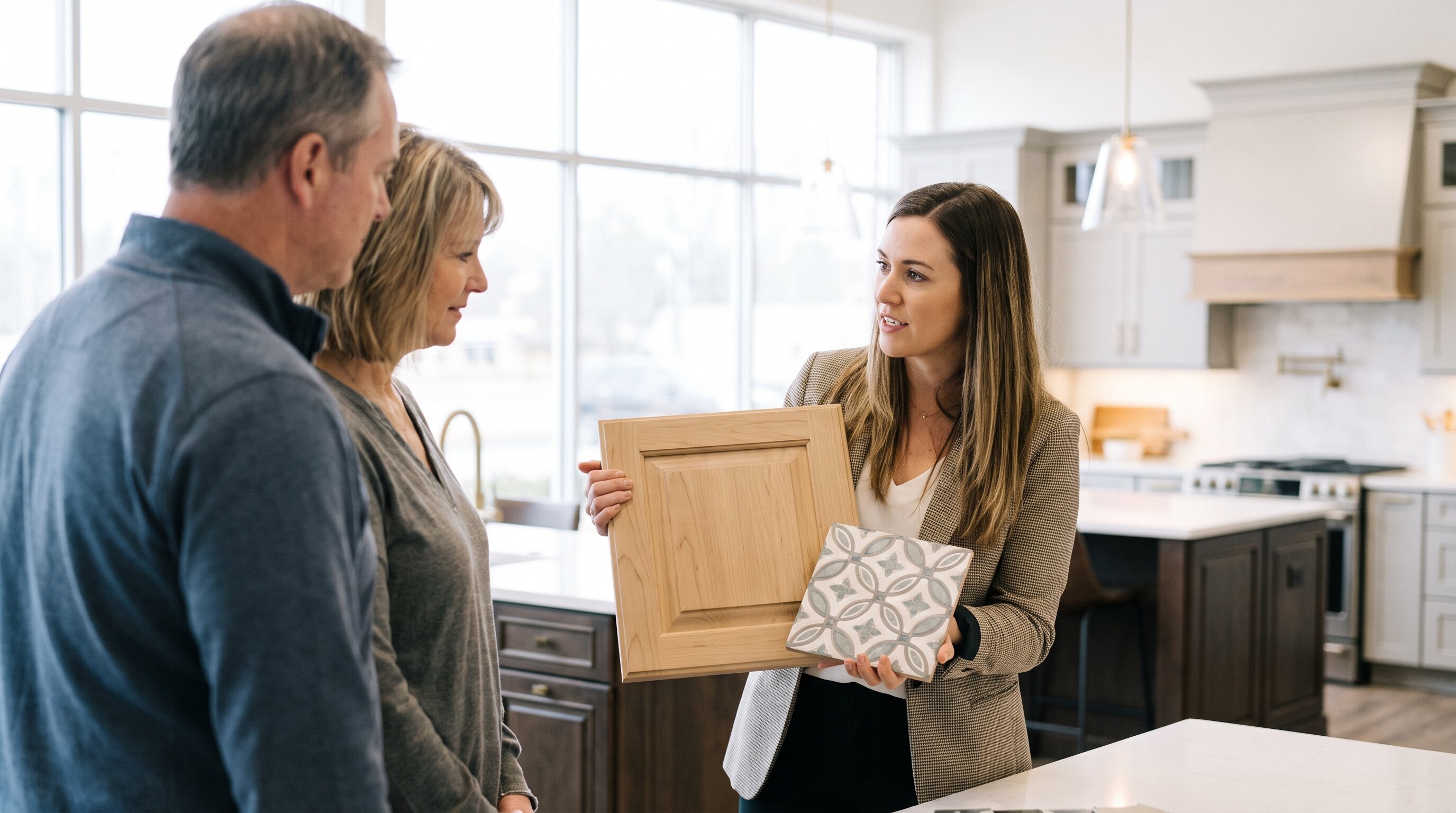
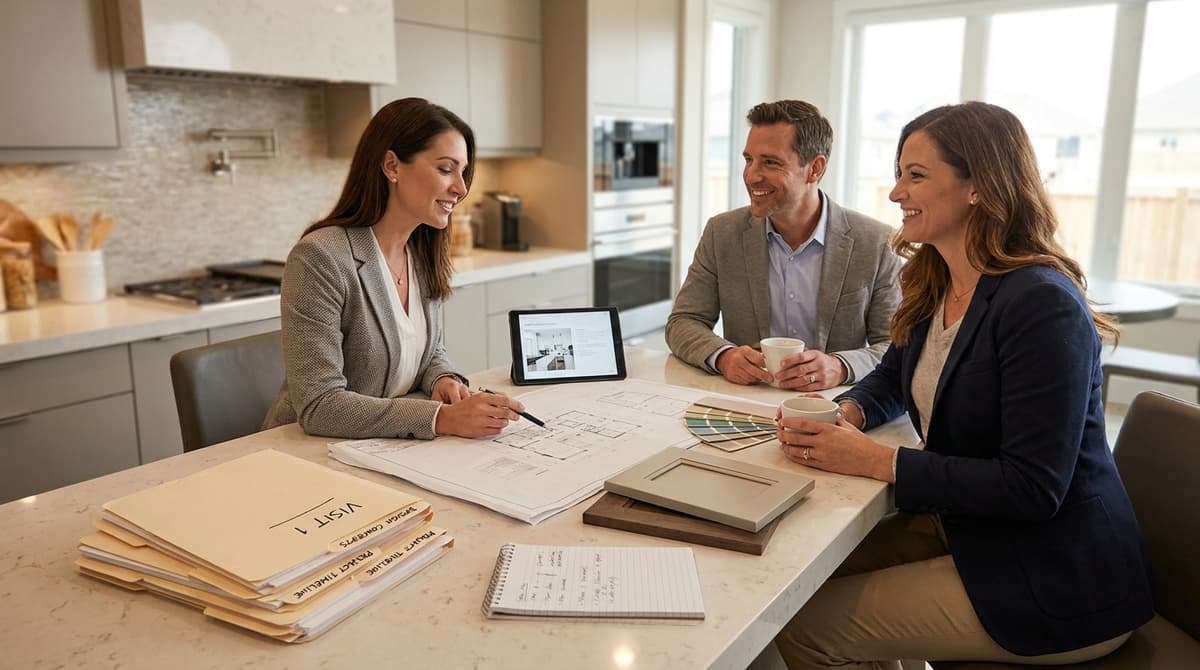
The first visit went well. Ninety minutes at the kitchen table, tape measure out, the homeowners nodding along as the consultant sketched the new island. Everyone shook hands. Then eleven days went by, and when the second meeting finally happened, a different person showed up: same homeowner, colder questions, a competitor's brochure on the counter. I have listened to hundreds of recorded design consultations, and this pattern repeats so often it deserves a name. The sale didn't die in the meeting. It died in the space between meetings, where nobody from your company was present.
Kitchen and bath is not a one-call-close trade, and pretending otherwise is how good design consultants lose jobs they had already won. This is a post about the job title itself, what an in-home design consultant actually sells, why the multi-visit structure works against you, and what the best ones do differently in the gaps.
If you run a kitchen and bath sales team and want every appointment coached, not only the ones a manager can sit in on, book a SalesAsk demo.
What does a kitchen and bath design consultant actually sell?
You are not selling cabinets or countertops. You are selling the household's confidence that a five-figure decision they will mostly make without you in the room is safe.
Look at the actual job postings for this role. Companies hiring an in-home design consultant list the same duties: run the measure, guide selections, present the design, manage allowances, close the design agreement. Only one of those is a transaction. The rest are trust work.
A mid-range kitchen remodel now runs somewhere between $50,000 and $115,000 depending on market and scope. That is car money, sometimes college money. Homeowners do not process that decision during your presentation. They process it at dinner two nights later, on a phone call with a brother-in-law who "knows construction," and in front of a spreadsheet comparing your number to two others. Your real product is how they feel about you during those moments.
The consultants who understand this run different first visits. They spend less time on door styles and more time on the questions that surface how the household decides: who cooks, who pays, who worries, what happened the last time they hired a contractor. When I hear a recorded consultation where the consultant asked what went wrong on the last project, the close rate downstream is noticeably better than when the consultant went straight to the catalog. Discovery is not a warm-up. It is the sale.
Why does the multi-visit sale break down between visits?
Because the standard remodel process concentrates all of your persuasion into scheduled meetings while the homeowner's actual decision happens in the unscheduled days between them.
It helps to see how differently the design-led sale is shaped compared to the one-call-close trades that most sales training was written for:
| One-call-close (HVAC replacement, windows) | Design-led remodel (kitchen & bath) | |
|---|---|---|
| Visits before contract | Usually one | Two to four, plus a showroom trip |
| Time from first visit to decision | Same day to 48 hours | Two to eight weeks |
| Decision pressure | Urgency is real (no heat, failed unit) | Urgency is optional, the old kitchen still works |
| Where the close happens | In the room | Mostly between rooms: at dinner, by email, in silence |
| Biggest killer | Price objection in the room | Drift, ghosting, and the competitor's second visit |
Every gap in that right-hand column is unsupervised. The homeowner re-reads a paper quote that cannot answer questions. Selections stall because the spouse who missed the first visit never caught up. A competitor with a faster follow-up cadence books their second meeting inside your silence. None of this shows up as a lost sale in your CRM. It shows up as "still deciding," which is where remodel pipelines go to die quietly.
The follow-up numbers across sales generally are grim enough to take personally. IRC Sales Solutions' compilation of follow-up research found that 44% of salespeople give up after a single follow-up attempt, while 80% of closed sales require five or more follow-ups. I would argue the multi-visit remodel sale is the most extreme version of this: the process itself guarantees you need sustained follow-up, and most consultants still behave as if the presentation was the job.
How do the best design consultants run the first visit?
They treat the first visit as a discovery and alignment meeting whose only mandatory close is the next commitment: both decision-makers, a real budget conversation, and a booked second step before they leave the driveway.
Three habits separate the strong first visits from the weak ones in the consultations I have reviewed.
First, they insist on both decision-makers early, and they do it without being weird about it. A one-legger first visit in kitchen and bath is not a small handicap; the absent spouse becomes the invisible objection for the rest of the process. The best consultants make the scheduling call itself do this work: "Selections go ten times faster when you're both there for the first conversation, what evening works for both of you?"
Second, they have the budget conversation on visit one, in ranges, out loud. Not "what's your budget?" Homeowners deflect that, but "projects like this in your area are landing between sixty and ninety. Before I design anything, tell me where you'd like me to aim." It feels blunt. It saves everyone three weeks of designing a kitchen the household was never going to buy. The tradeoff is real: occasionally you will scare off a buyer who needed to fall in love before hearing numbers. I accept that loss rate, because the alternative, the silent sticker shock that arrives by email after the second visit, kills far more jobs than the honest range does.
Third, they never leave without the next step scheduled. Not "I'll send you some ideas." A date, a time, an agenda: "Thursday the 4th, I'll bring two layouts and the selections shortlist." A design agreement or retainer, where your company uses one, is the strongest version of this. A homeowner who has paid even a few hundred dollars for design work has stopped shopping in a way no free-estimate prospect ever has. Some markets resist paid design. Fine. The scheduled, agenda'd second meeting is the minimum bar.
What should you send after the first visit: and when?
Send a same-week recap that continues the conversation, what you heard, what happens next, what to look at before the second meeting, and never let the first thing they receive from you be a price.
Here is where I will take a position that annoys some sales managers: the emailed PDF quote, sent cold into the gap between visits, is one of the worst habits in this trade. A paper quote, and a PDF is just paper with better fonts, answers exactly one question, the price, and it answers it alone, with no designer present, at whatever moment the homeowner happens to open it. Usually 9:40 on a Tuesday night, tired, next to a spreadsheet.
What the strong consultants send instead, within 24 to 48 hours, is a recap that does three jobs. It proves you listened: two or three sentences reflecting their words back, the cramped triangle, the resale worry, the double oven the holidays require. It frames the process: what happens at the second meeting, what decisions will be needed, roughly when a project like theirs could start. And it gives the household homework that keeps them moving toward you: the selections shortlist, the two layouts to argue about at dinner. Homework converts the between-visits silence from dead air into progress you assigned.
Increasingly, the recap should not be an email at all but a link, a living, buyer-facing space where the scope, the selections, the photos from the measure, and the running conversation live together and stay current. The paper quote is static and alone; a shared digital space keeps you in the room after you have left it. That shift, from documents you send to a place the household visits, is, to my mind, the biggest open opportunity in remodel selling right now, and it is exactly the gap our team built for.
How do you win the second meeting before it starts?
You win the second meeting during the gap: by knowing exactly what happened in the first one, pre-answering the objections that formed at the dinner table, and arriving with the household already aligned on the decision you framed.
This is where I have to concede what nobody in the room can do alone. You cannot attend the dinner-table conversation. What you can control is how accurately you remember the first visit and how precisely your follow-up targets what was actually said, not what you think you said.
This is the strongest practical case for recording design consultations. Not surveillance, memory. A consultant who reviews their own ninety-minute consultation, or gets AI-graded feedback on it, walks into the second meeting knowing the homeowner went quiet when the timeline came up, that the wife asked about resale twice, that the budget range landed with a flinch. Their recap email quotes the homeowner's own words. Their second-meeting agenda opens with the concern the household has been chewing on for two weeks. The uncoached consultant, meanwhile, opens the second meeting by re-presenting the design, answering questions nobody asked while the real objection sits unaddressed on the counter next to the competitor's brochure.
At SalesAsk we watch this play out in the coaching data across remodel teams: the between-visit behaviors, recap speed, whether both decision-makers were engaged, whether the next step was booked in-room, predict close rates better than anything that happens in the presentation itself. Per-step feedback on recorded consultations is how you coach those behaviors deliberately instead of hoping reps develop them by osmosis. The honest tradeoff: multi-visit sales make revenue attribution genuinely harder than in one-call-close trades, and any coaching platform, ours included, has to work harder to connect a first-visit behavior to a contract signed six weeks later. That is a real limitation of the category, and worth pressure-testing in any demo, including ours.
For the complete kitchen and bath sales process, see our kitchen and bath remodeling sales guide.
For walk-in tub and bathroom remodeling specifics, see our bathroom remodeling sales training guide.
FAQ
Is a kitchen and bath design consultant a sales job or a design job?
Both, but the failure mode is almost always on the sales side. Plenty of consultants can produce a beautiful layout; far fewer can hold a budget conversation, keep both decision-makers engaged, and control the follow-up cadence. Hire and train for the second set.
Should we charge a design fee or retainer?
If your market allows it, yes. A paid design agreement filters shoppers from buyers and gives the homeowner a sunk commitment to your process. If competitors have trained your market on free design, compensate with a firmly scheduled, agenda-driven second meeting and fast recaps.
How fast should the follow-up after a first visit go out?
Within 24 to 48 hours, while the conversation is still warm in the household. The follow-up research IRC Sales Solutions compiled shows most salespeople quit after one attempt while most closed sales need five or more touches. Build the cadence so persistence is the default, not a personality trait.
What if only one spouse attends the first visit?
Reschedule if you can; if you cannot, make the absent partner the explicit audience of your recap, a short written or video summary designed to be forwarded, and get both of them confirmed for the second meeting before you leave.
Does recording an in-home design consultation hurt trust?
Handled with plain disclosure, "I record my consultations so I don't miss any details of what you want", it rarely does; framed as note-taking, most homeowners appreciate it. Check your state's consent rules and make disclosure part of the script.
Sources
- IRC Sales Solutions, "Sales Follow-Up Statistics and Process"ircsalessolutions.com/insights/sales-follow-up-statistics
- Renology, "Kitchen Remodel Cost 2026: $51K, $115K, Line by Line"therenology.com/journal/kitchen-remodel-costs-2026
Where to start this week
Pick your three most recent "still deciding" projects and audit the gap, not the meeting: how long after the first visit did the homeowner hear from you, what did they receive, and was a second meeting on the calendar before your consultant left? Then fix the cadence for every first visit going forward, both decision-makers booked, budget ranges out loud, recap inside 48 hours, homework assigned, second meeting dated. If you want to see what your consultants are actually saying at the kitchen table, and coach the between-visit behaviors that decide these jobs, this is what we built SalesAsk to do for remodelers, and the demo is the fastest way to see your own team's gap.
About the author
Dara Shabnam
Head of Growth, SalesAsk
Dara Shabnam leads growth at SalesAsk. She writes about in-home sales training, recording consent, and what the recorded conversations of home service and trades teams show about how jobs are actually won.
Dara Shabnam
About SalesAsk
Written by the SalesAsk team
SalesAsk records and coaches in-home sales conversations for home service, home improvement and home builder teams.
More postsKeep reading
All posts
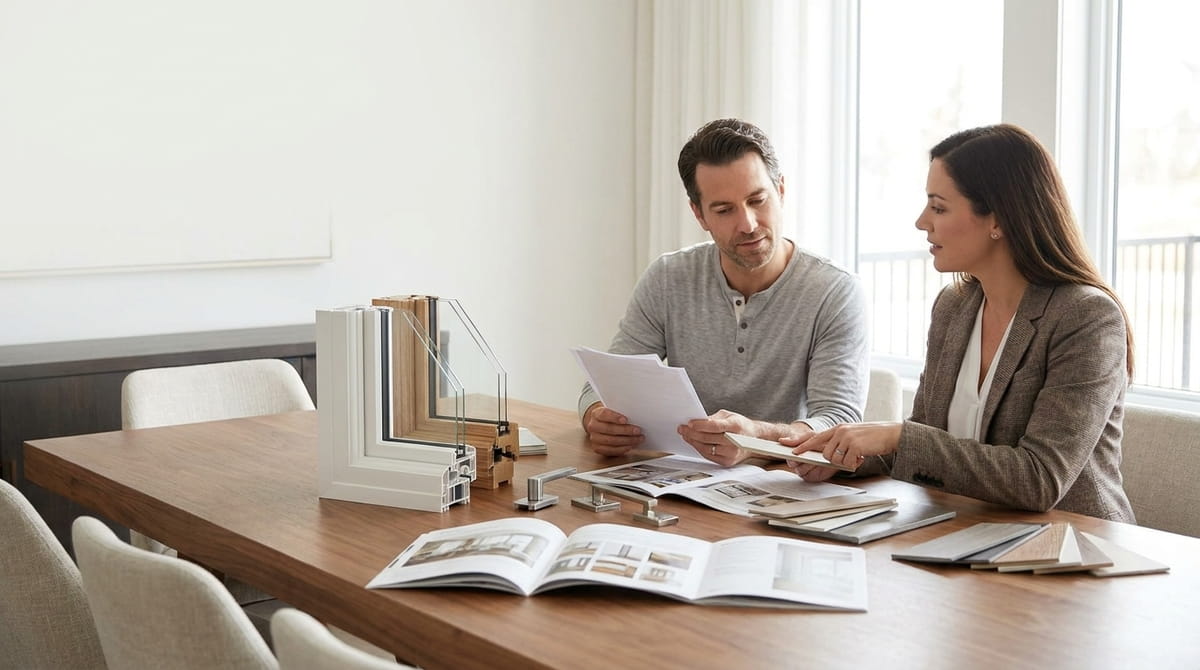

The first visit went well. Ninety minutes at the kitchen table, tape measure out, the homeowners nodding along as the consultant sketched the new island. Everyone shook hands. Then eleven days went by, and when the second meeting finally happened, a different person showed up: same homeowner, colder questions, a competitor's brochure on the counter. I have listened to hundreds of recorded design consultations, and this pattern repeats so often it deserves a name. The sale didn't die in the meeting. It died in the space between meetings, where nobody from your company was present.
Kitchen and bath is not a one-call-close trade, and pretending otherwise is how good design consultants lose jobs they had already won. This is a post about the job title itself, what an in-home design consultant actually sells, why the multi-visit structure works against you, and what the best ones do differently in the gaps.
If you run a kitchen and bath sales team and want every appointment coached, not only the ones a manager can sit in on, book a SalesAsk demo.
What does a kitchen and bath design consultant actually sell?
You are not selling cabinets or countertops. You are selling the household's confidence that a five-figure decision they will mostly make without you in the room is safe.
Look at the actual job postings for this role. Companies hiring an in-home design consultant list the same duties: run the measure, guide selections, present the design, manage allowances, close the design agreement. Only one of those is a transaction. The rest are trust work.
A mid-range kitchen remodel now runs somewhere between $50,000 and $115,000 depending on market and scope. That is car money, sometimes college money. Homeowners do not process that decision during your presentation. They process it at dinner two nights later, on a phone call with a brother-in-law who "knows construction," and in front of a spreadsheet comparing your number to two others. Your real product is how they feel about you during those moments.
The consultants who understand this run different first visits. They spend less time on door styles and more time on the questions that surface how the household decides: who cooks, who pays, who worries, what happened the last time they hired a contractor. When I hear a recorded consultation where the consultant asked what went wrong on the last project, the close rate downstream is noticeably better than when the consultant went straight to the catalog. Discovery is not a warm-up. It is the sale.
Why does the multi-visit sale break down between visits?
Because the standard remodel process concentrates all of your persuasion into scheduled meetings while the homeowner's actual decision happens in the unscheduled days between them.
It helps to see how differently the design-led sale is shaped compared to the one-call-close trades that most sales training was written for:
| One-call-close (HVAC replacement, windows) | Design-led remodel (kitchen & bath) | |
|---|---|---|
| Visits before contract | Usually one | Two to four, plus a showroom trip |
| Time from first visit to decision | Same day to 48 hours | Two to eight weeks |
| Decision pressure | Urgency is real (no heat, failed unit) | Urgency is optional, the old kitchen still works |
| Where the close happens | In the room | Mostly between rooms: at dinner, by email, in silence |
| Biggest killer | Price objection in the room | Drift, ghosting, and the competitor's second visit |
Every gap in that right-hand column is unsupervised. The homeowner re-reads a paper quote that cannot answer questions. Selections stall because the spouse who missed the first visit never caught up. A competitor with a faster follow-up cadence books their second meeting inside your silence. None of this shows up as a lost sale in your CRM. It shows up as "still deciding," which is where remodel pipelines go to die quietly.
The follow-up numbers across sales generally are grim enough to take personally. IRC Sales Solutions' compilation of follow-up research found that 44% of salespeople give up after a single follow-up attempt, while 80% of closed sales require five or more follow-ups. I would argue the multi-visit remodel sale is the most extreme version of this: the process itself guarantees you need sustained follow-up, and most consultants still behave as if the presentation was the job.
How do the best design consultants run the first visit?
They treat the first visit as a discovery and alignment meeting whose only mandatory close is the next commitment: both decision-makers, a real budget conversation, and a booked second step before they leave the driveway.
Three habits separate the strong first visits from the weak ones in the consultations I have reviewed.
First, they insist on both decision-makers early, and they do it without being weird about it. A one-legger first visit in kitchen and bath is not a small handicap; the absent spouse becomes the invisible objection for the rest of the process. The best consultants make the scheduling call itself do this work: "Selections go ten times faster when you're both there for the first conversation, what evening works for both of you?"
Second, they have the budget conversation on visit one, in ranges, out loud. Not "what's your budget?" Homeowners deflect that, but "projects like this in your area are landing between sixty and ninety. Before I design anything, tell me where you'd like me to aim." It feels blunt. It saves everyone three weeks of designing a kitchen the household was never going to buy. The tradeoff is real: occasionally you will scare off a buyer who needed to fall in love before hearing numbers. I accept that loss rate, because the alternative, the silent sticker shock that arrives by email after the second visit, kills far more jobs than the honest range does.
Third, they never leave without the next step scheduled. Not "I'll send you some ideas." A date, a time, an agenda: "Thursday the 4th, I'll bring two layouts and the selections shortlist." A design agreement or retainer, where your company uses one, is the strongest version of this. A homeowner who has paid even a few hundred dollars for design work has stopped shopping in a way no free-estimate prospect ever has. Some markets resist paid design. Fine. The scheduled, agenda'd second meeting is the minimum bar.
What should you send after the first visit: and when?
Send a same-week recap that continues the conversation, what you heard, what happens next, what to look at before the second meeting, and never let the first thing they receive from you be a price.
Here is where I will take a position that annoys some sales managers: the emailed PDF quote, sent cold into the gap between visits, is one of the worst habits in this trade. A paper quote, and a PDF is just paper with better fonts, answers exactly one question, the price, and it answers it alone, with no designer present, at whatever moment the homeowner happens to open it. Usually 9:40 on a Tuesday night, tired, next to a spreadsheet.
What the strong consultants send instead, within 24 to 48 hours, is a recap that does three jobs. It proves you listened: two or three sentences reflecting their words back, the cramped triangle, the resale worry, the double oven the holidays require. It frames the process: what happens at the second meeting, what decisions will be needed, roughly when a project like theirs could start. And it gives the household homework that keeps them moving toward you: the selections shortlist, the two layouts to argue about at dinner. Homework converts the between-visits silence from dead air into progress you assigned.
Increasingly, the recap should not be an email at all but a link, a living, buyer-facing space where the scope, the selections, the photos from the measure, and the running conversation live together and stay current. The paper quote is static and alone; a shared digital space keeps you in the room after you have left it. That shift, from documents you send to a place the household visits, is, to my mind, the biggest open opportunity in remodel selling right now, and it is exactly the gap our team built for.
How do you win the second meeting before it starts?
You win the second meeting during the gap: by knowing exactly what happened in the first one, pre-answering the objections that formed at the dinner table, and arriving with the household already aligned on the decision you framed.
This is where I have to concede what nobody in the room can do alone. You cannot attend the dinner-table conversation. What you can control is how accurately you remember the first visit and how precisely your follow-up targets what was actually said, not what you think you said.
This is the strongest practical case for recording design consultations. Not surveillance, memory. A consultant who reviews their own ninety-minute consultation, or gets AI-graded feedback on it, walks into the second meeting knowing the homeowner went quiet when the timeline came up, that the wife asked about resale twice, that the budget range landed with a flinch. Their recap email quotes the homeowner's own words. Their second-meeting agenda opens with the concern the household has been chewing on for two weeks. The uncoached consultant, meanwhile, opens the second meeting by re-presenting the design, answering questions nobody asked while the real objection sits unaddressed on the counter next to the competitor's brochure.
At SalesAsk we watch this play out in the coaching data across remodel teams: the between-visit behaviors, recap speed, whether both decision-makers were engaged, whether the next step was booked in-room, predict close rates better than anything that happens in the presentation itself. Per-step feedback on recorded consultations is how you coach those behaviors deliberately instead of hoping reps develop them by osmosis. The honest tradeoff: multi-visit sales make revenue attribution genuinely harder than in one-call-close trades, and any coaching platform, ours included, has to work harder to connect a first-visit behavior to a contract signed six weeks later. That is a real limitation of the category, and worth pressure-testing in any demo, including ours.
For the complete kitchen and bath sales process, see our kitchen and bath remodeling sales guide.
For walk-in tub and bathroom remodeling specifics, see our bathroom remodeling sales training guide.
FAQ
Is a kitchen and bath design consultant a sales job or a design job?
Both, but the failure mode is almost always on the sales side. Plenty of consultants can produce a beautiful layout; far fewer can hold a budget conversation, keep both decision-makers engaged, and control the follow-up cadence. Hire and train for the second set.
Should we charge a design fee or retainer?
If your market allows it, yes. A paid design agreement filters shoppers from buyers and gives the homeowner a sunk commitment to your process. If competitors have trained your market on free design, compensate with a firmly scheduled, agenda-driven second meeting and fast recaps.
How fast should the follow-up after a first visit go out?
Within 24 to 48 hours, while the conversation is still warm in the household. The follow-up research IRC Sales Solutions compiled shows most salespeople quit after one attempt while most closed sales need five or more touches. Build the cadence so persistence is the default, not a personality trait.
What if only one spouse attends the first visit?
Reschedule if you can; if you cannot, make the absent partner the explicit audience of your recap, a short written or video summary designed to be forwarded, and get both of them confirmed for the second meeting before you leave.
Does recording an in-home design consultation hurt trust?
Handled with plain disclosure, "I record my consultations so I don't miss any details of what you want", it rarely does; framed as note-taking, most homeowners appreciate it. Check your state's consent rules and make disclosure part of the script.
Sources
- IRC Sales Solutions, "Sales Follow-Up Statistics and Process"ircsalessolutions.com/insights/sales-follow-up-statistics
- Renology, "Kitchen Remodel Cost 2026: $51K, $115K, Line by Line"therenology.com/journal/kitchen-remodel-costs-2026
Where to start this week
Pick your three most recent "still deciding" projects and audit the gap, not the meeting: how long after the first visit did the homeowner hear from you, what did they receive, and was a second meeting on the calendar before your consultant left? Then fix the cadence for every first visit going forward, both decision-makers booked, budget ranges out loud, recap inside 48 hours, homework assigned, second meeting dated. If you want to see what your consultants are actually saying at the kitchen table, and coach the between-visit behaviors that decide these jobs, this is what we built SalesAsk to do for remodelers, and the demo is the fastest way to see your own team's gap.