Proposal Tracking for Contractors: The Quote Reopened at 9:47 p.m. Is Telling You Something
On this page
Proposal tracking means sending your quote as a live page that tells you when the homeowner opens it and shares it, in place of a PDF that goes silent once it's sent. It matters because quotes are decided fast: in Level's contractor dataset, winning quotes were accepted in a median of 2 days. For in-home sales teams, SalesAsk's HomePlan is our pick, because the page is built from the recorded appointment and shows every open, click and share.
Key takeaways
- Winning quotes were accepted in a median of 2 days in Level's dataset of 794 contractor companies. Lost quotes weren't marked lost until a median of 29 days.
- The median contractor in that dataset converted 38.1% of quotes issued. The 75th percentile converted 47.7%.
- Three signals are worth acting on: a reopen, a share and a homeowner telling you what is holding them back.
- Let the signal pick the timing and topic of your follow-up. Never mention that you saw it.
- Nobody has published which signals predict a close for contractors. Treat them as a priority list, not a forecast.
What is proposal tracking for contractors?
Proposal tracking is sending the quote as a hosted page and seeing what happens to it afterward. You send a link in place of an attachment. Because the page lives on a server, it can report the first open, each reopen, what was clicked and whether the link was shared.
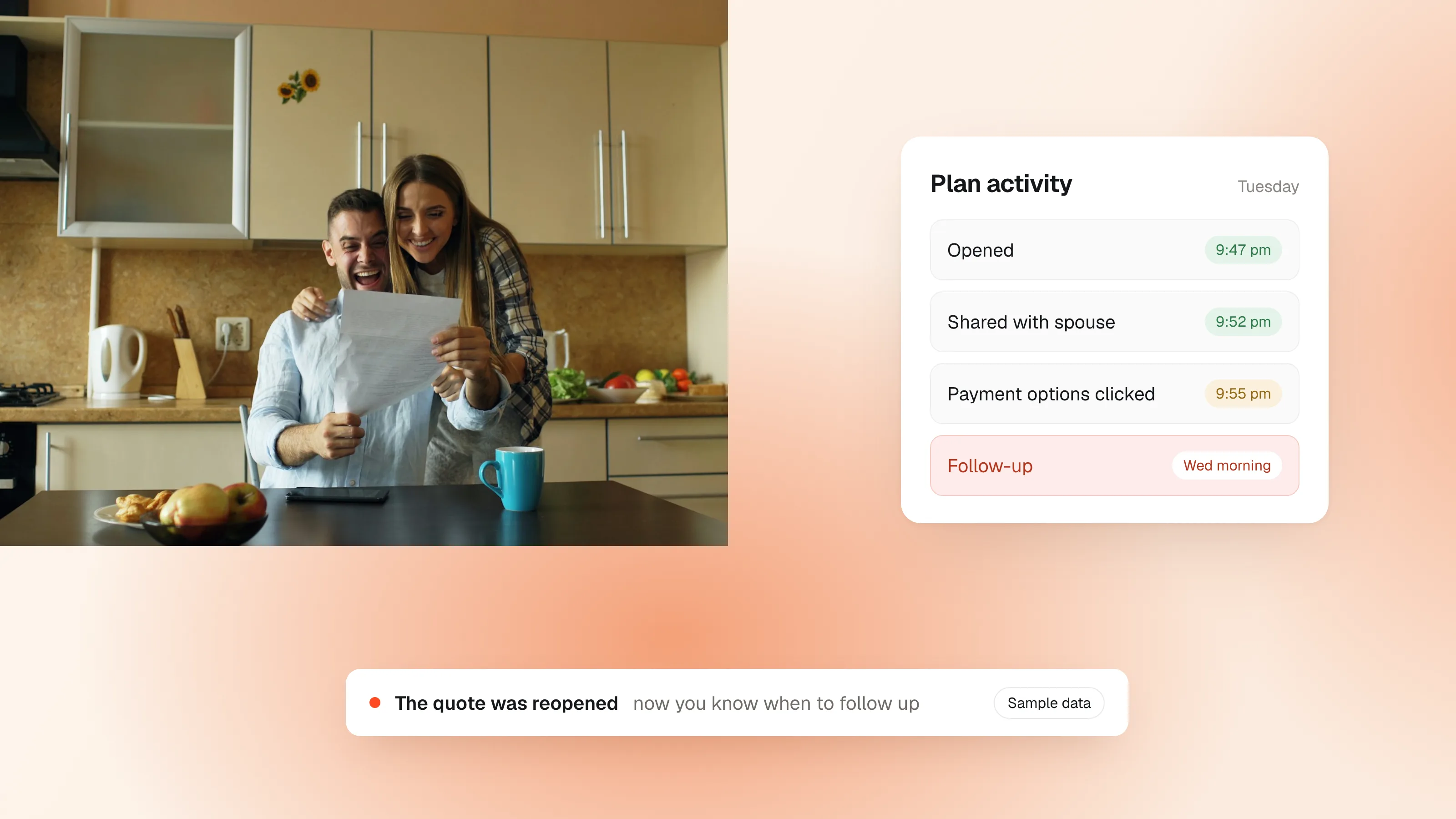
Picture a Tuesday night. At 9:47 a homeowner reopens your quote, looks at the payment options and forwards the link to her husband. Your rep, who left that kitchen six days ago, knows none of it. On Wednesday afternoon another contractor phones her first.
An in-home sale often has one touchpoint: the visit. After the rep leaves the driveway, the decision happens somewhere you can't see. In a 2025 Roofing Contractor survey, 66% of homeowners said they would gather three quotes for a roof, so that decision usually involves two other bids.
Why does an emailed PDF go dark?
Because a PDF carries your price out the door and sends nothing back. Every quote in your pipeline looks the same, whether it is being studied nightly or was never opened.
The cost shows up in timing. Level, which sells finance services to contractors, publishes a dataset covering 794 contractor companies in specialty trades such as HVAC, plumbing and electrical. Winning quotes were accepted in a median of 2 days. Lost quotes weren't marked lost until a median of 29 days. The median company converted 38.1% of all quotes issued.
Two cautions on those numbers. The 29 days measures when the contractor marked the quote lost, not when the homeowner decided. And Level doesn't state the period the data covers. Even so, the gap is the point: jobs are won in days, and contractors find out about the losses a month later.
| Question your rep is asking | Emailed PDF | Tracked plan page |
|---|---|---|
| Did they open it? | Unknown | Yes, with the time of each open |
| Has the spouse seen it? | Unknown | Shares are shown |
| What are they stuck on? | Unknown | They can tell you from the page |
| When should I follow up? | A fixed cadence | The morning after a reopen |
| Is this quote dead? | You find out weeks later | No opens after a week says it now |
Which proposal signals are worth acting on?
Three: a reopen, a share, and a stated reason for waiting. A single open on the day you send it tells you little, because most people click the email that just arrived.
A reopen. An evening or weekend reopen suggests the project survived the family budget conversation. It is the digital version of the homeowner pulling your quote back out of the kitchen drawer, and this time you know.
A share. Many in-home sales stall on the decision maker who wasn't home. When the link is forwarded, that person has entered the deal. Your rep presented to one person, and the page is now presenting to the other.
A stated reason. The most useful signal is the homeowner telling you. On a HomePlan page they can approve, or tap "Not ready yet" and say what is holding them back, in their own words.
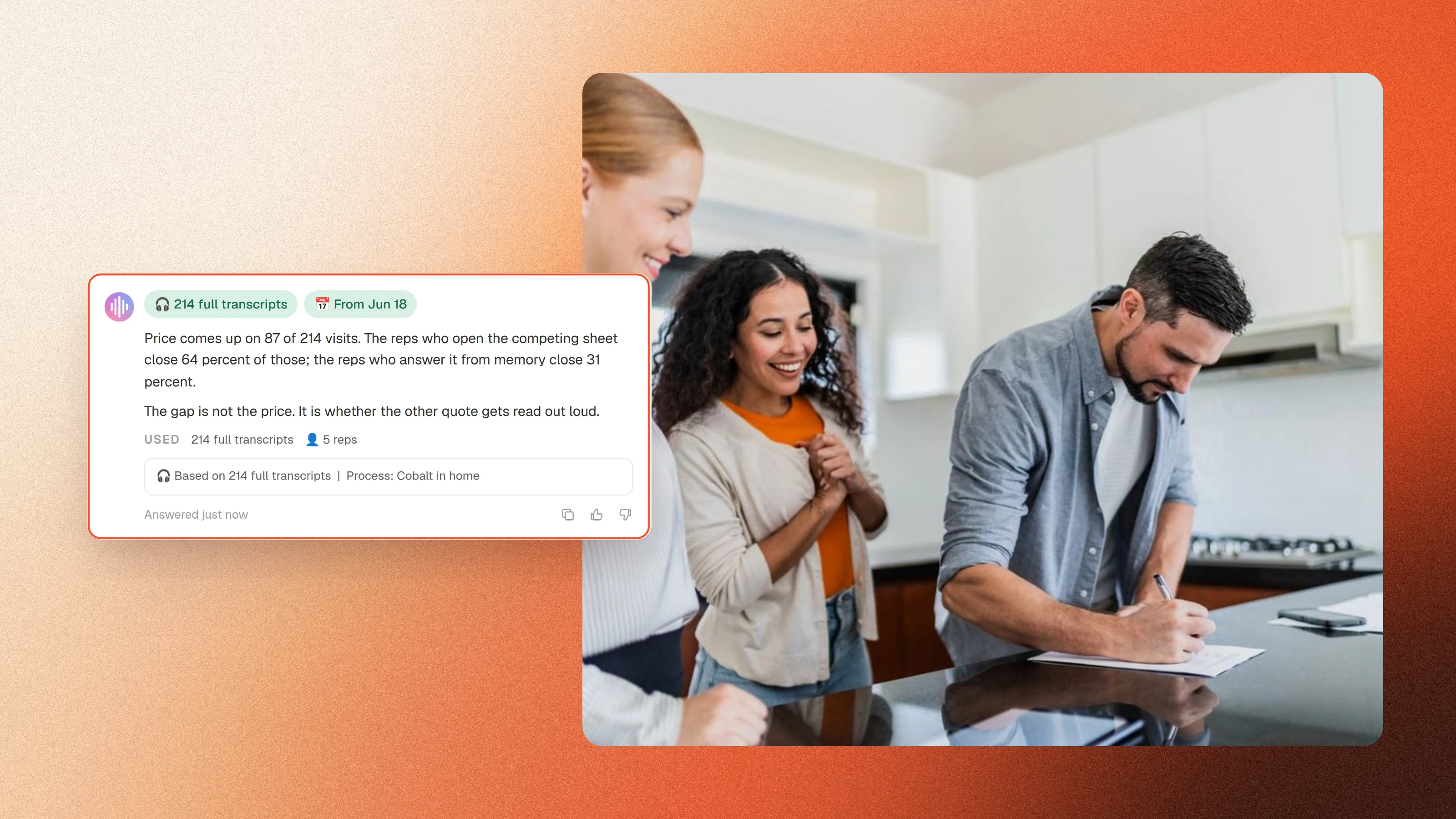
If they clicked the payment options, I'd raise the monthly figure in the follow-up. Across the 1.3 million+ conversations in the Kitchen Table Report, appointments where financing came up closed at 49%, against 38% where it never did. That is a correlation from the appointment itself, not from proposal clicks, so read it as a reason to bring the topic up.
How does SalesAsk track a proposal?
SalesAsk's HomePlan turns the recording of the appointment into a personalized plan page and shows you what happens after you send it. The rep records as usual. HomePlan drafts the recap, findings, scope, options and next steps from what was said, and it stays an unpublished draft until the rep approves it.
The homeowner gets one link they can forward to a spouse or a parent. You see every open, click and share, and the reason they're waiting if they give one. The HomePlan page shows a full example.
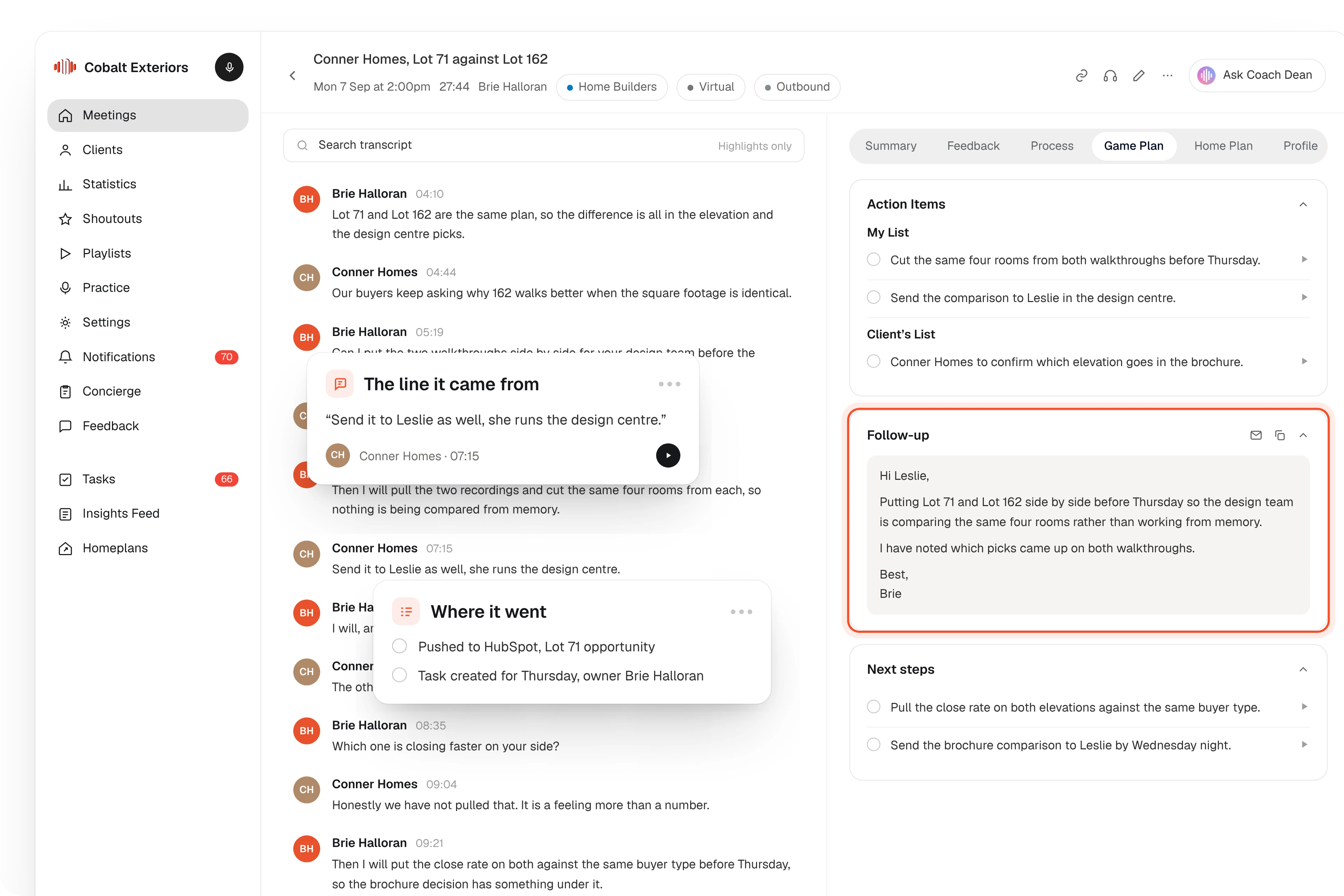
The same recording feeds the coaching, so the rep who rushed past the payment options hears about it. SalesAsk coaches with roleplay before the appointment, optional live coaching during it, and written feedback after.
How do you act on a signal without being creepy?
Let the signal choose when you follow up and what about, and keep the words ordinary. The fastest way to sour a deal is to open with "I noticed you were looking at the quote last night." Nobody wants to learn their kitchen table had an audience.
Done well, it sounds like this. The plan shows a Tuesday night reopen and a click on payment options. On Wednesday morning the rep phones: "Hi Sarah, I wanted to check in on the plan. One thing I probably rushed when I was out there is the monthly payment option. A lot of people find the project fits the budget better that way. Want me to walk you through it?"
Two rules keep it clean:
- Respond to topics, never to timestamps. If they clicked the premium option, talk about what it includes. Don't say you know they clicked.
- Treat silence as a signal. A quote with no opens after five days doesn't need a fourth email. Try a text or a phone conversation with a real question, because the email route has failed.
Can you rig this yourself?
Partly. An email tracking extension tells you the message was opened, and a link shortener tells you the link was clicked. If you send six quotes a week, start there tonight. It costs nothing.
The ceiling arrives quickly. Open tracking can't tell a courtesy click from a long read, and a tracked link to a PDF still delivers a PDF that can't ask the homeowner what is holding them back.
Where does proposal tracking fall short?
Signals are probabilities. A homeowner can reopen a plan five times and still hire a brother-in-law's crew, and quotes close on a single open. Tracking tells a rep with ten open quotes and one afternoon where to spend it.
The evidence is also thin. Level's data shows how fast quotes are decided, not which signals predict the decision, and we haven't published our own numbers on opens and closes. On privacy, tracking opens on a page you host is common in commercial email and document tools, but laws differ by state, so mention it in your terms and ask your attorney. To see a plan page built from one of your own appointments, book a SalesAsk demo.
Frequently asked questions
How fast should a rep respond to a reopen?
The same day, or the next morning for an evening reopen. A reopen suggests the project is being discussed now, and Level's data shows winning quotes are accepted in a median of 2 days.
Does proposal tracking replace a follow-up cadence?
No. Keep a default cadence for quotes with no activity, and let signals pull specific quotes to the front of the list. Our guide to quote follow-up software covers the cadence side.
What if the homeowner never opens the proposal?
That tells you the email didn't land: a wrong address, a spam folder, or a homeowner who lives in text messages. Switch channels within a couple of days and resend the link by text.
Does this matter if our close rate is already strong?
In Level's dataset the 75th percentile company converted 47.7% of quotes issued, against 38.1% at the median. If you're already near the top, tracking mostly protects your speed on larger quotes.
Sources
- Level, "The 7-Day Rule: Why Stale Quotes Kill Contractor Revenue," first published November 7, 2025 and updated November 7, 2026. Level Index dataset of 794 contractor companies. The collection period and total quote count are not stated.
- SalesAsk, The Kitchen Table Report 2026, The Conversation, for the 38% and 49% close rates and the Roofing Contractor survey of 127 homeowners (August 2025).
- SalesAsk, HomePlan.
Dara Shabnam
Leads growth at SalesAsk and writes about in-home sales training and recording consent.
More posts byWritten by the SalesAsk team
SalesAsk records and coaches in-home sales conversations for home service, home improvement and home builder teams.
More posts