Roofing Canvasser Training: The Job Is the Set, Not the Sale
On this page
Roofing canvasser training should teach one thing first: the canvasser sells a fifteen-minute inspection, and nothing else. The door is the highest-volume conversation in a roofing company and usually the one that gets the least coaching. It matters downstream. Top and bottom reps sit 25 to 35 points apart on close rate in the SalesAsk Kitchen Table Report, and part of what a closer walks into is decided on the porch.
Key takeaways
- A canvasser sells the inspection. Explaining shingles, guessing at insurance outcomes or quoting a ballpark price at the door gives the homeowner a reason to decide early.
- A real set has a confirmed time, both decision makers aware of it, a reason tied to the storm, and a clear expectation of what the inspection is.
- Top and bottom reps sit 25 to 35 points apart on close rate, across the 1.3 million+ sales conversations SalesAsk analyzed.
- Pay for inspection sets. A plan that pays per raw set buys soft sets.
- Recording at a stranger's door is more sensitive than recording a booked appointment. Check your state's consent rules before you require it.
What does a roofing canvasser sell?
A fifteen-minute inspection to someone who didn't ask for one. The moment the canvasser starts selling the roof, he's doing the closer's job badly on a doorstep.
Picture the door three days after a hail storm. The homeowner opens it a third of the way. The canvasser has about ten seconds, a storm date, and the name of the family two streets over whose roof his company is already tearing off.
The pitch that works is narrow: the storm date, proof the company is working the street, and a small ask. "Let us put eyes on it. You'll know either way." A canvasser who explains shingle options or quotes a ballpark is answering questions that should stay open until a closer is on the roof with photos. The skill is restraint under questioning, and that is harder to train than persuasion.
Why is the door the least coached conversation in roofing?
Because shadowing doesn't work at the door. A manager can sit in on one kitchen table presentation and see the whole thing. A day of knocking is a hundred conversations under two minutes each, spread across a turf the manager isn't standing in.
A canvass manager who walks a turf with a new hire sees one morning on one street, with his own presence changing how the rep behaves at each door. The rest of the week is invisible. So coaching defaults to what the office can see: doors, contacts and sets. Coaching on numbers alone produces what it measures, which is sets of any quality.
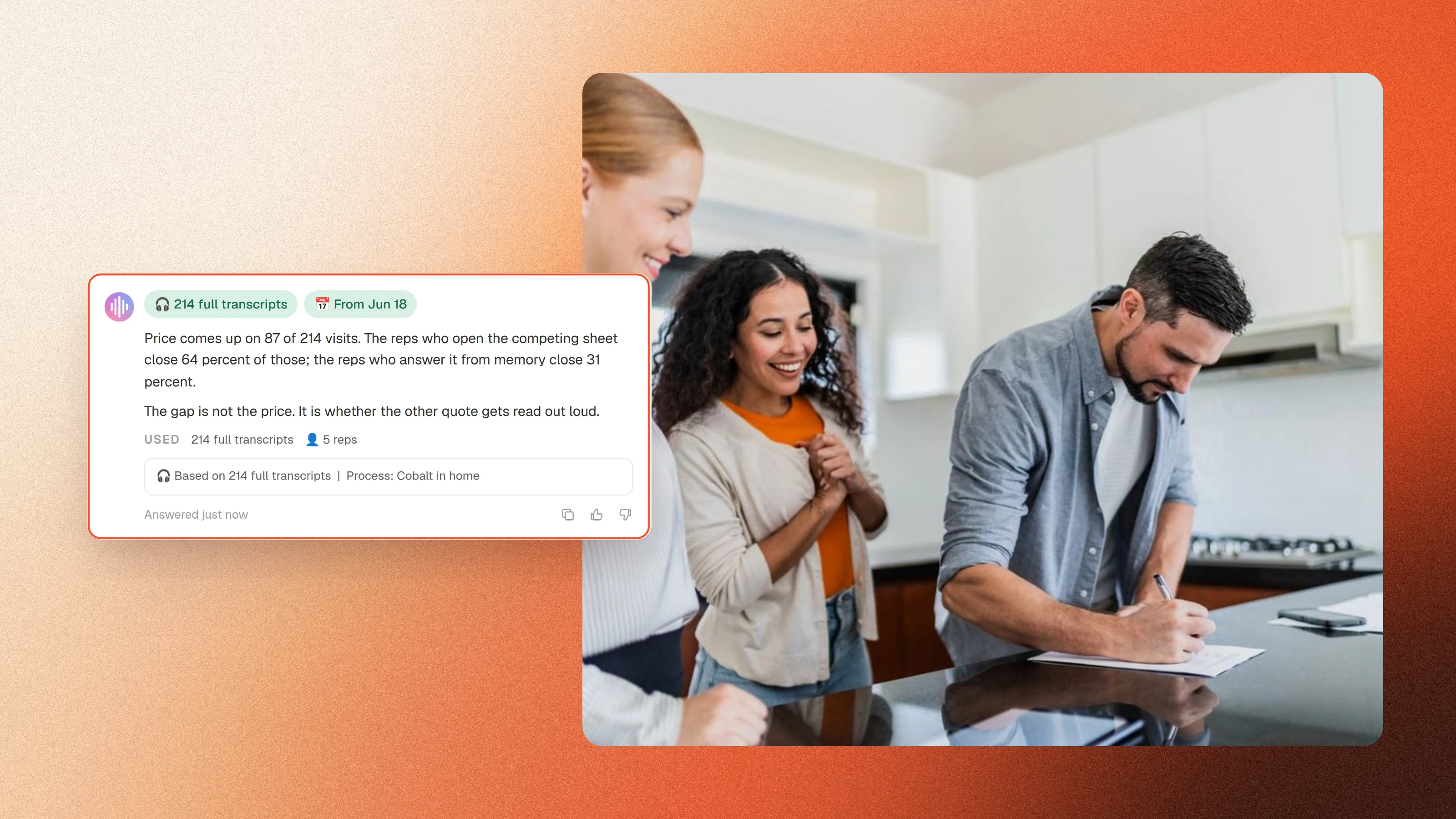
The gap between reps shows why that matters. Top and bottom reps sit 25 to 35 points apart on close rate in the Kitchen Table Report. That figure is measured on appointments. My view, which the report doesn't test, is that some of it starts earlier, because what a closer walks into is set by what the canvasser promised, who he confirmed would be home, and what the homeowner was told to expect.
What separates a soft set from a real set?
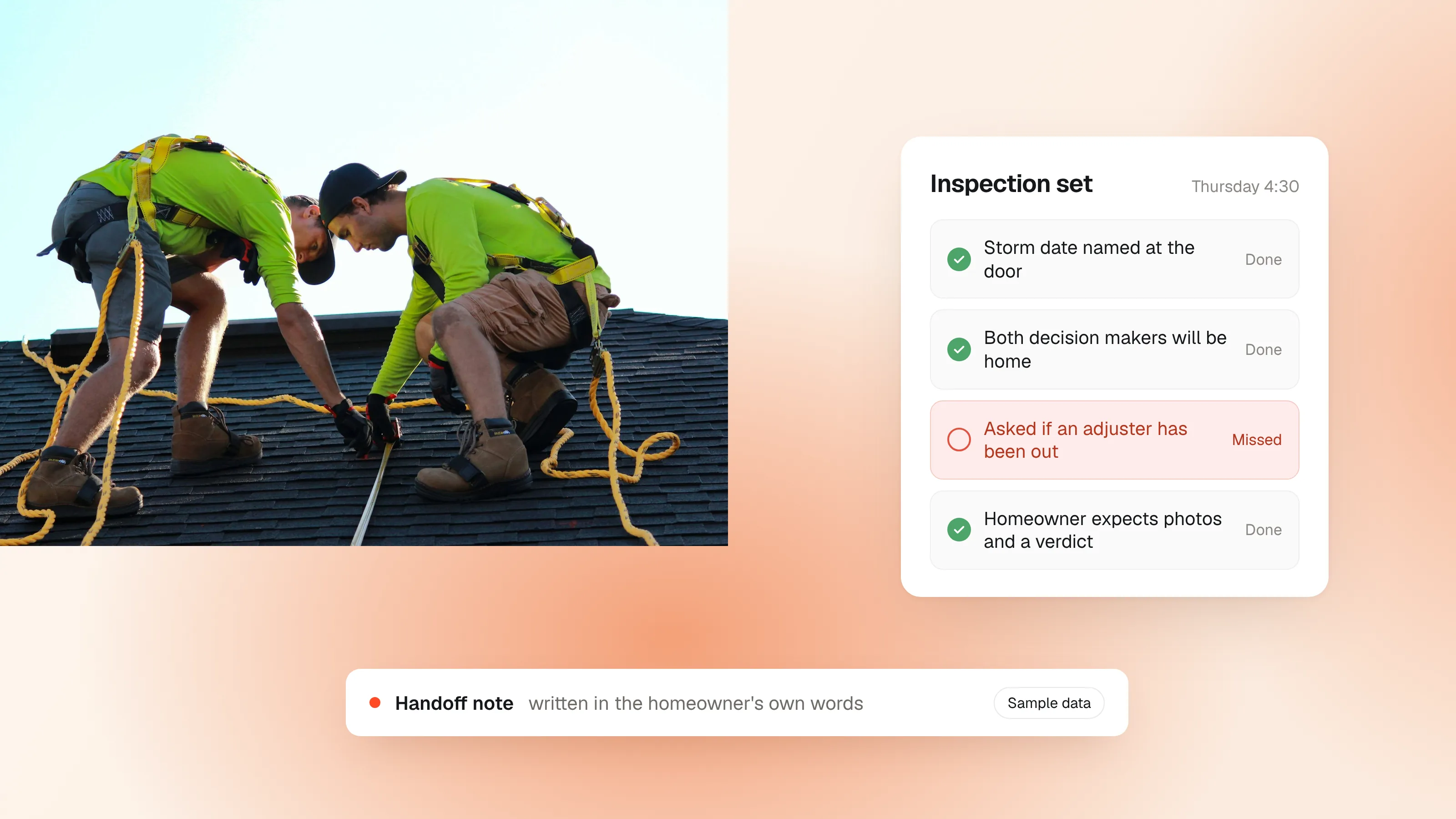
A real set has a confirmed time, both decision makers aware of it, a stated reason tied to the storm, and a plain expectation of what the inspection is. A soft set has a shrug and an address.
| Soft set | Inspection set | |
|---|---|---|
| Time | "Sometime Thursday is probably fine" | Thursday 4:30, confirmed at the door |
| Decision makers | Whoever answered | Asked who else should hear the findings, and when both are home |
| Reason | "Free inspection, why not" | Storm date named, neighbor's job mentioned, damage question raised |
| Insurance status | Unknown | Asked whether an adjuster has been out, and wrote down the answer |
| Expectation | Homeowner expects a flyer visit | Homeowner expects photos and a verdict, and knows it may lead to a claim conversation |
| What the closer inherits | A cold start at a warm address | A conversation already half begun |
Everything in the right-hand column is something said at the door. None of it takes talent. The canvasser has to know it matters, and he learns that when someone reviews his doors and not only his tally.
The question about both decision makers deserves its own line. The one-leg appointment, where a rep presents to one spouse and the decision happens later without him, starts on the porch. One extra question at the door is the cheap fix.
How do you coach a hundred doors a day?
Use SalesAsk to review the conversations and to rehearse them, and spend the manager's own time on the three doors a week that teach something. A canvasser's day is dozens of short conversations with the same structure, which is where patterns show quickly:
- Which opener holds the door past ten seconds.
- Where the rep keeps answering the price question he should be deferring.
- Whether the storm date and the neighbor's job made it into the pitch, or dropped out by the fortieth door.
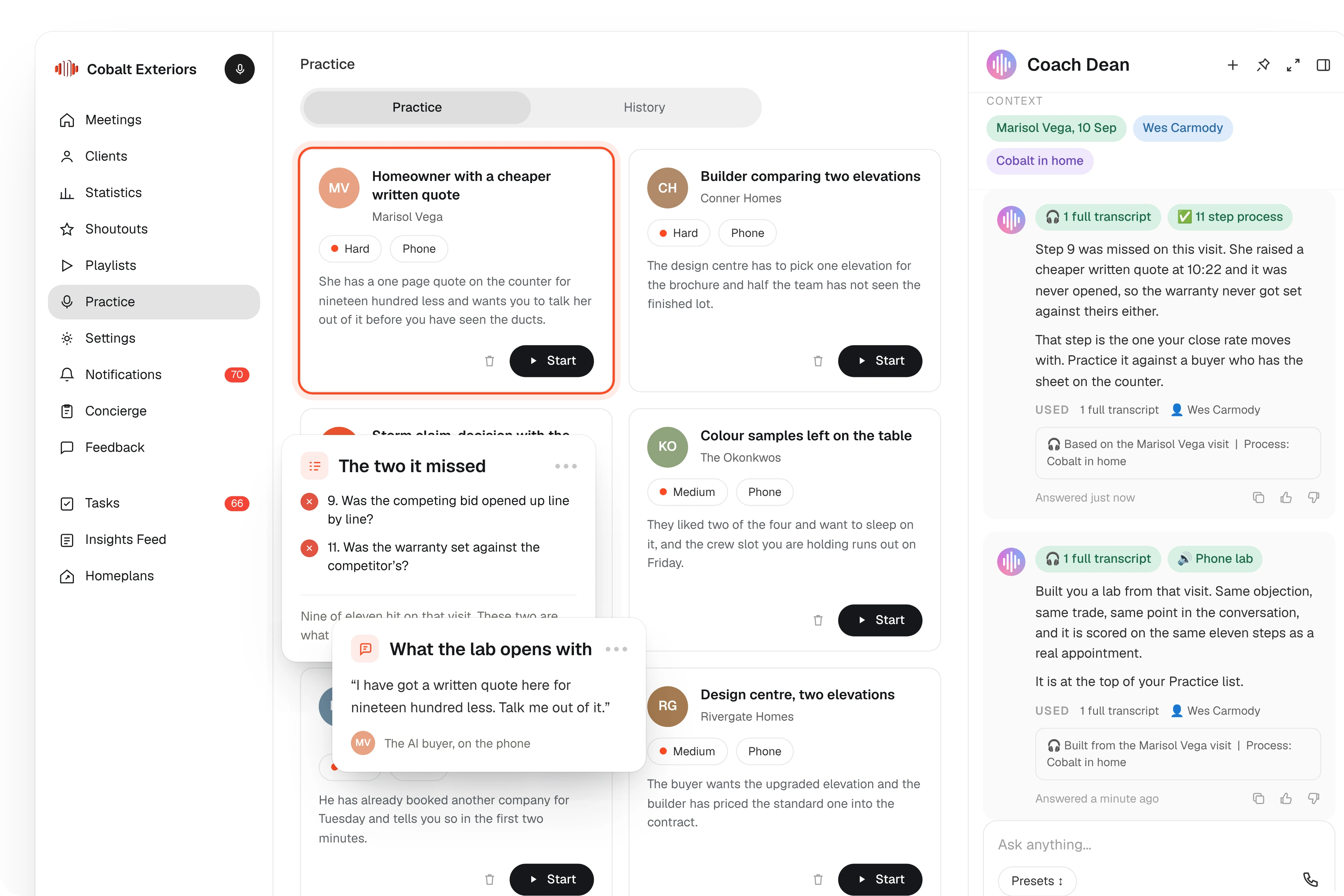
The coaching runs before, during and after. Before the turf, the rep practices the cold open, the arms-crossed homeowner and "insurance already came out" in an AI roleplay, which is cheap to do against an AI and miserable to do against a manager in a parking lot. During a recorded conversation, live coaching is available. Afterward, the rep gets written feedback against your own steps. Our door-to-door coaching guide covers the general case.
Should canvassers record their door conversations?
Only where consent law and your own judgment allow it. Recording at a stranger's door is more sensitive than recording an appointment the homeowner booked, and a disclosure that feels natural at a kitchen table feels different on a porch.
There are two workable setups. One records doors where the law allows, with the disclosure trained. The other practices the door in roleplay and records from the booked inspection onward. Train the disclosure either way, and read our guide to getting reps to record before you require anything.
What does the closer need from the handoff?
The homeowner's own words, written down: the storm date discussed, the insurance status, who will be home, and whatever the homeowner said that showed why they agreed.
"Set, 123 Maple, Thursday" doesn't do that. "Adjuster came Friday, homeowner thinks the denial was wrong, husband works nights, she said the ceiling stain showed up after the second storm" does, and the closer who reads it in the driveway starts the conversation in the middle. What happens next, on the roof and at the table, is in our roofing sales training guide.
To hear how your sets sound before the closer arrives, book a SalesAsk demo.
Where does canvass coaching stop?
At turf, weather and the pay plan. If the storm didn't hit your market, door coaching won't create demand. A well-coached canvasser in a retail-only neighborhood will have a harder month than an average one standing in a hail path.
Turnover is the other limit. A plan that pays per raw set will produce soft sets whatever the coaching says, because you're paying for the thing you don't want. Fix the pay plan first and coach second. Some of the roster will leave before the coaching pays back, and that is a cost of running a door program.
I also don't have door-level data to give you. The close-rate gap above is measured on appointments, and how much of it starts at the door is my judgment.
Frequently asked questions
Is door-to-door canvassing legal for roofing companies?
It depends on the town. Local solicitation permits, registration rules and posted no-soliciting signs all apply, and they differ from one municipality to the next. Check with the permit office for every town on the turf list before the trucks roll.
What should a canvass manager track besides sets?
Track the ratios that show set quality, per canvasser: sets that become completed inspections, inspections where both decision makers were present, and sets that become signed jobs. A rep whose sets disappear before the inspection is collecting addresses.
What is the difference between a canvasser, a setter and a closer?
The canvasser knocks cold and books the inspection. A setter, where the role exists, confirms and qualifies by phone. The closer runs the inspection and the kitchen table conversation. Small companies fold the first two into one job, and the coaching need stays the same.
Does AI roleplay help with door approaches?
It helps with the parts that are pattern, which at the door covers the opener, the list of objections and the restraint on price questions. It doesn't simulate rain, a slammed door or the fortieth porch of the day. Use it alongside recorded or observed doors.
Sources
- SalesAsk Kitchen Table Report 2026: benchmarks (close-rate gap between reps)
Dara Shabnam
Leads growth at SalesAsk and writes about in-home sales training and recording consent.
More posts byWritten by the SalesAsk team
SalesAsk records and coaches in-home sales conversations for home service, home improvement and home builder teams.
More posts