Siro vs SalesAsk for Kitchen & Bath Remodelers (2026): Who Sells During the Silence Between Visits?
Dara Shabnam
Head of Growth, SalesAsk
August 23, 2026
8 min read
On this page
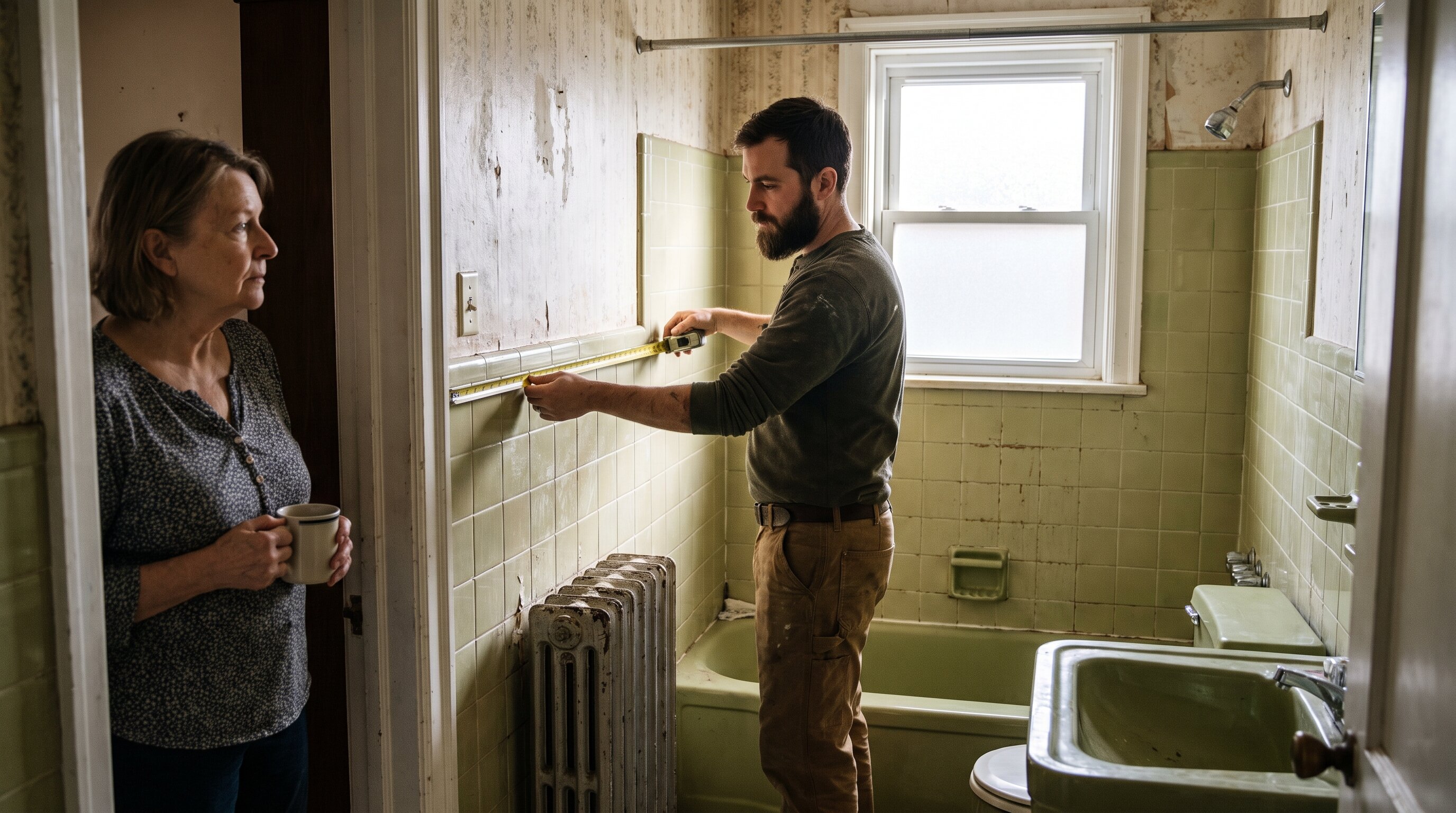
The loss pattern our kitchen and bath customers describe most often goes like this. Both homeowners in the room. Renderings on the big screen. The husband asks about lead times, which is usually a buying signal. The designer leaves the retainer agreement on the table, shakes hands, and drives home replaying every beat of a near-perfect ninety minutes.
Then three weeks of silence. When the designer finally reaches the wife by phone, the project has gone to a competitor whose design wasn't better. The competitor simply stayed in the room after leaving it. Weekly check-ins, a shared link where the couple could revisit the scope, a place to ask the small questions that pile up between visits.
If you run a kitchen and bath sales team and want every appointment coached, not only the ones a manager can sit in on, book a SalesAsk demo.
That pattern is why I think the Siro versus SalesAsk question looks different for kitchen and bath remodelers than it does for almost any other trade. Both products record and analyze sales conversations. The question is what each one does when nobody is talking.
Why does the kitchen and bath sale break appointment-centric coaching?
Because a full remodel is decided across six to ten weeks and two or three visits, and a tool that is built around the appointments has to be asked what it sees in the stretch of the sale where most K&B deals actually die.
Think about the shape of a design-led remodel sale. A showroom walk-in or a phone inquiry. An in-home measure. A design presentation, sometimes at the showroom, sometimes back at the kitchen table. A retainer ask. Selections. A final contract that might land two months after the first hello. Compare that to an HVAC replacement, where a comfort advisor can walk out with a signed agreement in one visit, or a bath-wrap conversion sold in an afternoon.
Appointment-centric AI coaching was built for the second shape. Record the conversation, score it, coach the rep, repeat. It works, and I will give Siro real credit for it below. But in K&B, the conversations themselves are usually fine. Designers are good talkers. What kills the deal is the gap: the three quiet weeks while the couple compares you against two other firms, forgets half of what they loved about your design, and gets a follow-up cadence of exactly one "just checking in" email.
We wrote about this pattern in The Follow-Up Gap, and nowhere is the gap longer than in kitchen and bath.
What does Siro actually do well?
Siro is a polished recorder and review platform with realtime prompts on top, it sells into home improvement as a named industry, and if you sell one-visit bath conversions, its model maps to your sale reasonably well.
I want to be fair here, because a comparison that pretends the other product is useless insults your intelligence. Siro records in-person appointments, cell phone calls, video calls and call center calls, records offline and uploads later, and gives managers a way to review every appointment without a single physical ride-along. Its improve page describes an automated debrief call about ten minutes after the recording, a daily review, a team feed, roleplay practice and playlists. It syncs both ways with Salesforce, HubSpot, Pipedrive, Microsoft Dynamics, LeadPerfection and Improveit360, the last two being remodeler CRMs, which tells you Siro has thought about this trade. It also publishes a licence-utilisation benchmark, which I respect; most vendors hide adoption.
Its realtime coaching deserves a mention too: siro.ai/improve advertises "a plan to close, mid-conversation", and Halftime Mode, launched in spring 2026, prompts the rep at natural breaks in the appointment. For a one-call close, that is exactly when help matters most.
Siro quotes after a demo; tiers and minimums vary by deal. Ask for two reference customers in kitchen and bath, and ask them what the renewal looked like. Then ask the harder question for this trade: what does the designer see, and what does the manager see, on day nine of silence after the presentation? Siro's model is built around recording the appointment and reviewing it afterwards. However sharp the analysis of visit one is, you want to know what the platform does before visit two.
Where does SalesAsk take a different approach?
SalesAsk covers the same appointment coaching ground, recording, transcription, AI scoring, virtual ridealongs, and then keeps working between visits with Homeplan, our digital proposal and decision-room product.
Yes, this is our blog, and yes, I run growth here, so weigh my words accordingly. The appointment layer will feel familiar if you have demoed Siro: record in-home and phone conversations, get transcripts and coaching tuned to home-services sales language, let managers review any appointment without riding along. The difference in the appointment layer is timing: Coach Dean coaches the designer during the presentation and writes the feedback straight after it, whether or not a manager has review time that week. Where we diverge further is the bet we made this year.
We launched Homeplan because our K&B and remodeling customers kept describing the same loss pattern as the one up top. Instead of a PDF quote that gets printed, skimmed, and buried under school permission slips, the homeowner gets a living link: their design, their scope, their options and allowances, a place to ask questions, all in one room they can walk their brother-in-law through on a Sunday. Your designer sees when the couple opens it, what they linger on, and which option they keep coming back to, which turns "just checking in" into "I noticed you were looking at the island options; want me to price the waterfall edge properly?"
That is a different theory of the sale: in a multi-visit trade, the space between conversations is a selling surface.
How do the two stack up for a remodeler?
On appointment coaching they are closer than either sales team will admit; the real separation is lifecycle coverage and vertical focus.
| What matters in K&B | Siro | SalesAsk |
|---|---|---|
| Recording & AI analysis of in-home visits | Yes, core strength | Yes, core strength |
| Real-time in-appointment tips | Yes, realtime coaching and Halftime Mode | Yes, via Coach Dean |
| Phone and showroom call capture | Records in-person, cell phone, video and call center calls | Phone + in-home in one timeline |
| Between-visit engagement (digital proposal / decision room) | Ask the vendor | Homeplan: live proposal link with engagement signals |
| Fit for one-visit bath conversions | Strong | Strong |
| Fit for multi-visit design-retainer sales | Review-based between visits; ask what the rep sees | Built for the full cycle |
| Pricing model | Not published; $149 to $249 per rep per month, buyer-reported | Published per user per month, no seat minimum, no setup fee |
One honest caveat on the table: a recording platform with a debrief and a daily review does not make the deal vanish from view after the visit, and a good manager can run follow-up discipline off Siro's team feed. But a follow-up reminder and a decision room are different weight classes. One reminds the homeowner you exist. The other gives them a reason to spend twenty minutes back inside your design on a Tuesday night.
Which one fits your business model?
If your revenue is one-visit bath or shower conversions, either tool will earn its keep and Siro is a credible choice; if you sell design-led remodels with retainers and selections, the between-visit layer is the whole ballgame and that is where SalesAsk pulls away.
I would put it as a straight sorting question. What percentage of your jobs close on the first visit? Above roughly seventy percent, you are running an appointment business, and the deciding factors are adoption, coaching quality, and price. Test both, pick the one your reps will actually leave running. Below that, count your average days from first visit to signed contract. Every one of those days is currently uncoached, unmeasured, and worth asking each vendor about by name.
Kitchen Tune-Up, a remodeling franchise selling into exactly this kind of homeowner, saw a 26% lift in close rate on SalesAsk. That is one customer, and I'd rather you ran your own test than took it on faith.
There is also the recording-consent question, which K&B owners raise in nearly every demo because designers spend so long inside customers' homes. The rules vary by state, and we keep a plain-English breakdown in our state-by-state guide to recording in-home sales calls. Both platforms operate on the same legal footing here; neither has an edge.
What should you test in a demo?
Ignore the feature tour and make each vendor walk through your last three lost deals, week by week, showing exactly what their product would have seen and done at every point of silence.
Bring real timelines. The showroom visit on March 3rd, the measure on the 10th, the presentation on the 24th, the loss in mid-April. Ask Siro what their platform knows on April 2nd, when nobody has spoken in nine days. Ask us the same question, and ask to see the Homeplan engagement view for a real project, not a staged one. Then ask both vendors the adoption question: what percentage of appointments actually get recorded and coached after ninety days? Siro publishes a utilisation benchmark, so ask where your reference accounts sit against it. On SalesAsk, 85% of recorded appointments get AI coaching feedback, and more than 100,000 appointments were coached in the last 90 days. Any answer without a number is an answer.
If a vendor's story is strongest during the appointment and vaguest between them, you have learned which trade their product was really built for.
For walk-in tub and bathroom remodeling specifics, see our bathroom remodeling sales training guide.
FAQ
Does Siro work for kitchen and bath remodelers?
Yes, for the appointment portion of the sale. It records, transcribes, and coaches in-home conversations, lists home improvement among its industries, and integrates with LeadPerfection and Improveit360. For multi-visit design sales, where weeks of the deal happen outside any appointment, ask what the platform does between visits.
Can either platform capture showroom conversations?
Both are mobile-first and travel with the rep, so a showroom consultation can be recorded like an in-home visit. Siro also records cell phone and call center calls. SalesAsk ties phone calls into the same customer timeline as the in-home visit, which matters when half your inquiries start on the phone.
Is it legal to record in-home sales consultations?
In most states, one-party consent makes it legal when your rep is part of the conversation, but eleven states require all-party consent. Check our state-by-state guide before rolling out either tool.
What is a decision room?
A persistent link where the homeowner's design, scope, options, and questions live between visits. Unlike a PDF quote, it shows you when and how the homeowner engages, so follow-up lands when interest is real rather than on a calendar guess.
How much do the two cost?
Siro does not publish pricing. Teams that moved from Siro to SalesAsk report $149 to $249 per rep per month, roughly $1,800 to $3,000 per rep per year, usually on an annual contract, with an implementation fee of $1,500 to $5,000 reported by the same teams. SalesAsk pricing is published per user per month, monthly or annual, with no seat minimum and no setup fee. For a typical five-designer K&B firm, either is a rounding error against one saved remodel.
Does either replace ride-alongs entirely?
Mostly, for observation purposes: managers can review any recorded appointment. I would still keep occasional live ride-alongs for new-hire onboarding and culture. Software observes; it does not yet mentor in the truck on the way over.
Where this leaves you
Record your appointments with something. The era of coaching from memory is over, and both of these products beat nothing by a mile. But match the tool to the shape of your sale. If your deals close in one sitting, run both demos and haggle. If your deals close over six weeks, ask the harder question: who is selling for you during the silence? Book a look at Homeplan alongside your SalesAsk demo and judge that answer with your own lost-deals list in hand.
Sources
- Siro: AI Sales Coaching for Home Improvement (industry list, recording channels, coaching features, integrations)
- Siro, Siro vs. Rilla comparison page
- SalesAsk: State-by-State Guide to Recording In-Home Sales Calls
- SalesAsk: Rilla vs SalesAsk for Kitchen & Bath Remodelers
About the author
Dara Shabnam
Head of Growth, SalesAsk
Dara Shabnam leads growth at SalesAsk. She writes about in-home sales training, recording consent, and what the recorded conversations of home service and trades teams show about how jobs are actually won.
Dara Shabnam
About SalesAsk
Written by the SalesAsk team
SalesAsk records and coaches in-home sales conversations for home service, home improvement and home builder teams.
More postsKeep reading
All posts



The loss pattern our kitchen and bath customers describe most often goes like this. Both homeowners in the room. Renderings on the big screen. The husband asks about lead times, which is usually a buying signal. The designer leaves the retainer agreement on the table, shakes hands, and drives home replaying every beat of a near-perfect ninety minutes.
Then three weeks of silence. When the designer finally reaches the wife by phone, the project has gone to a competitor whose design wasn't better. The competitor simply stayed in the room after leaving it. Weekly check-ins, a shared link where the couple could revisit the scope, a place to ask the small questions that pile up between visits.
If you run a kitchen and bath sales team and want every appointment coached, not only the ones a manager can sit in on, book a SalesAsk demo.
That pattern is why I think the Siro versus SalesAsk question looks different for kitchen and bath remodelers than it does for almost any other trade. Both products record and analyze sales conversations. The question is what each one does when nobody is talking.
Why does the kitchen and bath sale break appointment-centric coaching?
Because a full remodel is decided across six to ten weeks and two or three visits, and a tool that is built around the appointments has to be asked what it sees in the stretch of the sale where most K&B deals actually die.
Think about the shape of a design-led remodel sale. A showroom walk-in or a phone inquiry. An in-home measure. A design presentation, sometimes at the showroom, sometimes back at the kitchen table. A retainer ask. Selections. A final contract that might land two months after the first hello. Compare that to an HVAC replacement, where a comfort advisor can walk out with a signed agreement in one visit, or a bath-wrap conversion sold in an afternoon.
Appointment-centric AI coaching was built for the second shape. Record the conversation, score it, coach the rep, repeat. It works, and I will give Siro real credit for it below. But in K&B, the conversations themselves are usually fine. Designers are good talkers. What kills the deal is the gap: the three quiet weeks while the couple compares you against two other firms, forgets half of what they loved about your design, and gets a follow-up cadence of exactly one "just checking in" email.
We wrote about this pattern in The Follow-Up Gap, and nowhere is the gap longer than in kitchen and bath.
What does Siro actually do well?
Siro is a polished recorder and review platform with realtime prompts on top, it sells into home improvement as a named industry, and if you sell one-visit bath conversions, its model maps to your sale reasonably well.
I want to be fair here, because a comparison that pretends the other product is useless insults your intelligence. Siro records in-person appointments, cell phone calls, video calls and call center calls, records offline and uploads later, and gives managers a way to review every appointment without a single physical ride-along. Its improve page describes an automated debrief call about ten minutes after the recording, a daily review, a team feed, roleplay practice and playlists. It syncs both ways with Salesforce, HubSpot, Pipedrive, Microsoft Dynamics, LeadPerfection and Improveit360, the last two being remodeler CRMs, which tells you Siro has thought about this trade. It also publishes a licence-utilisation benchmark, which I respect; most vendors hide adoption.
Its realtime coaching deserves a mention too: siro.ai/improve advertises "a plan to close, mid-conversation", and Halftime Mode, launched in spring 2026, prompts the rep at natural breaks in the appointment. For a one-call close, that is exactly when help matters most.
Siro quotes after a demo; tiers and minimums vary by deal. Ask for two reference customers in kitchen and bath, and ask them what the renewal looked like. Then ask the harder question for this trade: what does the designer see, and what does the manager see, on day nine of silence after the presentation? Siro's model is built around recording the appointment and reviewing it afterwards. However sharp the analysis of visit one is, you want to know what the platform does before visit two.
Where does SalesAsk take a different approach?
SalesAsk covers the same appointment coaching ground, recording, transcription, AI scoring, virtual ridealongs, and then keeps working between visits with Homeplan, our digital proposal and decision-room product.
Yes, this is our blog, and yes, I run growth here, so weigh my words accordingly. The appointment layer will feel familiar if you have demoed Siro: record in-home and phone conversations, get transcripts and coaching tuned to home-services sales language, let managers review any appointment without riding along. The difference in the appointment layer is timing: Coach Dean coaches the designer during the presentation and writes the feedback straight after it, whether or not a manager has review time that week. Where we diverge further is the bet we made this year.
We launched Homeplan because our K&B and remodeling customers kept describing the same loss pattern as the one up top. Instead of a PDF quote that gets printed, skimmed, and buried under school permission slips, the homeowner gets a living link: their design, their scope, their options and allowances, a place to ask questions, all in one room they can walk their brother-in-law through on a Sunday. Your designer sees when the couple opens it, what they linger on, and which option they keep coming back to, which turns "just checking in" into "I noticed you were looking at the island options; want me to price the waterfall edge properly?"
That is a different theory of the sale: in a multi-visit trade, the space between conversations is a selling surface.
How do the two stack up for a remodeler?
On appointment coaching they are closer than either sales team will admit; the real separation is lifecycle coverage and vertical focus.
| What matters in K&B | Siro | SalesAsk |
|---|---|---|
| Recording & AI analysis of in-home visits | Yes, core strength | Yes, core strength |
| Real-time in-appointment tips | Yes, realtime coaching and Halftime Mode | Yes, via Coach Dean |
| Phone and showroom call capture | Records in-person, cell phone, video and call center calls | Phone + in-home in one timeline |
| Between-visit engagement (digital proposal / decision room) | Ask the vendor | Homeplan: live proposal link with engagement signals |
| Fit for one-visit bath conversions | Strong | Strong |
| Fit for multi-visit design-retainer sales | Review-based between visits; ask what the rep sees | Built for the full cycle |
| Pricing model | Not published; $149 to $249 per rep per month, buyer-reported | Published per user per month, no seat minimum, no setup fee |
One honest caveat on the table: a recording platform with a debrief and a daily review does not make the deal vanish from view after the visit, and a good manager can run follow-up discipline off Siro's team feed. But a follow-up reminder and a decision room are different weight classes. One reminds the homeowner you exist. The other gives them a reason to spend twenty minutes back inside your design on a Tuesday night.
Which one fits your business model?
If your revenue is one-visit bath or shower conversions, either tool will earn its keep and Siro is a credible choice; if you sell design-led remodels with retainers and selections, the between-visit layer is the whole ballgame and that is where SalesAsk pulls away.
I would put it as a straight sorting question. What percentage of your jobs close on the first visit? Above roughly seventy percent, you are running an appointment business, and the deciding factors are adoption, coaching quality, and price. Test both, pick the one your reps will actually leave running. Below that, count your average days from first visit to signed contract. Every one of those days is currently uncoached, unmeasured, and worth asking each vendor about by name.
Kitchen Tune-Up, a remodeling franchise selling into exactly this kind of homeowner, saw a 26% lift in close rate on SalesAsk. That is one customer, and I'd rather you ran your own test than took it on faith.
There is also the recording-consent question, which K&B owners raise in nearly every demo because designers spend so long inside customers' homes. The rules vary by state, and we keep a plain-English breakdown in our state-by-state guide to recording in-home sales calls. Both platforms operate on the same legal footing here; neither has an edge.
What should you test in a demo?
Ignore the feature tour and make each vendor walk through your last three lost deals, week by week, showing exactly what their product would have seen and done at every point of silence.
Bring real timelines. The showroom visit on March 3rd, the measure on the 10th, the presentation on the 24th, the loss in mid-April. Ask Siro what their platform knows on April 2nd, when nobody has spoken in nine days. Ask us the same question, and ask to see the Homeplan engagement view for a real project, not a staged one. Then ask both vendors the adoption question: what percentage of appointments actually get recorded and coached after ninety days? Siro publishes a utilisation benchmark, so ask where your reference accounts sit against it. On SalesAsk, 85% of recorded appointments get AI coaching feedback, and more than 100,000 appointments were coached in the last 90 days. Any answer without a number is an answer.
If a vendor's story is strongest during the appointment and vaguest between them, you have learned which trade their product was really built for.
For walk-in tub and bathroom remodeling specifics, see our bathroom remodeling sales training guide.
FAQ
Does Siro work for kitchen and bath remodelers?
Yes, for the appointment portion of the sale. It records, transcribes, and coaches in-home conversations, lists home improvement among its industries, and integrates with LeadPerfection and Improveit360. For multi-visit design sales, where weeks of the deal happen outside any appointment, ask what the platform does between visits.
Can either platform capture showroom conversations?
Both are mobile-first and travel with the rep, so a showroom consultation can be recorded like an in-home visit. Siro also records cell phone and call center calls. SalesAsk ties phone calls into the same customer timeline as the in-home visit, which matters when half your inquiries start on the phone.
Is it legal to record in-home sales consultations?
In most states, one-party consent makes it legal when your rep is part of the conversation, but eleven states require all-party consent. Check our state-by-state guide before rolling out either tool.
What is a decision room?
A persistent link where the homeowner's design, scope, options, and questions live between visits. Unlike a PDF quote, it shows you when and how the homeowner engages, so follow-up lands when interest is real rather than on a calendar guess.
How much do the two cost?
Siro does not publish pricing. Teams that moved from Siro to SalesAsk report $149 to $249 per rep per month, roughly $1,800 to $3,000 per rep per year, usually on an annual contract, with an implementation fee of $1,500 to $5,000 reported by the same teams. SalesAsk pricing is published per user per month, monthly or annual, with no seat minimum and no setup fee. For a typical five-designer K&B firm, either is a rounding error against one saved remodel.
Does either replace ride-alongs entirely?
Mostly, for observation purposes: managers can review any recorded appointment. I would still keep occasional live ride-alongs for new-hire onboarding and culture. Software observes; it does not yet mentor in the truck on the way over.
Where this leaves you
Record your appointments with something. The era of coaching from memory is over, and both of these products beat nothing by a mile. But match the tool to the shape of your sale. If your deals close in one sitting, run both demos and haggle. If your deals close over six weeks, ask the harder question: who is selling for you during the silence? Book a look at Homeplan alongside your SalesAsk demo and judge that answer with your own lost-deals list in hand.
Sources
- Siro: AI Sales Coaching for Home Improvement (industry list, recording channels, coaching features, integrations)
- Siro, Siro vs. Rilla comparison page
- SalesAsk: State-by-State Guide to Recording In-Home Sales Calls
- SalesAsk: Rilla vs SalesAsk for Kitchen & Bath Remodelers