How Long Do Homeowners Take to Decide After an Estimate?
On this page
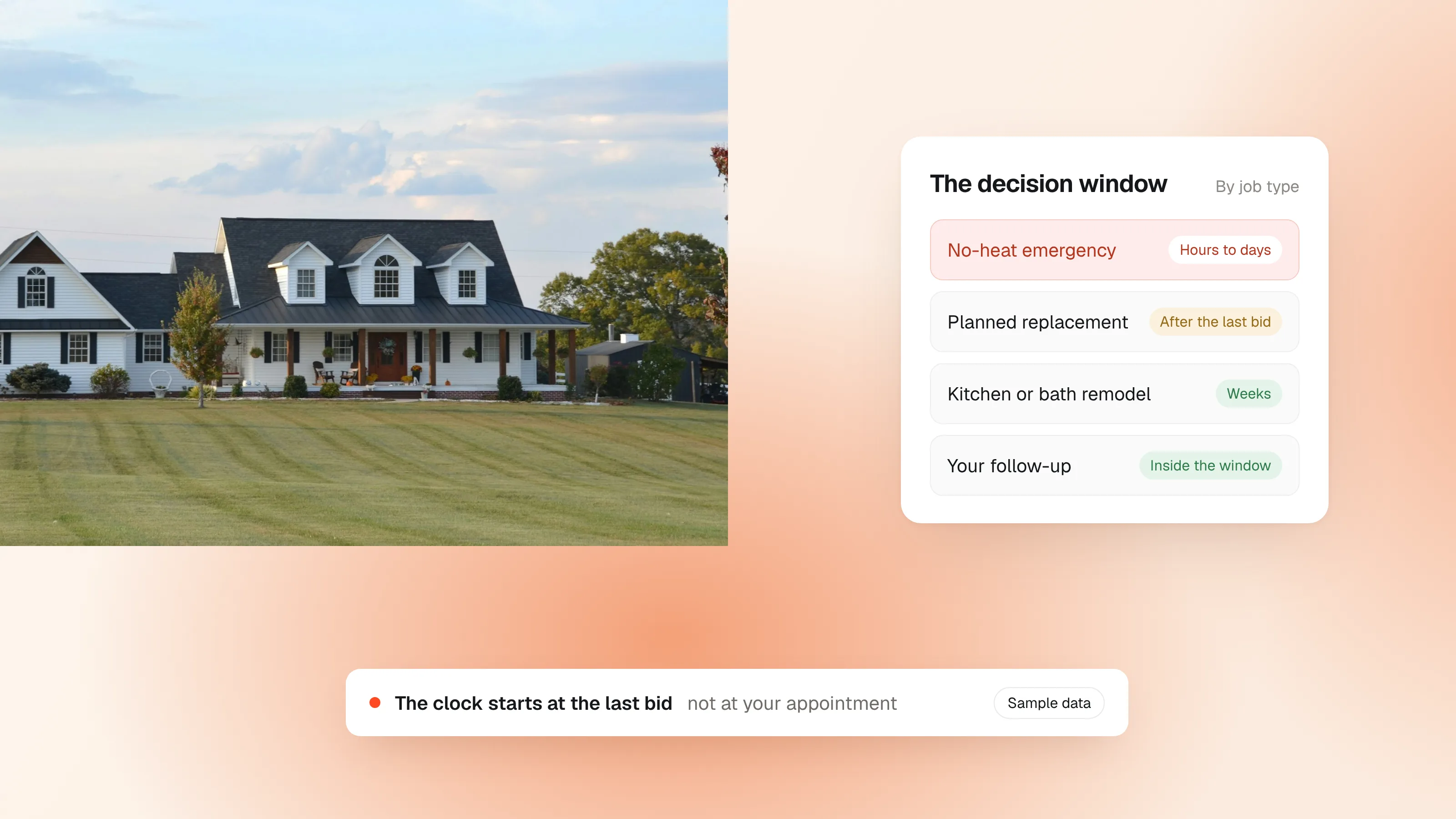
Homeowners who say yes tend to say it within days: in Level's dataset of 794 contractor companies, winning quotes were accepted in a median of 2 days. Nobody has published a study that follows in-home estimates to signed contracts, so that figure is the closest measurement there is. The window is shorter for a dead furnace and longer for a kitchen, and it starts when the last bid comes in, not when yours does.
Key takeaways
- Winning contractor quotes were accepted in a median of 2 days in Level's data. Lost quotes weren't marked lost until a median of 29 days.
- Across 1.28 million proposals in 27 industries, Proposify found deals closed roughly 51 hours after the proposal was first opened.
- 42% of homeowners compare two quotes, 28% compare three and 16% compare four or more, in Modernize's homeowner research.
- The decision window opens after the last competing bid, so ask when that is.
- What gets settled at the table shortens the window: the money, the absent spouse and the next step.
How long do homeowners take to decide after an estimate?
Days, for the ones who buy. The best public figure comes from Level, which sells finance services to contractors. In its dataset of 794 companies in trades such as HVAC, plumbing and electrical, winning quotes were accepted in a median of 2 days.
A second measurement points the same way. Proposify, which sells proposal software, studied 1,280,657 proposals across 27 industries and found the time from first open to close was about 51 hours. That covers many industries, not homeowners specifically.
Neither one is a study of in-home sales appointments. I haven't found one, and I'd be wary of anyone quoting a precise industry average. What the two datasets agree on is the shape: a yes comes quickly, and a no arrives slowly or never. Level's lost quotes weren't marked lost until a median of 29 days.
Why does the window depend on the job?
Because urgency and the number of people involved change with the work.
| Job | What sets the pace | What I'd expect |
|---|---|---|
| No-heat emergency in January | How long a second opinion takes | Hours to a day or two |
| Planned replacement: roof, water heater, windows | The date of the last competing bid | About a week from that bid |
| Kitchen or bath remodel | Design, financing, sometimes a bonus someone is waiting on | Weeks |
| New home | A reservation or contract appointment, not a signature at the table | Its own calendar |
The right-hand column is my expectation from working with these teams, not a measurement. The middle column is the useful one. For a planned replacement, your proposal spends most of its life waiting for a competitor to finish talking.
Bids are the norm. Modernize, which sells leads and financing products to contractors, reports that 42.02% of homeowners compare two quotes, 27.90% compare three and 15.64% compare four or more. If you were first of three and the third rep comes Thursday, the clock starts Thursday.
What happens inside the decision window?
The spouse who wasn't there gets a vote, more bids show up, and your proposal competes as a sheet of paper.
Play the week forward. On night one, the homeowner relays your presentation to their partner in about ninety seconds, from memory, without your pricing logic or the photos of the rotted decking. You've been re-presented by someone who wasn't fully convinced.
By day three the other bids are in. Around day four, someone searches the equipment model and finds a price with no labor, permit or warranty attached. Mantel's 2025 survey of 422 HVAC shoppers found 69% searched for pricing online and only 15% found it very clear. By day five the paper quote has moved from the counter to a drawer.
None of this is the homeowner being difficult. The window is the most active part of the sale, and the rep is the one person not in it.
Can you shorten the window from inside the appointment?
Mostly, yes. Three things settled at the table take days off the wait.
- The money. A homeowner looking at a large total deliberates. One comparing a monthly figure to their utility bill deliberates less. In the Kitchen Table Report, appointments where financing came up closed at 49%, against 38% where it didn't. That is a correlation.
- The absent decision maker. Find out who else decides, and book a time when they can hear it from you. Our guide to one-leg appointments covers how.
- The next step. "You said the last bid comes Thursday, so let's talk Friday at six when you can compare all three" keeps the rep inside the decision.
Builders see the same effect. Taylor Morrison's first-visit-to-contract time fell by 4.5 days after it began coaching every appointment with SalesAsk, which it credits to clear next steps and commitment tracking.
There is a bad way to shorten the window: the tonight-only price. Invented urgency does compress the decision. It also shows up later as cancellations and poor reviews. Under the FTC's Cooling-Off Rule, a homeowner can cancel most sales of $25 or more made at their home until midnight of the third business day. If a sale only survives when the homeowner isn't allowed to think, the window was never the problem.
How does SalesAsk keep you inside the window?
SalesAsk records the appointment and turns it into things that work while the homeowner decides. HomePlan builds a plan page from the recording, with the recap, findings, options and next steps. The homeowner can forward it to the spouse who wasn't there, and you see every open and share.
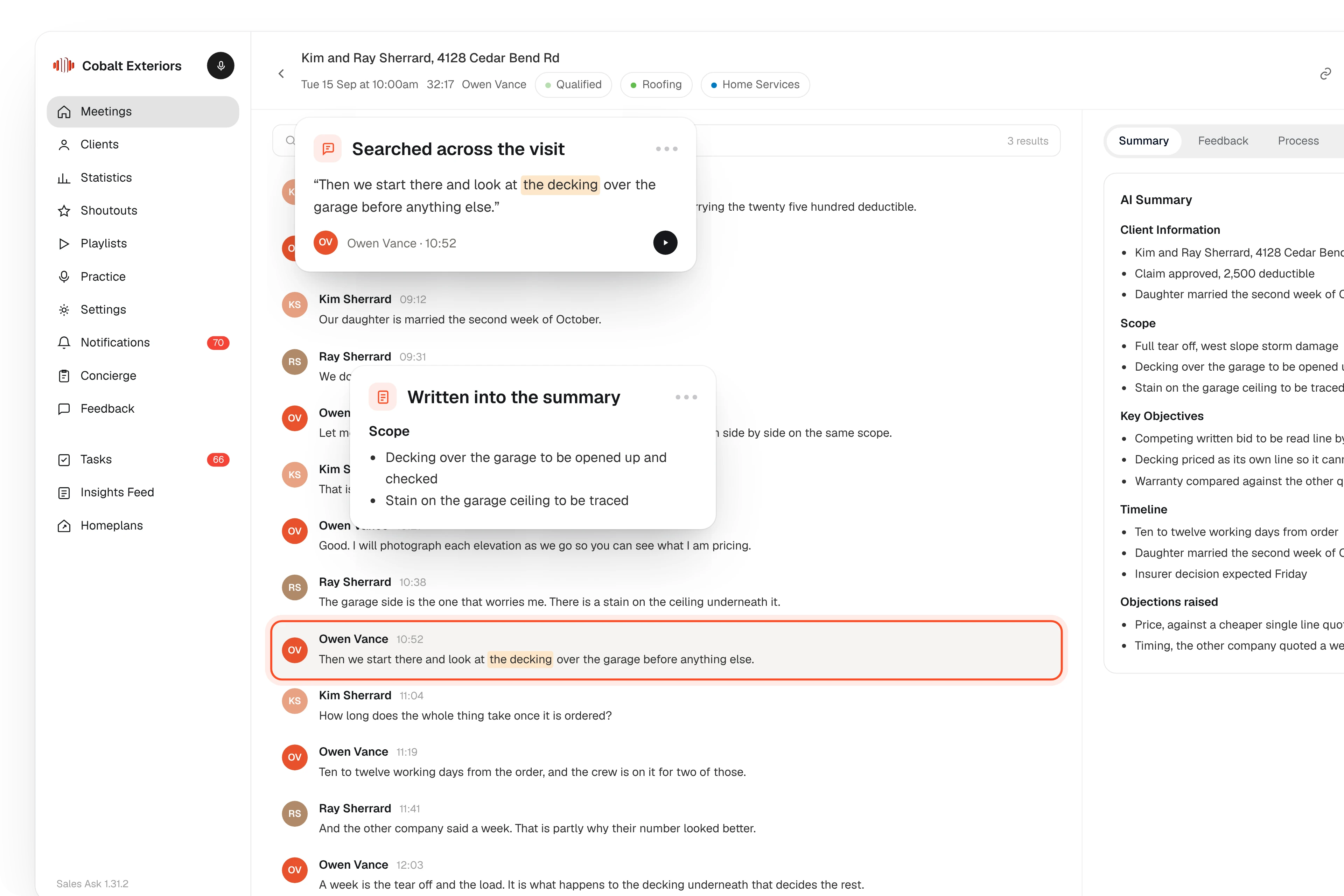
The same recording shows whether the three window-shorteners happened. Each visit is scored against your steps, so "raised financing" and "booked the next step" are marked hit or missed. The rep practices the miss in an AI roleplay before the next appointment, can get live coaching during it, and reads written feedback after. To see it on your own visits, book a SalesAsk demo.
What don't we know yet?
We don't know the in-home number. Level measures quotes of every kind, and its 29 days reflects when a contractor gave up, not when the homeowner chose someone else. Proposify's figure spans 27 industries.
Our own recordings show the appointment and the follow-up thread that comes after it. The Kitchen Table Report has days and visits from first appointment to a won job, by trade, on its list of cuts to publish. Until then, treat the 2-day figure as a direction: if a week has passed since the last bid with no word, assume you're losing and act on it.
Frequently asked questions
How soon should I follow up after giving an estimate?
The same day, with substance: a recap and the plan link, not a temperature check. Then tie the next touch to the date of their last competing bid. Our quote follow-up playbook has the full sequence.
Do homeowners just pick the cheapest bid?
Price matters a great deal. 64.81% of homeowners in Modernize's research called pricing very important. It decides most easily when the bids look alike, and three sheets of paper with three totals look very alike by day five.
Should the price be given at the table or sent afterward?
At the table for standard work, with the rep there to handle the reaction. A price sent two days later opens the window with silence. We cover the exceptions in email the quote or present it in person.
Does offering financing speed up the decision?
We can show it goes with a higher close rate, 49% against 38%, and not yet that it shortens the wait. A monthly figure does turn "can we afford this" into a smaller question, which is why I'd raise it every time.
Sources
- Level, "The 7-Day Rule: Why Stale Quotes Kill Contractor Revenue," updated November 7, 2026. Level Index dataset of 794 contractor companies. Period not stated.
- Proposify, The State of Proposals 2024. 1,280,657 proposals across 27 industries.
- Modernize, Homeowner Insights: Contractor Selection Trends, updated August 12, 2026.
- SalesAsk, The Kitchen Table Report 2026, for the financing close rates, the Mantel survey and the Cooling-Off Rule summary, and the Taylor Morrison customer story.
Dara Shabnam
Leads growth at SalesAsk and writes about in-home sales training and recording consent.
More posts byWritten by the SalesAsk team
SalesAsk records and coaches in-home sales conversations for home service, home improvement and home builder teams.
More posts